.svg)

.svg)
.svg)

TL;DR
The best outdoor lighting plan layers safety lighting (path, step, and entry sconces), accent lighting (uplights/spotlights), and ambient glow (string or pendant lights) in warm 2700–3000K tones. Use weather-rated IP65+ fixtures, aim for 100–200 lumens per path light, and preview placements and styles in a photo of your home using ReimagineHome.ai to test modern outdoor lighting ideas for front of house and patio walls before you drill.
Your quick answer + why this matters
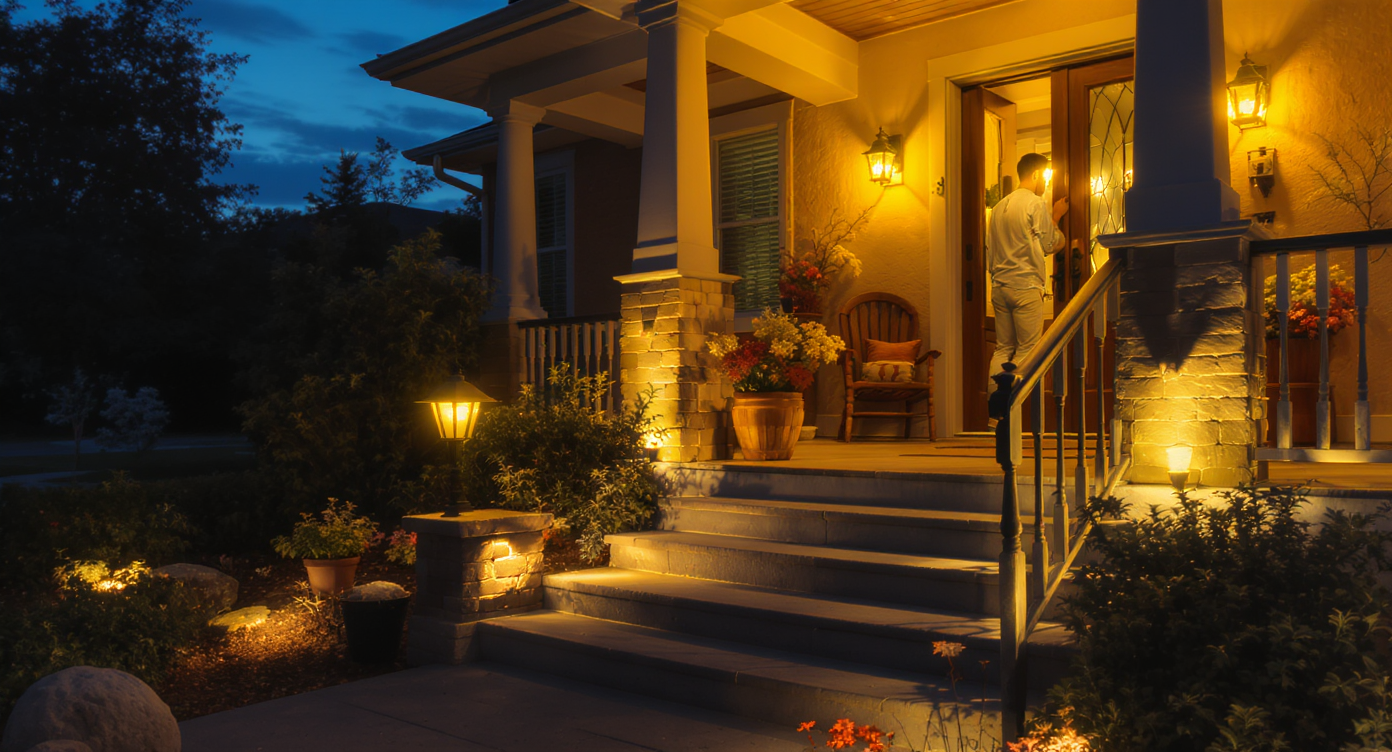
Prioritize bright, shielded lights around doors and steps, then add gentle wall and tree accents.
Start with safety and scale: place bright-but-shielded lights where feet land and doors open, then add accents to trees and walls, finishing with ambient glow above seating. Keep color temperature warm (2700–3000K) so skin tones and stone look inviting, not blue. Outdoor lighting is the quiet hero of curb appeal. It makes steps safer, the entry welcoming, and a compact patio feel like an extra room after dark. Before you move a single sconce or pick up a drill, upload a photo to ReimagineHome.ai and test a few schemes safely — it’s a room design AI that works beautifully outdoors too, from ai backyard design mockups to ai outdoor design moodboards. Designers often note the pain points are predictable: glare in your eyes, patchy paths, and fixtures that feel too big in real life. A little math plus a quick visualization saves money and guesswork.
At a glance: the smartest order of operations (with numbers)

Follow this smart lighting sequence for balanced outdoor ambiance and safety.
• Mounting height rules: front-door sconces go 66–72 inches (167–183 cm) from finished grade; the fixture center should sit about 1/4–1/3 the door height. At a glance - Start at the door: two sconces 6–12 inches from the casing, or one larger sconce on the knob side. 75–250 total fixture lumens each is plenty for most entries. - Paths first: space path lights 5–8 feet apart, staggered, at 12–18 inches tall for even pools of 100–200 lumens per fixture. - Steps next: step/tread lights every 3–4 feet, 3–5 watts LED each, shielded to avoid glare. - Accent with purpose: uplight one or two verticals (tree, column, stone detail) with 3–7W spots; aim across, not straight up. - Ambient last: string/pendant lights over seating at 7–8 feet clearance; choose 2700–3000K for warmth. - Weatherproofing: choose wet-rated fixtures at IP65+ for exposed zones; coastal homes benefit from marine-grade finishes. - Power and control: add photocell + motion at entries and dark side yards; dimmers or smart controls extend use and save energy. - Budget sanity: phase in layers. Start with the “safety four” (door, path, steps, dark corner) and add accents later. For planning costs, see a step-by-step exterior budgeting guide to align fixtures, wiring, and finish upgrades.
Anecdote
That corner where the armchair never fit indoors? Outside, it was the dining bench that no one used after sunset. Two under-bench LEDs and a dimmer later, it’s where the last cup of tea always happens.
How to light patios, paths, and house walls like a pro
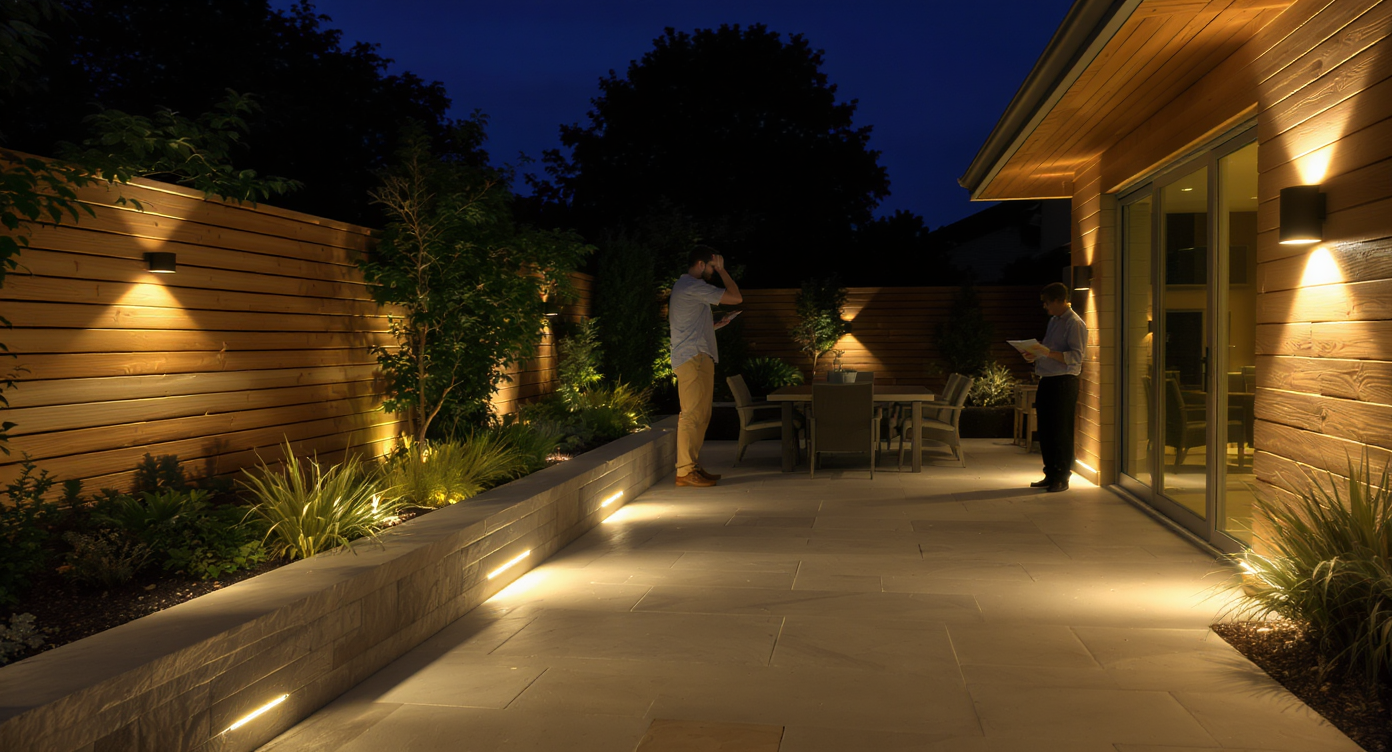
Lighting patios and paths with warm tones creates inviting, natural-looking outdoor spaces.
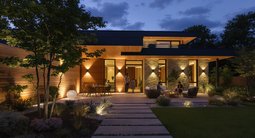
• Warm white (2700–3000K) reads most natural on skin, stone, and wood; reserve 3000–3500K for modern facades that want a crisp edge. Front door and facade - Two sconces if you have width: mount them 6–12 inches from the casing, with the bulb source shielded. For modern outdoor lighting ideas for front of house, choose downlight sconces that wash the wall and reduce glare. - One sconce if tight: go slightly larger (proportionally 1/4 the door height) and install on the knob side to light hands and faces. - Add a pendant only where there’s cover: hang 7 feet minimum above the threshold, centered; a single 8–12W LED is ample. Paths and steps - Path lights: low-voltage LED, 100–200 lumens, spaced 5–8 feet in a zigzag to avoid a runway effect. Solar is fine for decorative edges, but wired low-voltage is more reliable where safety matters. - Steps: integrate 3–5W shielded step lights into risers every 3–4 feet, or undercap strip lighting on stone caps. Think “glow,” not “headlights.” Patios and seating - String lights: choose shatterproof, wet-rated strands; space poles 10–12 feet apart and secure a gentle catenary curve. A dimmable plug makes them work for dinner and late-night cleanup. - Pendants outside: use damp/wet-rated fixtures under a pergola or canopy, hung 30–36 inches over a dining tabletop, or 7–8 feet over open conversation areas. - Hidden lighting: 3–4W LED tape under bench lips or railing bottoms creates a floating effect without hot spots. Walls and landscape accents - Uplights: 3–7W spots at 12–18 inches from the base of a feature, angled 30–45° to graze texture. One light per small tree, two for trunks over 8 inches in diameter. - Downlights: mount in eaves or trees 12–20 feet high for a moonlit wash; look for glare shields. - Silhouette tricks: place a low spotlight behind a plant to “draw” its outline on a wall — instant drama with one fixture. Plan visually before you buy - Drop a photo of your facade or patio into ReimagineHome.ai and try multiple schemes: a soft “garden party” layout, a security-first plan, or a minimalist wall-wash. The ai landscape design and ai yard design modes help you test plant uplights, path spacing, and even fixture styles. - If your outdoor refresh includes paint, cladding, or new windows, pair lighting tests with 2025 exterior design trends you can preview to ensure tones and textures play nicely at night. User insight: Most people overlight the door and underlight the steps. Flip that: keep the entry warm and welcoming, but put your brightest, most reliable fixtures where feet move.
Common mistakes to avoid
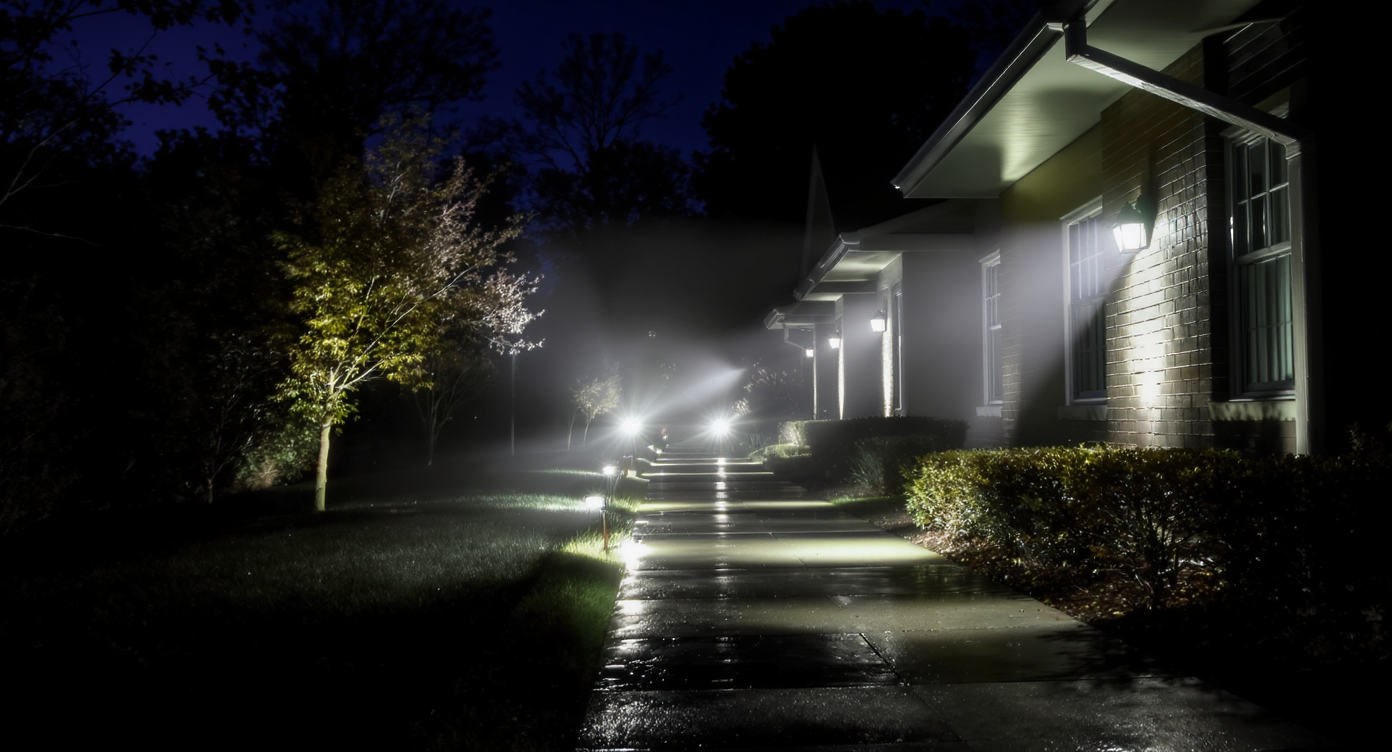
Avoid harsh lights and oversized fixtures that cause glare and uneven outdoor lighting.
• Aim for 0.3–0.5 foot-candles on walkways; more than 1.0 often feels harsh and wastes energy. Mistakes to avoid 1) Glare bombs at eye level: clear-glass sconces with exposed bulbs can blind. Choose frosted, louvered, or downlight-only designs. 2) The runway path: evenly spaced soldiers on one side look commercial. Stagger fixtures and skip every other position where spill light overlaps. 3) Mismatched color temperatures: mixing 4000K path lights with 2700K sconces makes materials look off. Keep your exterior within a 300K band. 4) Underpowered solar everywhere: solar is great for accents, not critical safety. Use wired low-voltage for steps and primary paths. 5) Wrong rating: damp-rated under open sky leads to failures. Look for wet-rated IP65+ and coastal finishes if you’re near salt air.
Pro tips, resources, and photo ideas
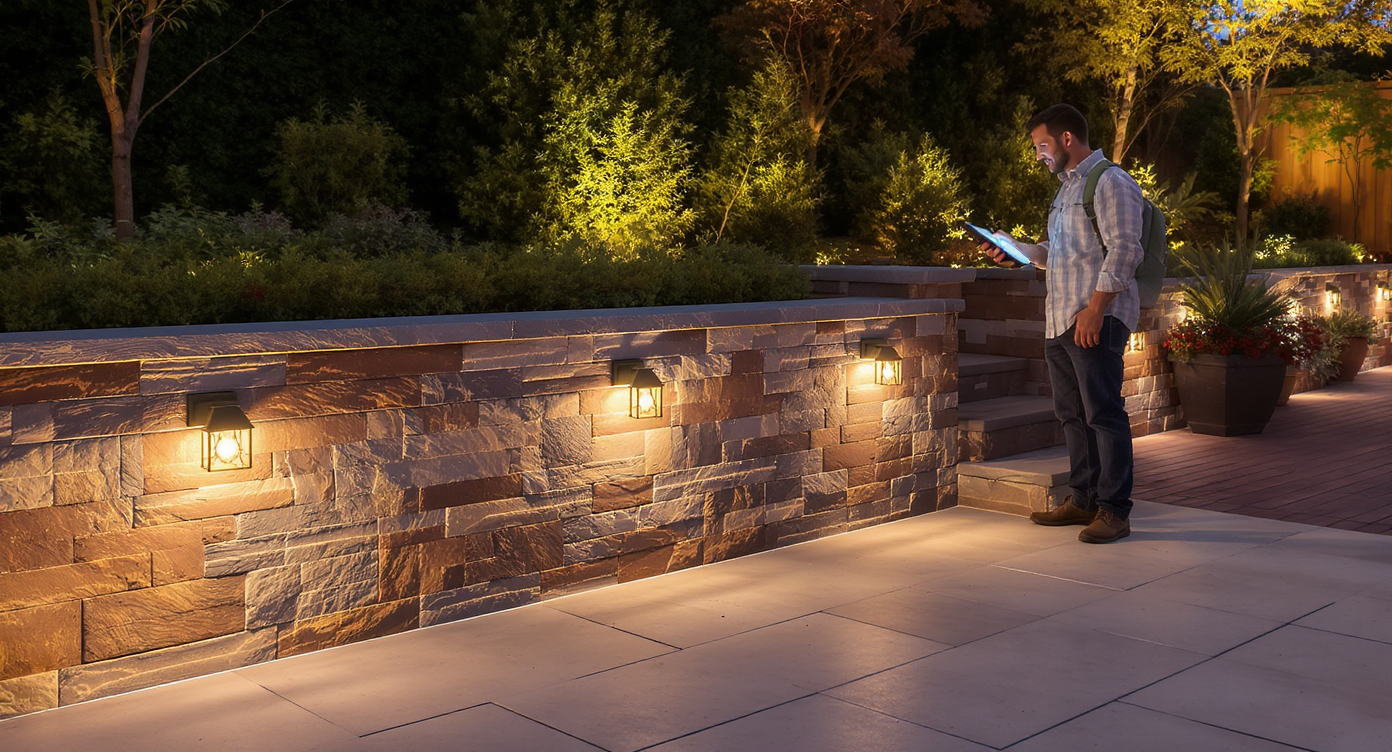
Use low-voltage systems and smart fixture choices for flexible, energy-efficient outdoor lighting.
• A 12V low-voltage system is the most DIY-friendly way to power multiple outdoor fixtures safely and efficiently. Pro tips - Size matters: porch sconces that are too small disappear at night. When in doubt, go one size up; aim for 1/4–1/3 the door height. - Layer controls: photocell for dusk-to-dawn, motion for side yards, dimmers for entertaining. Smart plugs retrofit easily. - Hide hardware: bury wiring 6 inches deep along bed edges; use dark, shielded bullets so the effect reads, not the fixture. Resources and planning help - If your update extends beyond lights, use a step-by-step exterior renovation budgeting guide to phase lighting with siding, roofing, and window work. - For curb-appeal decisions you want to see before you spend, preview palettes, trims, and fixture styles with our 2025 exterior design trends walkthrough. - Mapping your beds and walkway? Steal ideas from front yard landscaping ideas for every timeline, then overlay lighting in ReimagineHome.ai — it doubles as an ai landscape generator and landscaping AI tool free to try from a photo. Anecdotes & real stories - The “perfect” sconce that wasn’t: a reader loved a clear-glass cylinder online; installed, it lit the neighbor’s bedroom. Swapping to a downlight version fixed glare and made the stonework glow. - Patio that finally hosted dinners: one dimmable bistro strand and two 4W bench underlights turned an unused slab into the most popular room of the house. - Steps made safe in five fixtures: four 3W riser lights plus a single tree-mounted downlight erased shadows without looking like a stadium. Alt-text & caption suggestions - Alt: Modern black downlight sconces flanking a wood front door at dusk. Caption: Shielded sconces wash the wall while keeping glare low. - Alt: Zigzag path lights along a stone walkway with native grasses. Caption: Staggered spacing avoids a runway effect. - Alt: String lights over a small patio with a round dining table. Caption: One dimmable strand turns a patio into an evening room. - Alt: Uplight grazing a textured stone column. Caption: A 5W spot angled 30° pulls out beautiful shadows.
Visualization Scenario
Picture this: you stand at the curb at blue hour. The path glows softly in a staggered rhythm, the front door is framed with two warm downlight sconces, and a single spot brushes texture across the stone column. Through the side gate, string lights hover over a small table, and the steps are quietly lit from within. It’s welcoming but not bright; defined but not fussy — and you knew it would be, because you tested the whole scheme in ReimagineHome.ai first.
FAQ: snippet-ready answers
Q: What is the best option for outdoor lights? A: For most homes, a low-voltage (12V) LED system with wet-rated IP65+ fixtures offers reliability, energy savings, and easy expansion. Use wired path/step lights for safety and add solar only for decorative accents. Q: How do I illuminate the outside of my house without glare? A: Choose shielded downlight sconces at 66–72 inches high, keep color temperature warm (2700–3000K), and aim accent lights across surfaces at 30–45°. Test placements in a photo using ReimagineHome.ai before drilling. Q: Can I use LED lights outside? A: Yes—look for wet-rated LEDs with IP65 or higher for exposed areas. Path lights need 100–200 lumens, step lights 3–5W each, and strings/pendants should be outdoor-rated with sealed connections. Q: How many lumens do I need for a front path? A: Plan 100–200 lumens per path fixture, spaced 5–8 feet apart and staggered to create overlapping pools of light instead of a harsh runway. Q: How can AI help redesign my exterior lighting? A: Upload a facade or patio photo to ReimagineHome.ai to see ai outdoor design options—swap fixture styles, test uplight angles, and compare warm vs. cool color temperatures before you buy.
Bring it to life, then bring everyone outside
• Most homes feel balanced with 3 layers: safety (paths/steps), accent (trees/walls), and ambient (strings/pendants), all within 2700–3000K. Great outdoor lighting is part math, part mood. Decide where you need to see, choose warm tones that flatter materials and faces, then add one or two accents that make your architecture sing. When you can try the look in minutes, you make better choices: upload your facade or patio to ReimagineHome.ai, compare two or three schemes, and save the one that feels like home after dark.


.svg)


.png)