
TL;DR
Tile trends in 2025 lean nature-inspired, artisanal, and tactile, with warm neutrals, sculptural 3D reliefs, soft organic shapes, and confident mix-and-match patterns leading the conversation. ReimagineHome.ai lets you visualize each look on your own walls and floors in seconds, so you can choose styles, grout colors, and layouts with clarity before you commit.
Why Tile Trends Matter Right Now

Previewing nature-inspired and textured tile trends effortlessly with ReimagineHome.ai in real spaces.
Tile trends for 2025 center on six looks you can trust: nature-inspired motifs, artisanal texture, warm neutral palettes, sculptural 3D relief, soft organic shapes, and confident mix-and-match layouts. Use ReimagineHome.ai to preview these interior design styles on your own backsplash, shower, fireplace, or floor, complete with grout, scale, and lighting variations. At a glance - Artisanal texture and zellige sheen for depth and character - Warm neutrals (beige, taupe, ivory, cocoa) with layered finishes - Nature-inspired botanicals and watery, wave-like patterns - Sculptural 3D tile for light-and-shadow drama on feature walls - Organic shapes that curve and soften hard surfaces - Mix-and-match mosaics, stripes, and hexes for custom patterns Try your own design ideas instantly on ReimagineHome.ai: https://www.reimaginehome.ai/?utm_source=blog
The Rise of Elegant Tile — What’s Driving It

Large-format tiles bring depth and understated elegance to key interior features like fireplaces.
Large-format tile is defined as any side 15 inches or more, while classic formats like 2x6, 3x6, and 4x4 remain staples for backsplashes and showers. That measurable shift toward scale is paired with a renewed appetite for hand-touched texture and natural references. The rise of nature-inspired design is a natural response to the last few years of nesting at home; leafy, botanical, and wave-like patterns bring outdoor calm to interior spaces. Artisanal style lands next: rippled glazes, imperfect edges, and zellige-like sheen make walls feel layered and collected. Warm neutrals continue to dominate interior design trends because they play nicely with existing furniture and wood tones, adding softness without the sterility of cool grays. At the same time, sculptural 3D tiles create statement-making surfaces that bounce light and shadow, especially in entry walls and fireplace surrounds. Organic shapes and half-moon motifs soften rectilinear rooms, while mix-and-match layouts turn simple subway or hex tiles into personal signatures. Together, these trends balance serenity with expression, which is exactly where home aesthetics are headed in 2025. Explore deeper how each trend translates room by room here: - Backsplashes made simple: https://www.reimaginehome.ai/blogs/visualize-backsplash-ideas - Choosing grout color with confidence: https://www.reimaginehome.ai/blogs/how-to-choose-grout-color - Bathroom tile trends you can try now: https://www.reimaginehome.ai/blogs/bathroom-tile-trends-2025
Anecdote
A couple debated between botanical blue tile and creamy zellige. ReimagineHome.ai revealed their north-facing kitchen dulled the blue at dawn but made the cream glow. Decision made.
Key Elements That Define 2025’s Tile Trends

Key 2025 tile trend elements mix shapes, textures, and grout to create unique personalized surfaces.
Grout joints typically range from 1/16 to 3/16 inch; choosing width and color can dramatically shift how a tile reads. Here are the defining elements for each of the six tile trends in 2025. Nature-inspired - Colors: sage, eucalyptus, misty blue, ink, and charcoal on ivory grounds - Textures: matte or satin glazes that feel soft under downlighting - Forms: botanicals, leaf silhouettes, water-wave lines - Tip: In showers, maintain a 1/4 inch per foot slope toward the drain so organic patterns don’t pool visually or literally. Artisanal style - Colors: chalky whites, cream, sea-glass green, deep ocean blues - Textures: rippled, hand-molded, or gently pitted surfaces - Forms: 2x6 or 4x4 with intentional variation; star-and-cross for accent moments - Tip: Stack-bond vertical 2x6 to heighten ceilings; keep joints at 1/16 inch if the tile is rectified. Warm neutrals - Colors: beige, taupe, mushroom, cacao, putty, camel - Textures: brushed marble, honed limestone, subtle speckles - Forms: basketweave mosaics, large-format porcelain stone looks - Tip: Use a grout 1–2 shades darker than the tile to hide dirt on floors. 3D tile - Colors: white-on-white, metal-tinged pewter, soft ecru for light play - Textures: fluted, scalloped, faceted geometries - Forms: elongated ribs, hex reliefs, sculpted waves - Tip: Place wall washers 8–12 inches from the surface to graze relief without glare. Organic shapes - Colors: tonal grays, blush clay, fog blue - Textures: matte porcelain for slip resistance in wet zones - Forms: half-moons, arches, irregular rounds - Tip: Rotate motifs to create custom rhythms; mock up four rotations before setting. Mix-and-match patterns - Colors: keep one neutral anchor plus one accent family - Textures: blend matte and gloss for subtle contrast - Forms: stripe backsplashes, hex flowers, polka-dot floors - Tip: Limit to 2–3 tile types in one sight line to avoid visual noise.
How ReimagineHome.ai Helps You Visualize These Tile Trends

ReimagineHome.ai streamlines visualizing personalized tile layouts across styles and patterns efficiently.
In under 60 seconds, you can render a new backsplash or floor using your own photo on ReimagineHome.ai. Here’s a simple workflow to bring these interior design styles to life. Step 1: Upload your space - Photograph your kitchen, bath, fireplace, or entry with even lighting. Step 2: Select tile surfaces - Mask the backsplash, shower walls, hearth, or floor; the tool snaps to edges for quick selections. Step 3: Prompt your look - Nature-inspired: “botanical ceramic tile, ivory ground with charcoal vines, satin finish, 4x4, offset.” - Artisanal: “zellige-style 2x6 ceramic, chalk white, rippled glaze, vertical stack with 1/16-inch grout.” - Warm neutrals: “brushed marble look porcelain, 24x48 slab, warm beige veining, 1/8-inch joint.” - 3D tile: “fluted ceramic wall tile, ecru, sculptural relief, linear pattern.” - Organic shapes: “half-moon mosaic, fog blue and gray, matte, playful rotation.” - Mix-and-match: “striped subway backsplash, cream and cocoa, 2x8, alternating rows.” Step 4: Dial in details - Adjust orientation, scale, grout width and color. Toggle under-cabinet or sconce lighting to see true sheen and texture. Step 5: Compare variations - Save 3–5 studies and A/B them side by side. Share with a partner or contractor for fast consensus. Step 6: Document your spec - Export the final visual and notes, including tile size, layout, and grout for an easy handoff.
Style Comparisons — How Today’s Tile Looks Differ (and Overlap)
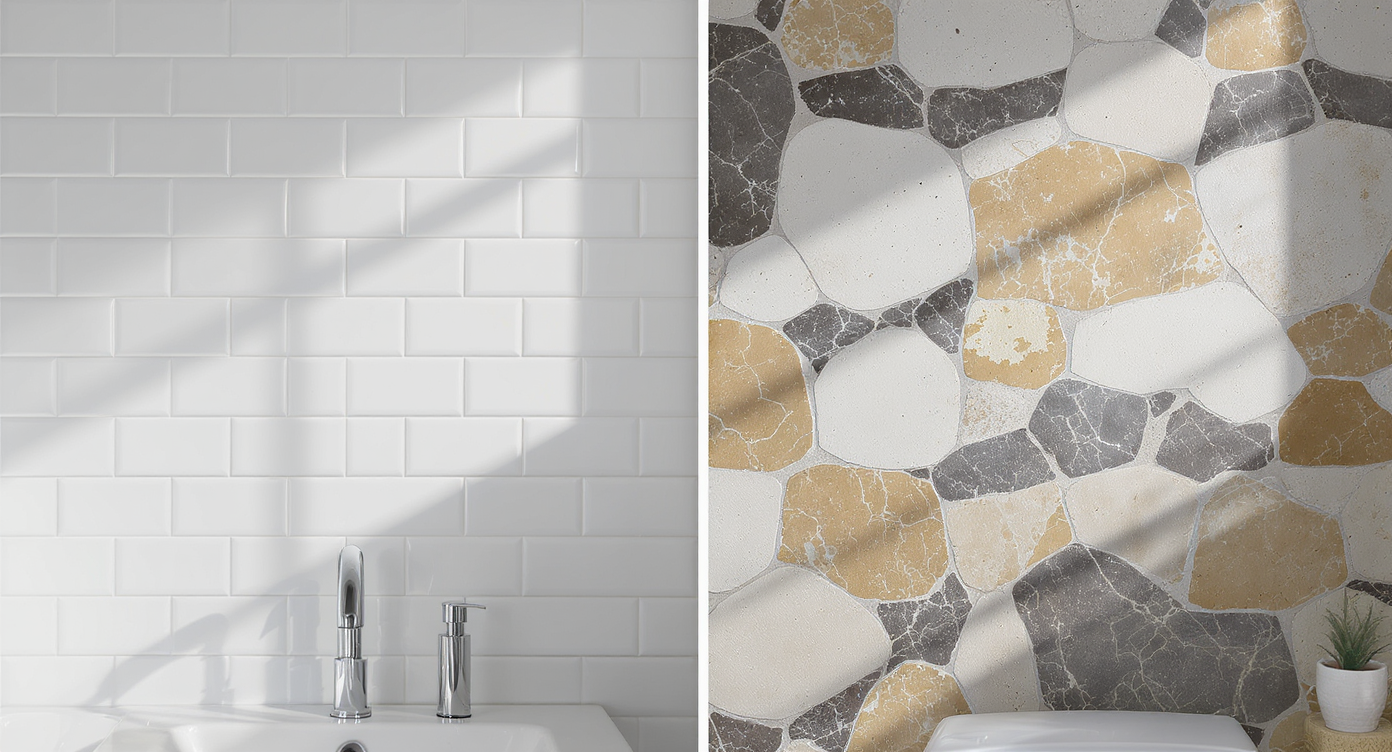
Comparing today’s tile styles reveals distinct textures and patterns that influence design choices.
A standard subway tile averages 3x6 inches, while handmade zellige can vary by 1–3 mm in size and thickness, which affects grout alignment. Artisanal zellige vs classic subway - Zellige: variegated glazes, wavy faces, smaller joints if rectified but often 1/8 inch for character. - Subway: crisp edges, consistent sheen, reliable alignment for chevron or herringbone. 3D relief vs textured flat tile - 3D: sculpted profiles that crave directional light; best on dry feature walls. - Textured flat: safer for high-splash zones; easier to clean while still reading tactile. Porcelain stone-look vs natural marble - Porcelain: stain-resistant, low maintenance, budget-friendly in large format. - Marble: unmatched veining and depth; seal regularly and use pH-neutral cleaners. Warm neutrals vs bold botanicals - Neutrals: longevity and resale ease. - Botanicals: focal walls that layer beautifully with solid counters and simple hardware.
Visualization Scenario
Upload your current kitchen, select the backsplash, and prompt “zellige-style 2x6 vertical stack, chalk white, satin glaze, 1/16-inch grout.” Save variations with warm vs cool grout to compare under-cabinet lighting, then export the winning spec.
FAQ
- What tile size makes a small bathroom look bigger? Large-format porcelain (e.g., 24x24 or 24x48) reduces grout lines and visually expands floors; pair with a vertical 2x6 or 2x8 wall stack to elongate height. - Can 3D tile go in a shower? Yes on walls outside direct splash or steam; for heavy-use zones, choose shallow flutes or textured flat tile for easier squeegeeing and maintenance. - How do I choose grout color? Match for a seamless field, contrast to spotlight pattern. Test three shades in ReimagineHome.ai with your actual lighting to see real differences. - Is porcelain better than ceramic for floors? Porcelain is denser and absorbs less water, making it ideal for floors and wet areas; ceramic is excellent for walls and decorative features. - How can I visualize tile layout before buying? Upload a photo to ReimagineHome.ai, mask tile zones, then try layouts (stack, offset, herringbone), grout widths, and lighting angles side by side.
Visualize Your Home with 2025’s Best Tile Trends
A backsplash zone is typically 18 inches high between countertop and upper cabinets, which makes it the ideal canvas to audition tile trends at true scale. Use that measurable frame to test a soothing neutral, a rippled zellige gloss, or a sculptural 3D moment in ReimagineHome.ai before you order a single box. Real-World Stories — Tile in Action - Small spaces: In under-800-square-foot apartments, a vertical 2x6 stack visually lifts ceilings; a renter used peel-and-stick temporarily, then replicated the exact look later with ceramic after previewing the pattern in ReimagineHome.ai. - Rentals: A landlord-friendly refresh swapped a busy mosaic for a warm 24x48 porcelain stone look; fewer grout lines simplified turnover cleaning. - Color changes: One homeowner shifted from cool gray to mushroom-beige tile, then adjusted grout two shades deeper; the floor instantly looked grounded and forgiving. - Furniture swaps: A living room fireplace clad in fluted ecru tile harmonized with a caramel leather sofa, proving neutrals don’t need to be timid when texture leads. Common Mistakes People Make with Tile Interior floor tiles should meet a DCOF of 0.42 or higher for slip resistance in wet areas. Avoid these pitfalls: - Choosing glossy wall tile for shower floors. Fix: Use matte porcelain mosaics for traction. - Ignoring grout color. Fix: Test three swatches in ReimagineHome.ai; warm grout softens patterns, cool grout sharpens them. - Overmixing patterns. Fix: Cap at three tile types per sight line. - Poor lighting for 3D tile. Fix: Add wall washers 8–12 inches off the surface to graze relief. - Skipping layout planning. Fix: Dry-lay a full row; center the pattern on a focal point, not a corner. Pro Tips to Get It Right Designers recommend pendant bottoms hang 30–36 inches above islands so tile backsplashes glow without glare. More precise wins: - Keep countertop-to-sconce clearance at 6–8 inches to avoid awkward crop lines on tile. - Align stacked tile with appliance or window centerlines for calm sight lines. - In showers, niche shelves at 48–60 inches to hit reach height for most adults. - For large-format floors, use 1/3 offset, not 1/2, to minimize lippage. Visualize Your Home with 2025’s Best Tile Trends A backsplash or feature wall is a high-impact, moderate-footprint place to play with design trends, interior design styles, and home aesthetics. See your space in six fresh directions, then save the iteration that feels timeless to you. Try your own design ideas instantly on ReimagineHome.ai: https://www.reimaginehome.ai/?utm_source=blog