
TL;DR
Yes. The '90s are resurging, but with edited palettes, better proportions, and richer textures. Think jewel tones grounded by modern neutrals, chunky-yet-tailored seating, playful wallpaper borders used like trim, and tactile fabrics such as bouclé and chenille. The look is cozy, eclectic, and personal - minus the kitsch.
Introduction
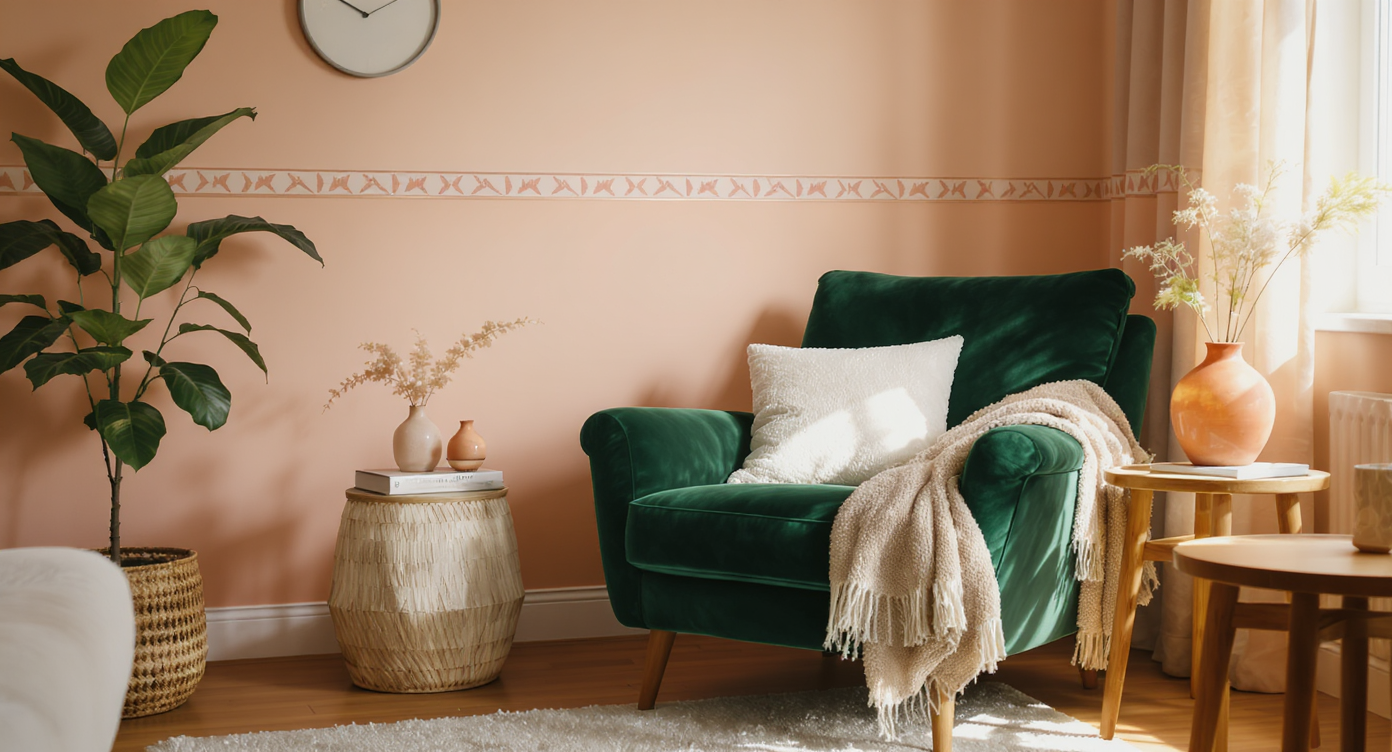
Cozy corner showing '90s vibe with jewel tones and layered textures for warmth and charm.
Dial-up nostalgia can stay in the attic, but the '90s spirit is showing up in living rooms again - and it feels surprisingly right. After years of blank-box minimalism, homeowners are leaning back into warmth and personality. Rich color. Satisfying curves. Layers you can feel. As one designer told me recently, the decade worked because homes had heart. People are craving that again.
I heard a homeowner describe their favorite '90s memory as "velvet next to rattan, deep green next to pale peach." That fearless mix is what designers are reviving today. Lowri Allpress put it simply: it was a time when rooms didn’t apologize for comfort, and that confidence reads as fresh again. The trick is editing. Keep the soul, update the silhouette.
So what does a modern '90s room look like? Jewel tones without the gloom. Chunky sofas with better scale. Wallpaper borders used like crisp architectural lines. Tactile textiles that warm up contemporary spaces. Here’s how to pull it off - and avoid the pitfalls.
How to Do '90s Style Now
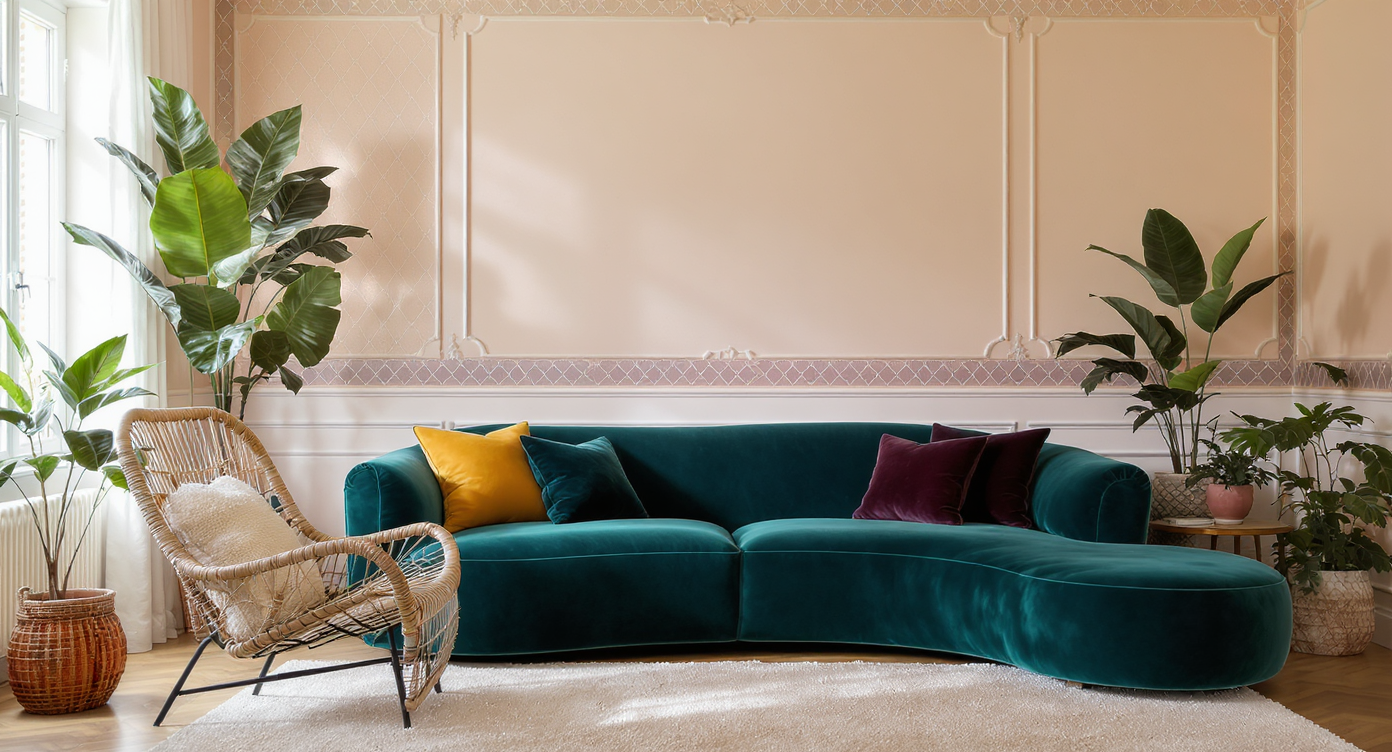
Updated '90s style with jewel-tone sofas, rattan, and tactile fabrics for a fresh look.
Short answer: the '90s are back because they deliver what many homes lack today - character you can live with. Do it in a few decisive moves:
- Lead with one saturated color. Deep aubergine, bottle green, garnet, or muddy red work beautifully. Designer Isfira Jensen often floods a single surface - a wall or built-in - then balances the drama with stone, wood, and pale upholstery.
- Choose chunky, not clumsy. Christopher Boutlier points to deep-seated sofas and exaggerated lounge chairs as the vibe, but today’s versions are tightened up: lower arms, slimmer plinths, textured but tailored fabrics. Think presence without the bulk.
- Make texture the star. Bouclé, chenille, and chunky linens soften all the bold color. Lauren Conner likes curvy pieces upholstered in nubby textiles so they read sculptural, not retro.
- Reframe wallpaper borders. Melanie Bryant uses borders as graphic trim - to outline doorways, picture-rail height, or the top of a headboard wall - in geometrics or stripes instead of ditsy florals.
- Sample unexpected materials in small doses. Niki Cheng notes Formica’s comeback in accessories: trays, lamp shades, desk tops. Use light woods too - stripped oak floors, Scandinavian silhouettes, minimalist vanities - to keep the palette airy.
- Dial in proportion and contrast. Pair one oversized piece with two visually lighter ones. If you add a big sofa, balance it with a leggy wood chair and a slender metal side table. Contrast matte and gloss, smooth and nubby, jewel and neutral.
My rule of thumb: 60-30-10. Sixty percent neutral foundation, thirty percent rich color, ten percent playful pattern or gloss. It keeps the look expressive but restrained.
Anecdote
During a refresh of a rental studio, we painted a single wall of built-in shelving in deep garnet and added a slim checkered border at the door head. The tenant kept their simple linen sofa and pale rug. Friends swore the space had grown. It hadn’t - it just finally had a heartbeat.
Common Mistakes & Misconceptions
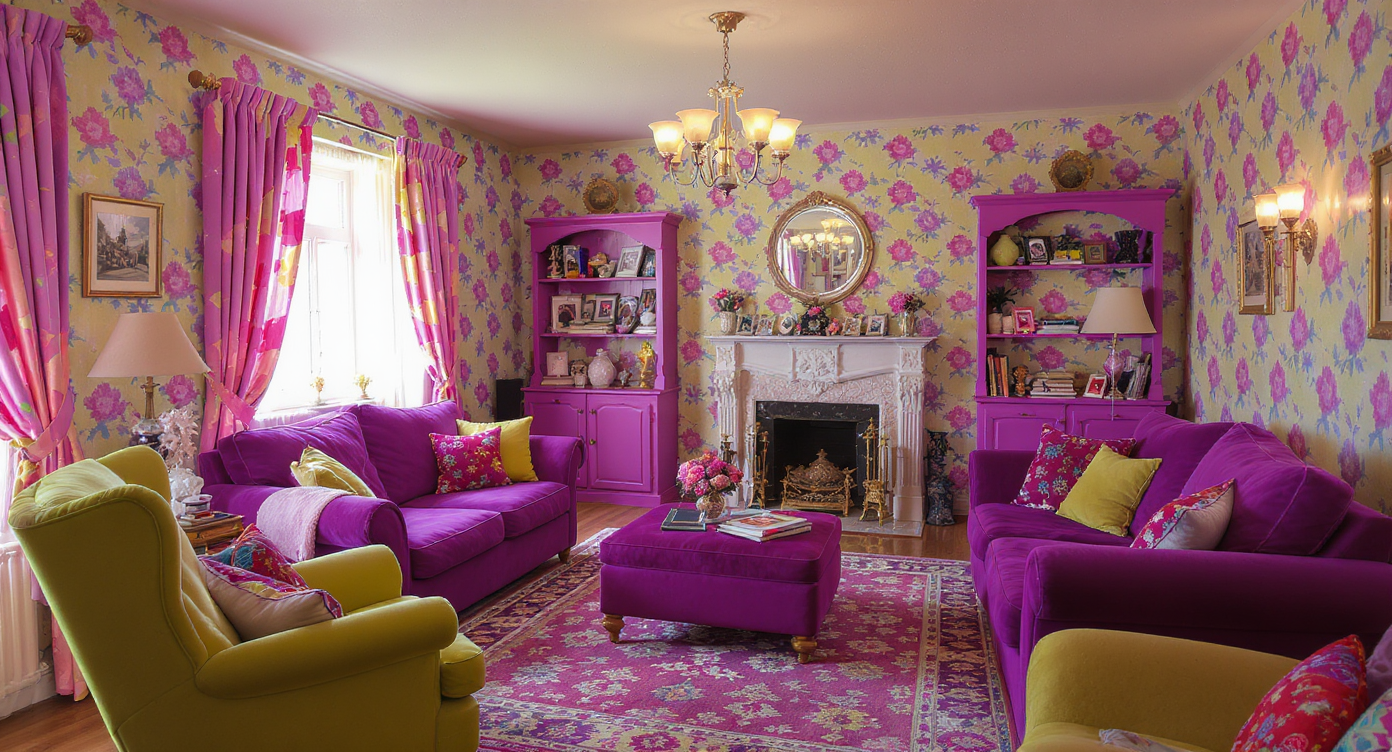
Avoid '90s over-theme: moderation keeps vintage influences fresh and timeless.
- Going full theme. A room that screams "time capsule" dates fast. Solution: introduce only two or three '90s signatures - a saturated wall, a curvy chair, a border-as-trim - and keep the rest contemporary.
- Letting jewel tones turn murky. Heavy paint plus heavy fabric can feel claustrophobic. Solution: add light wood, reflective accents, and warm-white bulbs around 2700K to lift the palette.
- Oversizing everything. Big sofa, big coffee table, big rug equals bulky. Solution: one statement piece, then vary leg heights and visual weight in the rest of the furniture.
- Wallpaper borders used like the '90s used them. A floral ring around the room flattens the architecture. Solution: deploy borders as frames - door surrounds, picture rails, or to cap wainscoting - in crisp patterns.
- Cheap laminate overload. Too much plastic sheen reads cafeteria. Solution: if you try Formica, keep it small and pair with natural textures like oak, wool, and stone.
Pro Tips / Expert Insights
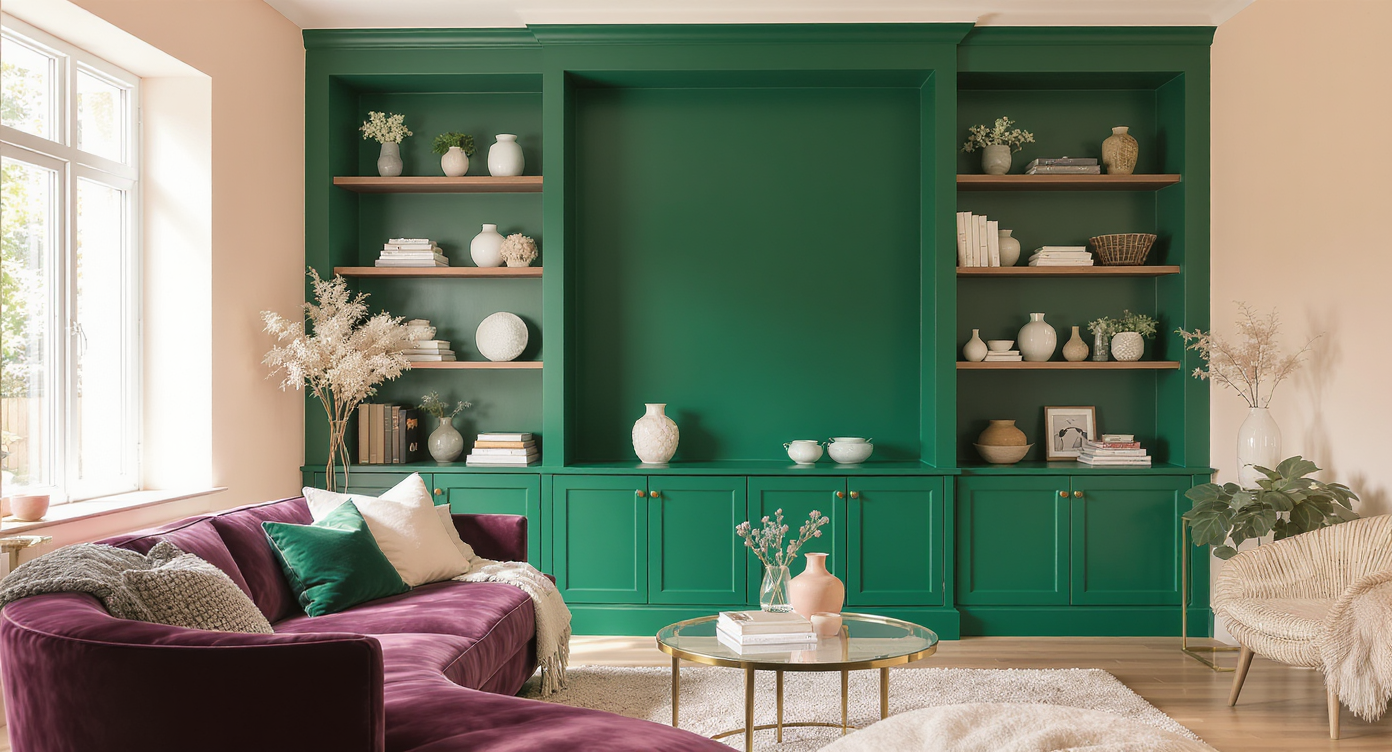
Expert tip: flood architectural features with bold paint to enhance '90s style impact.
- Flood one architectural element. Paint an entire built-in or the inside of a niche in garnet or deep green, not just a single accent wall. The color looks intentional and contemporary.
- Upgrade the curves. Boutlier’s advice holds: choose one sculptural chair in bouclé or warm wool. It delivers the '90s softness and becomes a focal point in a modern room.
- Border as a custom detail. Bryant often places a 2 to 4 inch geometric border at door heads or ceiling lines to mimic bespoke millwork. It sharpens the room without heavy carpentry.
- Mix finishes with discipline. Two woods max. One metal in two finishes max. One glossy surface offset by matte and nubby textures, so the look feels designed, not chaotic.
- Shop vintage for sustainability. Lightly refinish Scandinavian oak pieces, reupholster a '90s sofa in oatmeal bouclé, or fit a custom slipcover. The bones of that era are sturdy.
- Color placement matters. Put the darkest hue low (sofa, rug) or on a single vertical mass (bookcase) and keep drapery in a tonal neutral to avoid visual heaviness.
One homeowner told me they revived a hand-me-down 1998 sofa with new springs and a textured ivory fabric. The frame was solid, the comfort unbeatable, and suddenly it looked like a boutique piece. I have done the same with a thrifted club chair - a tight back and nubby textile turned a clunky relic into a sculptural keeper.
Tools, Inspiration, and Resources
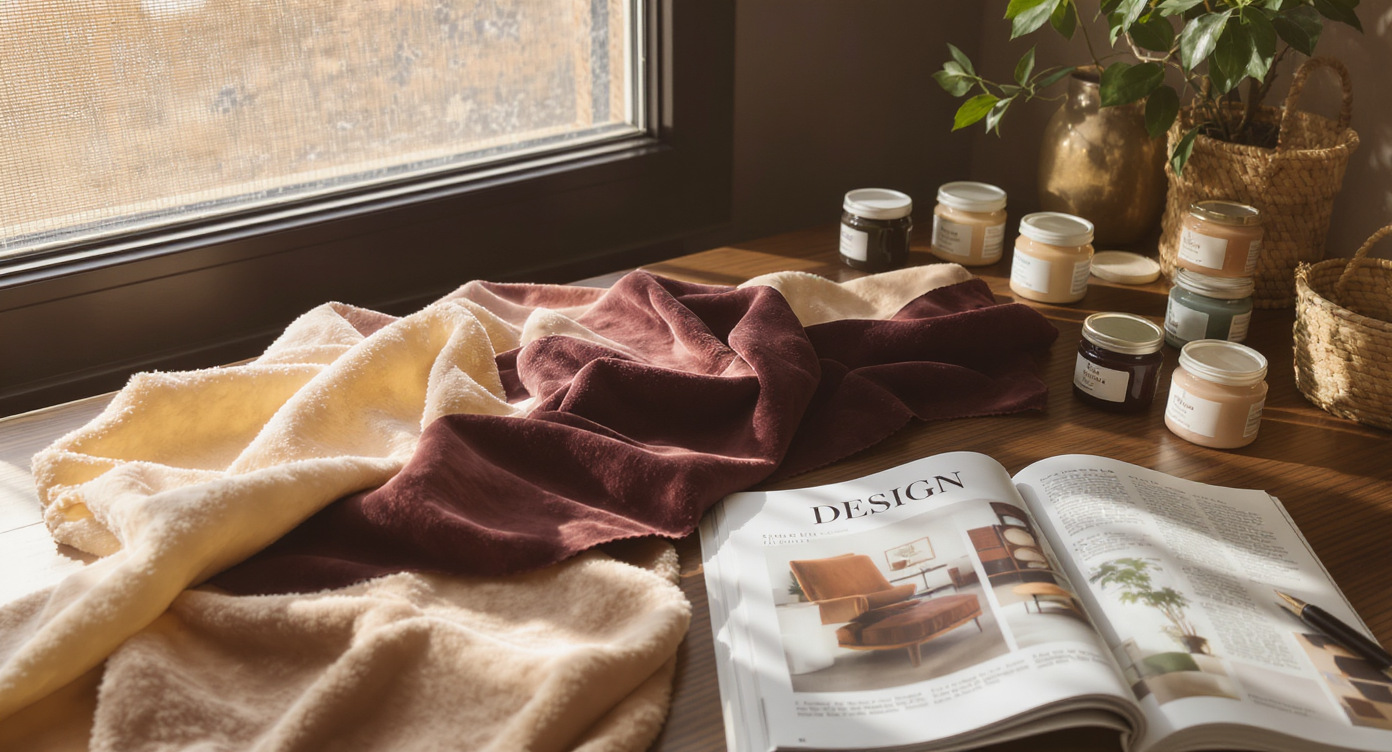
Gather swatches and samples to confidently blend textures and colors in '90s-inspired rooms.
- Paint and material sampling: Order oversized swatches of bouclé, chenille, and linen; test jewel-tone paint on two walls and view at morning and evening light.
- Vintage and upcycling: Search local resellers for deep-seated sofas from the late '90s - focus on frame quality. Budget for reupholstery rather than buying new.
- Digital visualization: Use ReimagineHome to mock up jewel-tone walls, border placements, or fabric swaps on your actual room photos before committing.
- Textile houses and trim: Look for wool-bouclé blends for softness without pilling, and geometric fabric tapes if you prefer a sewn border over wallpaper.
Visualization Scenario
Picture a living room at dusk. The bookcase at one end is painted bottle green, books haloed by warm light. A curved bouclé chair holds court beside a vintage pine table. Along the cased opening, a narrow striped border creates a crisp frame. The palette is rich, but the room breathes. You sink into the sofa and think: this is exactly the right kind of throwback.
FAQ
- What colors read '90s but still modern? Aubergine, muddy red, bottle green, and teal, grounded by oatmeal, mushroom, and light oak. Use one saturated hue, not five.
- How do I use wallpaper borders today? Treat them like trim: outline doorways, picture-rail height, or to cap wainscoting. Choose stripes, checks, or geometrics in 2 to 4 inch widths.
- Are oversized sofas practical in small spaces? Yes, if you keep arms tight and legs visible, and pair with airy pieces. One large sofa plus small tables beats three medium seats.
- Can I mix '90s elements with other styles? Absolutely. '90s color with Scandinavian light wood, or a curvy bouclé chair with a modern metal table, works beautifully.
- What are budget-friendly ways to try the look? Paint a built-in in a jewel tone, add a small geometric border, swap throw pillow textures, or refinish a light oak side table.
Conclusion
The new '90s is less about nostalgia and more about nerve. Saturated color meets tactile comfort. Big shapes meet good manners. When you edit the palette, refine the silhouettes, and let texture do the talking, you get rooms that feel confident and deeply livable. That was the decade’s secret all along - homes with heart. We could use more of that now.