
TL;DR
Most botched artificial lawns come from skipped base prep and too many seams; the lasting fix is removal, rebuilding a 5–7 inch compacted base, and re-laying a single 12–15-foot roll with seams aligned to the grain. Before you spend again, visualize a new lawn, a native meadow, or a stone patio with AI landscape design to preview curb appeal and costs.
90% of artificial turf failures start with poor base prep (TL;DR)
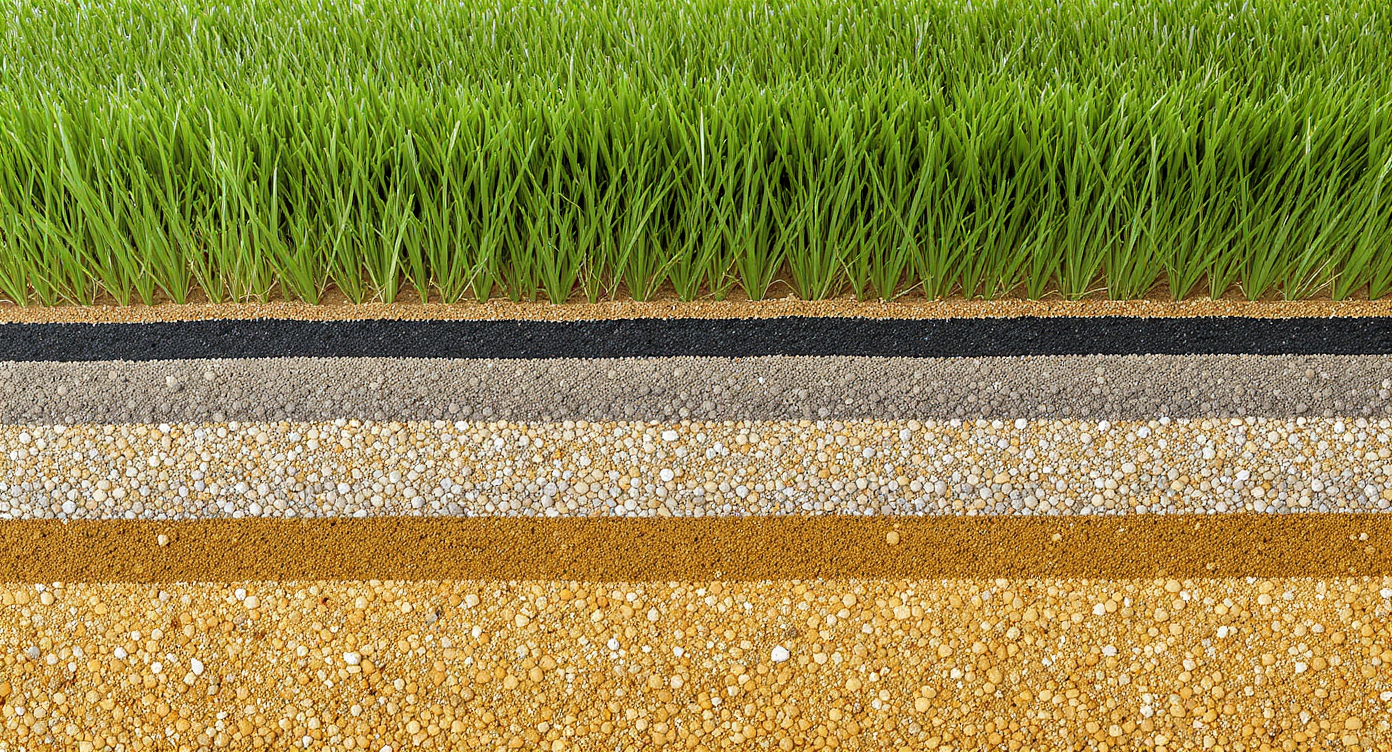
A properly compacted base of gravel and screenings prevents turf waves and weed growth beneath artificial lawns.
Most landscaping ideas succeed or fail beneath the surface. If an artificial lawn looks like a patchwork quilt, the issue is rarely the infill; it’s almost always missing excavation, no stabilized base, and too many mismatched seams. The right fix is methodical: remove the scraps, rebuild the base, and install a single, properly oriented roll with minimal joints — or pivot to a low-maintenance garden or stone patio that fits your climate and lifestyle.
- At a Glance: A proper turf base is 4–6 inches of compacted 3/4-inch minus + 1 inch of screenings.
- At a Glance: Turf rolls come 12–15 feet wide; most small front yard designs need 0–2 seams.
- At a Glance: Seams disappear when fibers (the “grain”) run the same direction.
- At a Glance: Plan 1–2 lb per sq ft of infill; more won’t hide crooked seams.
- At a Glance: A 1–2% slope directs drainage away from foundations.
- At a Glance: Comparable small-yard re-installs typically take 2–3 days for a pro crew.
Try your own yard design, patio layout, or native planting plan on a photo of your space in ReimagineHome.ai.
5–7 inches of compacted base stop waves and weeds (Introduction)
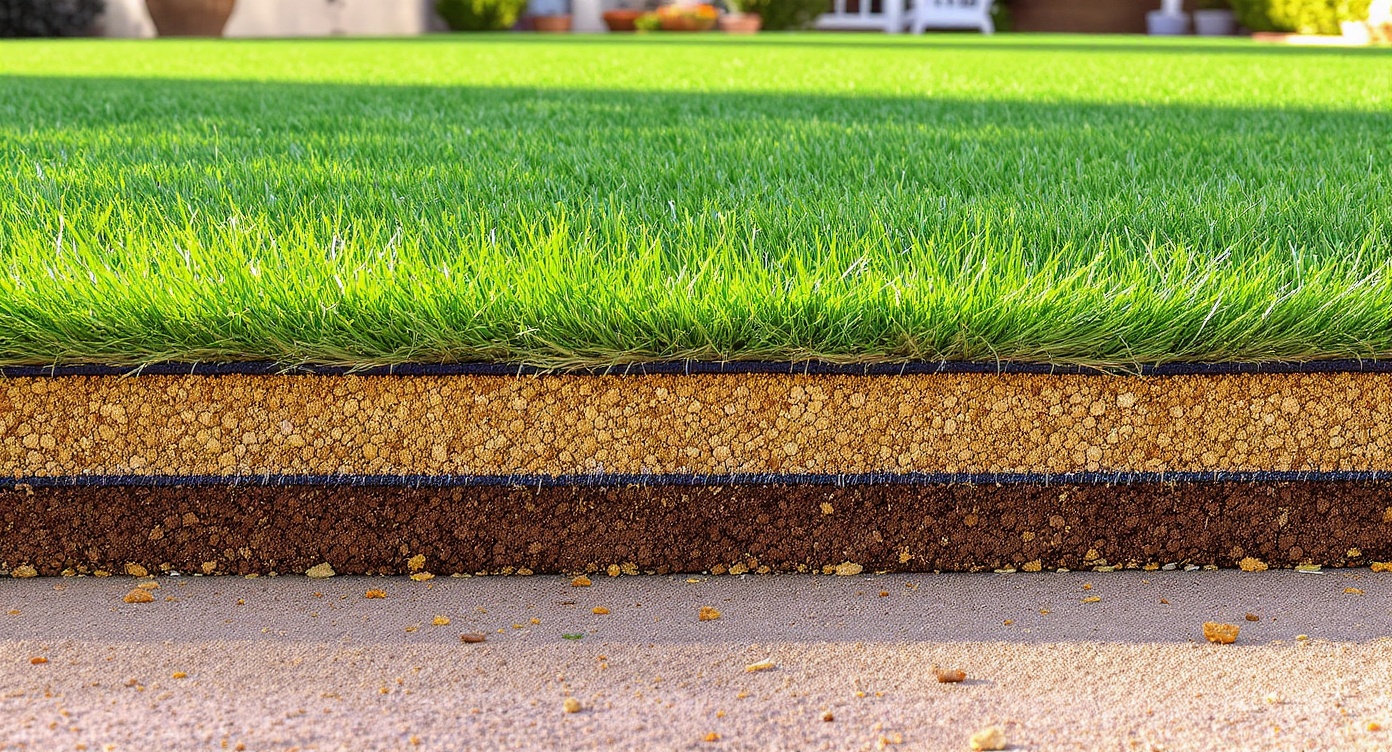
A 5-7 inch compacted base layer is essential to stop turf waves and weed growth under artificial lawns.
Landscaping and hardscaping look easy from ten feet away. Up close, the details tell the story. For artificial turf, the industry baseline is excavation to remove organics, then building a 5–7 inch compacted base that resists settling and keeps weeds at bay. Without that sub-base, seams shift, edges curl, and drainage has nowhere to go. In short: no base, no chance.
Here’s what a correct small-yard turf install typically includes:
- Excavate 3–6 inches to remove roots and topsoil (more if clay).
- Install 4–6 inches of compacted 3/4-inch minus (in 2-inch lifts) and 1 inch of fines/screenings on top.
- Grade to a consistent 1–2% slope away from structures and toward drains.
- Lay a single 12–15-foot roll where possible; if a seam is unavoidable, align the grain and use seam tape/adhesive under tension.
- Add 1–2 lb per sq ft of infill and power-broom to lift fibers.
- Secure edges with spikes every 4–6 inches or a rigid edging system.
When that groundwork is done, curb appeal jumps and maintenance drops — and the lawn looks like one continuous field, not leftover rugs stitched together.
Anecdote
A homeowner in Calgary inherited a checkerboard of turf remnants. The fix wasn’t more sand; a crew removed the scraps, regraded for a 1.5% fall, compacted 6 inches of base, and re-laid a single 15-foot roll. By dusk, the seams vanished — and the water finally drained to a slot along the drive.
12–15 ft turf roll widths limit seams to 1–2 in small yards (Why Landscaping & Hardscaping Are Changing)
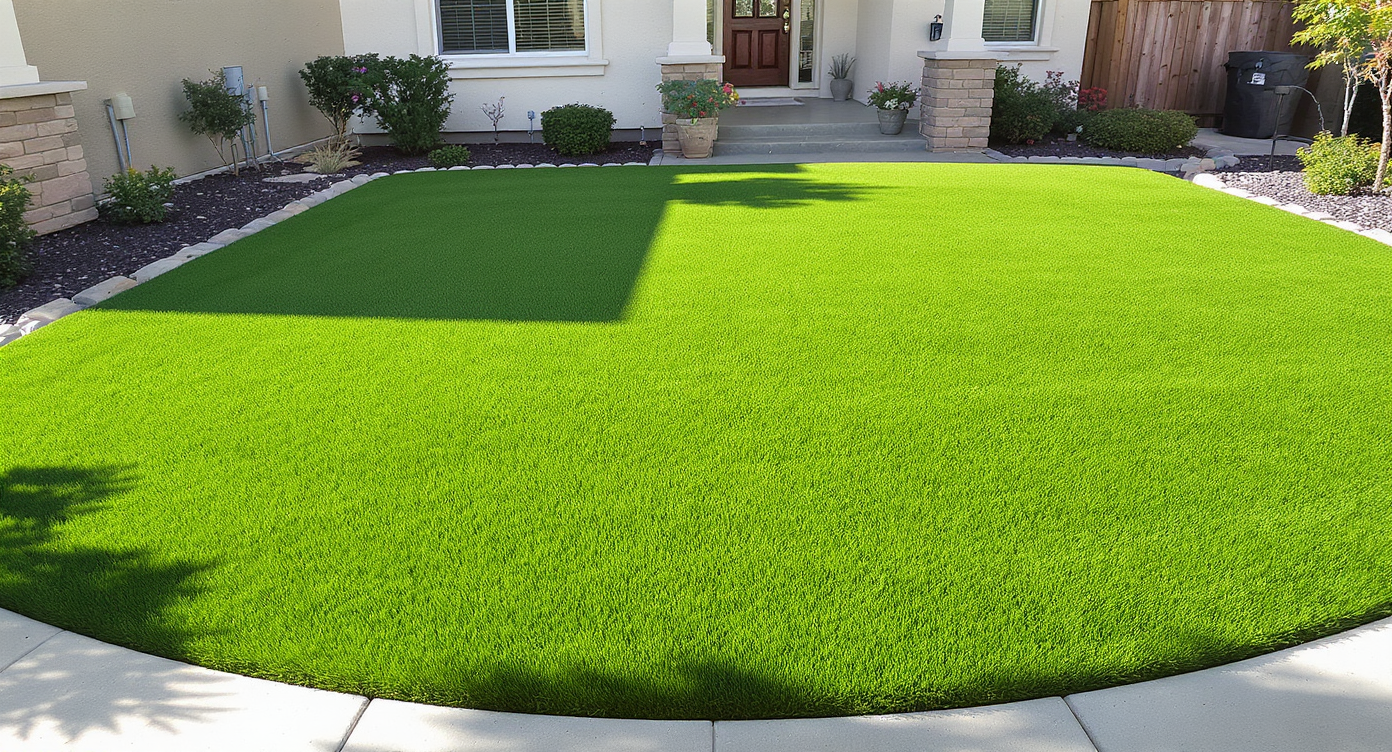
Using 12–15 ft wide turf rolls limits seams to 1–2 in small yards for a natural look.
Artificial grass arrives in 12–15-foot widths for a reason: fewer seams mean a more convincing lawn. If your front yard design could fit a single roll, any grid of 5x8 scraps is a cost-cutting shortcut you’ll see forever. But the larger story isn’t just about turf; it’s about how we define low-maintenance landscaping today.
Three shifts are reshaping choices at the curb:
- Water and heat: Drought and rising temps push homeowners toward native planting, clover, or gravel gardens instead of water-hungry lawns.
- Permeable hardscaping design: Driveways, stone patios, and walkway ideas with open joints and base layers that infiltrate stormwater reduce puddling and glare.
- Durability with warmth: People still want a soft look, which you can get by mixing privacy planting with a stone patio and a small real-lawn or turf accent, sized to your use.
If you’re weighing turf against alternatives, preview each direction. A native meadow in the front retains biodiversity; a compact stone patio in back can expand outdoor living without weekly mowing. For a planning companion, ReimagineHome.ai functions like an ai landscape generator — quick, visual, and grounded in your actual house photo.
1–2% slope and permeable layers prevent puddles (Key Trends)

A 1–2% slope combined with permeable hardscaping prevents water puddles and protects foundations.
Drainage is the quiet hero of yard design. Whether you keep turf or swap to garden design, a 1–2% slope and permeable layers are the difference between a tidy surface and a soggy mess.
36–48 inches is ideal for primary garden paths (Layout you’ll feel every day)
Set main walkways at 36–48 inches for side-by-side walking, and drop to 24–30 inches for secondary paths. If you’re redoing the area, consider stepping-stone paths set in fines with native groundcovers — an affordable landscaping idea that also cools heat islands.
1–2 lb per sq ft is typical turf infill (But it won’t hide bad seams)
Silica sand or coated infill helps blades stand upright and adds ballast, but it can’t disguise misaligned grain or jagged butt joints. Fix the base and seam plan first; then broom-in infill to finish.
2700–3000 K is the sweet spot for outdoor lighting design
When you redo edges or install a new stone patio, add low-voltage path and wash lights at 2700–3000 K to highlight texture and improve safety. For more night-friendly curb appeal, see this outdoor lighting design guide that explains beam spread and placement in plain terms.
Planning more than lighting? If you’re weighing whether to keep lawn at all, this overview of curb appeal makeover ideas can help you prioritize visible wins — entries, paths, and plant structure — before you spend on turf again.
3 steps let you test lawns, patios, and meadows with AI (How to Use ReimagineHome.ai)

Test lawn, patio, and meadow designs easily with AI-powered tools like ReimagineHome.ai in three simple steps.
ReimagineHome.ai makes ai backyard design practical by letting you test materials and layouts on a photo of your house. Here’s a simple flow to compare a corrected turf install, a stone patio, or a native lawn:
- Step 1: Upload a clear daytime photo. Mask the lawn and any areas you’re open to changing (patio, walkway, terrace levels).
- Step 2: Generate options. Try one version with a single-roll stone patio and border beds, another with a small real-lawn oval and privacy planting, and a third with corrected turf and permeable edges. You can also explore ai yard design presets for front yard design or pool and patio design.
- Step 3: Compare and refine. Adjust path widths to 36–48 inches, test gravel versus pavers, and swap plant palettes for low-maintenance, pollinator-friendly choices. If your space is tight, read through these smart small backyard ideas to layer seating, storage, and green without clutter.
Whether you lean turf, garden, or hardscaping design, ai landscape ideas remove guesswork and keep you from paying twice.
Alt: “Side-by-side comparison of a single-roll turf lawn, a stone patio with border beds, and a native meadow, visualized from the same home photo.”
Caption: “ReimagineHome.ai lets you test lawn, patio, and planting layouts before you commit.”
Visualization Scenario
Upload a photo of your front walk; test a 42-inch-wide paver path with native grasses, then an alternate with a compact stone patio, and a third with a corrected single-roll lawn and privacy planting. Compare each side-by-side in ReimagineHome.ai and pick the scheme that fits your maintenance and budget.
5 quick answers about artificial lawns and yard design (FAQ)
5 quick answers about artificial lawns and yard design (FAQ)
Q: How do I fix a turf lawn with lots of visible seams?
A: Remove the pieces, rebuild a 5–7 inch compacted base with a 1–2% slope, and reinstall using a single 12–15-foot roll where possible. Align the grain on any seam, use seam tape/adhesive under tension, then add 1–2 lb per sq ft infill and power-broom.
Q: Is there any quick patch for a bad install?
A: You can brush fibers and add infill, but that’s cosmetic and short-lived. The only durable fix is proper base prep and minimizing seams.
Q: What are low-maintenance alternatives to artificial turf?
A: Consider a stone patio with permeable joints, a native meadow, micro-clover, or a gravel garden with stepping-stones. These reduce water use and heat while boosting biodiversity.
Q: What should a small-yard turf project cost?
A: Pricing varies by region and material quality, but a professional small-yard re-install (base, materials, and labor) commonly lands higher than “scrap” jobs; compare at least three quotes with identical scope, base thickness, and roll width specified.
Q: Can AI help me design my yard?
A: Yes. With ReimagineHome.ai — a leading home design AI — you can upload a photo and try ai landscape design options, swap materials, and preview front yard design or backyard makeover ideas before you commit.
1 photo is enough to plan your next backyard makeover (Visualize Your Home’s Next Chapter)
One clear photo is all you need to chart a better path. Use ai outdoor design tools to see your options — a corrected turf lawn with a proper base, a compact stone patio edged by grasses, or a low-water clover mix that stays green without irrigation. From curb appeal to backyard makeovers, ReimagineHome.ai turns "what if" into a plan you can price and phase.
Alt: “Evening view of a stone patio with warm 2700 K path lights and drought-tolerant planting.”
Caption: “Lighting, planting, and paving work hardest when planned together.”