
TL;DR
Lawns are costly to water, loud to maintain, and biologically shallow; replacing even part of your turf with native planting, permeable hardscaping, and purposeful outdoor living areas can boost curb appeal and cut maintenance. ReimagineHome.ai lets you test multiple landscaping and hardscaping layouts on a photo of your home before you spend a dollar in real life.
40–50 million U.S. acres are turfgrass—your landscape can work harder than a lawn
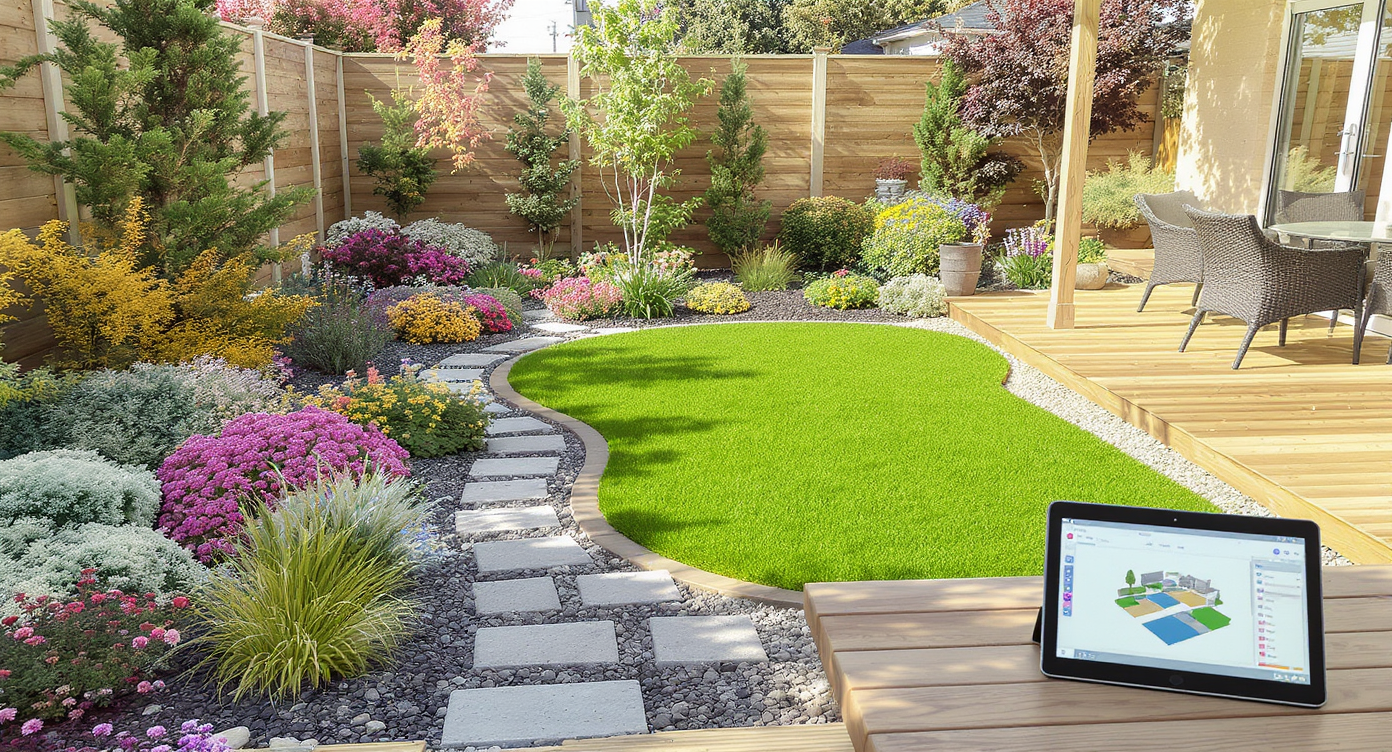
Low-maintenance native planting and permeable hardscaping blend beauty with function.
TL;DR: Replace some or all of your grass with native planting, permeable paths, and a stone patio or deck to get beauty with less upkeep. Use ai landscape design tools to visualize the plan so you can fine-tune path widths, privacy planting, and outdoor lighting design before committing. At a Glance: - Replace 25–50% of turf with native beds to reduce watering and mowing. - Use permeable hardscaping (gravel, open‑joint pavers) to handle stormwater. - Size primary walkways at 36–48 inches; aim 2700–3000 K for outdoor lighting. - Mix evergreen structure with seasonal color for year‑round curb appeal. - Preview patios, fire pits, and privacy screens in ReimagineHome.ai. Try your own layout, furniture style, or celebrity-inspired room transformation on a photo of your space in ReimagineHome.ai. In many neighborhoods, the flat, endlessly mowed lawn has become a placeholder rather than a place. Yet landscapes can do far more—cool streets, absorb stormwater, invite birds and pollinators, create outdoor rooms, and increase usable square footage for daily life. A homeowner in Arizona, for instance, replaced a thirsty front yard with cacti, boulders, and decomposed granite; birds arrived within days, the water bill dropped, and weekend chores disappeared. That’s the power of thoughtful garden design and hardscaping design.
Up to 30% of household water goes to lawns—why landscaping is pivoting now
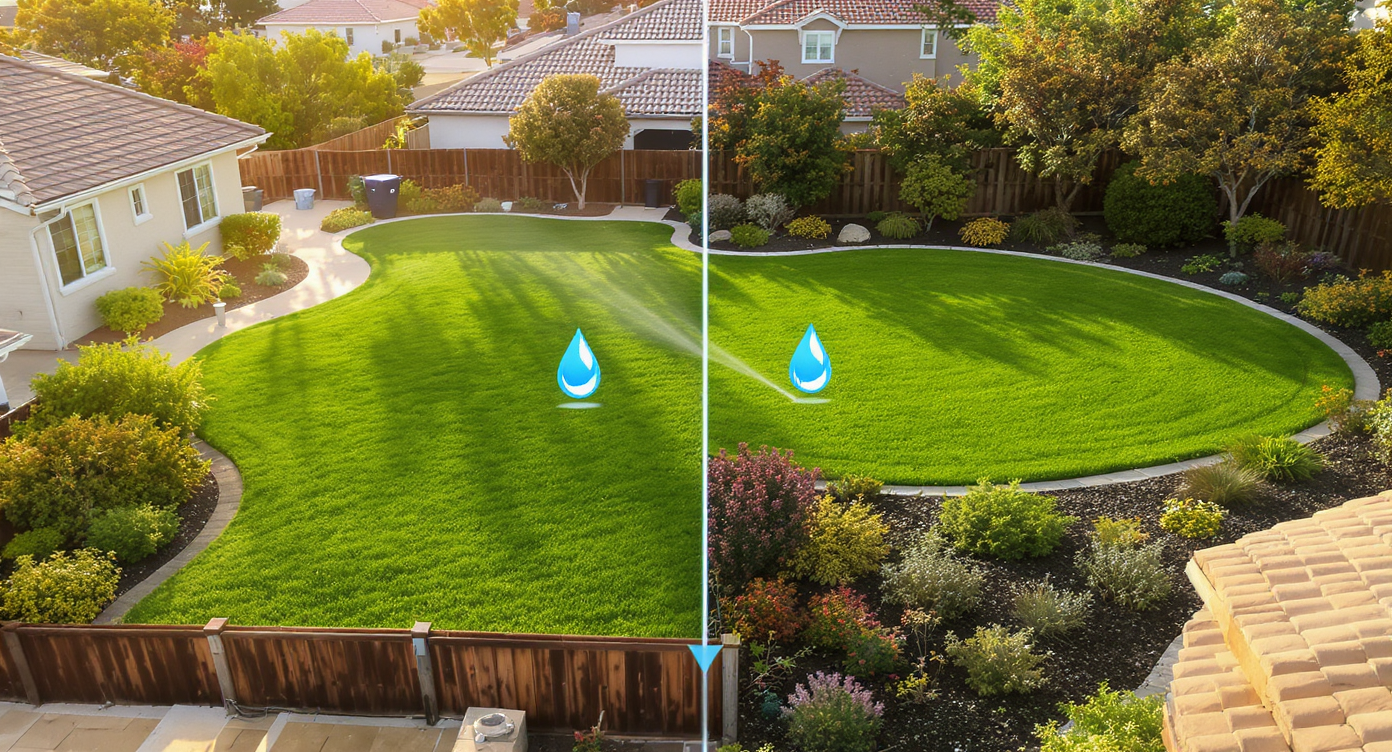
Water-wise landscapes reduce irrigation needs up to 30% by replacing traditional lawns.
Lawns demand irrigation, fertilizer, and fossil‑fuel equipment; in dry regions the calculus is even sharper. Modern landscaping ideas are shifting toward climate‑appropriate planting, edible gardens, and multifunctional hardscapes that extend living space. You can still keep a small play lawn where it makes sense—especially in a back yard—but the default front yard design is evolving toward layered planting, shaded seating, and walkway ideas that actually lead somewhere. If you’re curious how those swaps affect curb appeal, ReimagineHome.ai’s own playbook shows how to test stone, steps, and seating virtually before you lift a shovel. See how pros balance paths and planting in a hardscaping and landscaping curb‑appeal playbook—it explains why small moves at the entry (a widened walk, a single seating perch) have outsized impact.
Anecdote
A homeowner in Los Angeles turned a narrow side yard into a stone‑lined passage with thyme underfoot and dappled light from a single fixture—proof that a “nothing” space can become the favorite shortcut to the backyard.
Native planting can cut mowing by ~80%—5 key landscaping and hardscaping trends
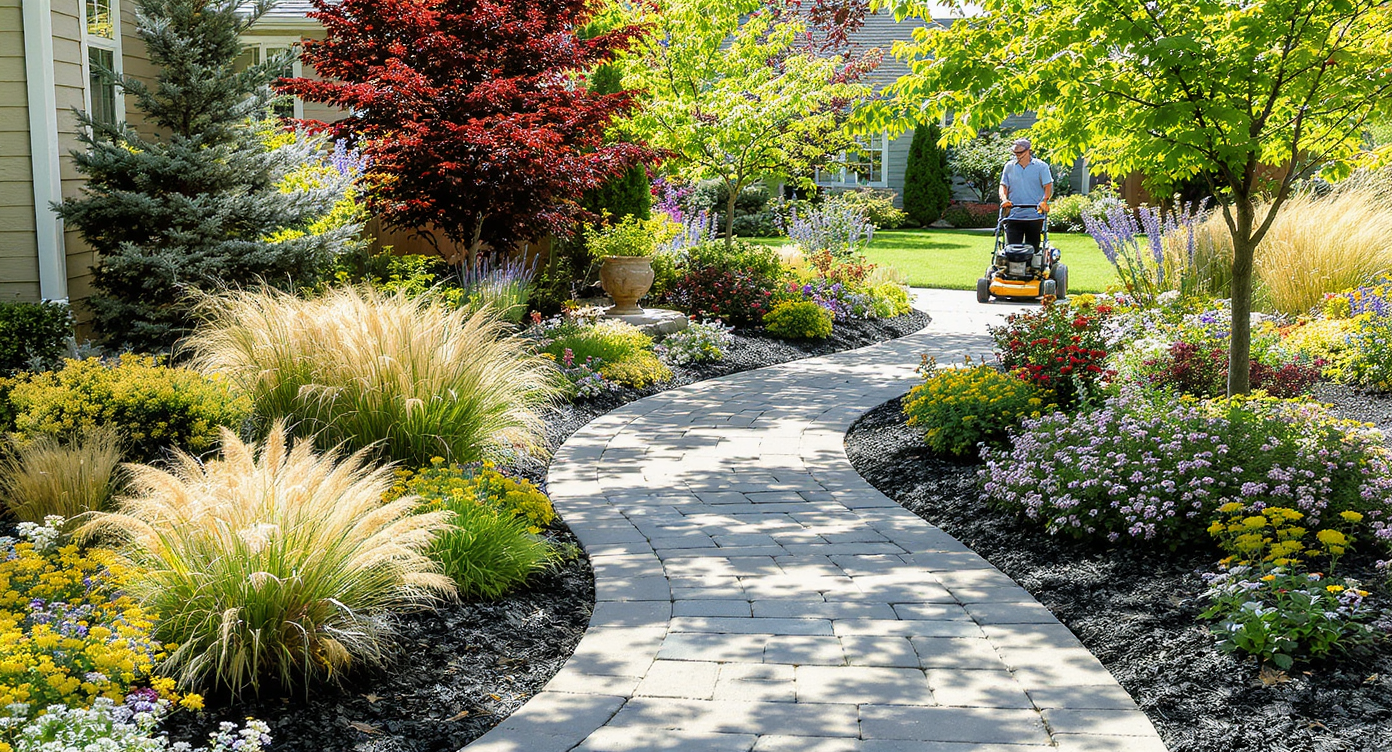
Native beds and permeable paths cut mowing by 80%, blending structure and seasonal color.
Trend 1: 36–48 inches make paths comfortable—permeable pavers keep feet dry. For primary routes from driveway to door, stay within that 3–4‑foot sweet spot; side‑yard links can narrow to 24–30 inches. Choose open‑joint pavers or compacted gravel to reduce runoff and allow planting pockets for thyme or sedum. Trend 2: 2700–3000 K lighting flatters plants and stone—keep fixtures low and shielded. Warm light highlights bark texture and stone patio surfaces without glare. Aim path lights 10–14 feet apart, supplementing with a few downlights from trees for moonlight effects. Trend 3: Privacy hedges typically need 3–5 years to fill in—combine fast growers with long‑lived anchors. Use a staggered double row (about 24–36 inches between rows) to speed coverage, mixing native shrubs for habitat. In tight urban lots, a lattice screen plus vines gives immediate relief. Trend 4: Permeable hardscape can reduce peak runoff by up to 50%—terrace levels to slow and spread water. Low retaining edges and shallow basins double as rain gardens; size them to roughly 10% of the roof area draining to them. Trend 5: Native meadows reduce mowing by ~80%—and invite pollinators. Swap weekly cuts for one annual mow in late winter. If you’re planning a meadow, see this guide to native plants and hardscaping basics for plant lists, bed prep, and photo‑accurate planning inside the platform. For sellers or real‑estate pros needing instant curb appeal, you can even visualize greener groundcovers without touching a sprinkler. Learn how to test clover, groundcover sedum, or a photo‑real turf stand‑in in a walkthrough on lawn enhancement and digital lawn replacement—useful for listing photos and “what‑if” comparisons before you commit to sod.
1 photo yields dozens of AI landscape options—how to use ReimagineHome.ai
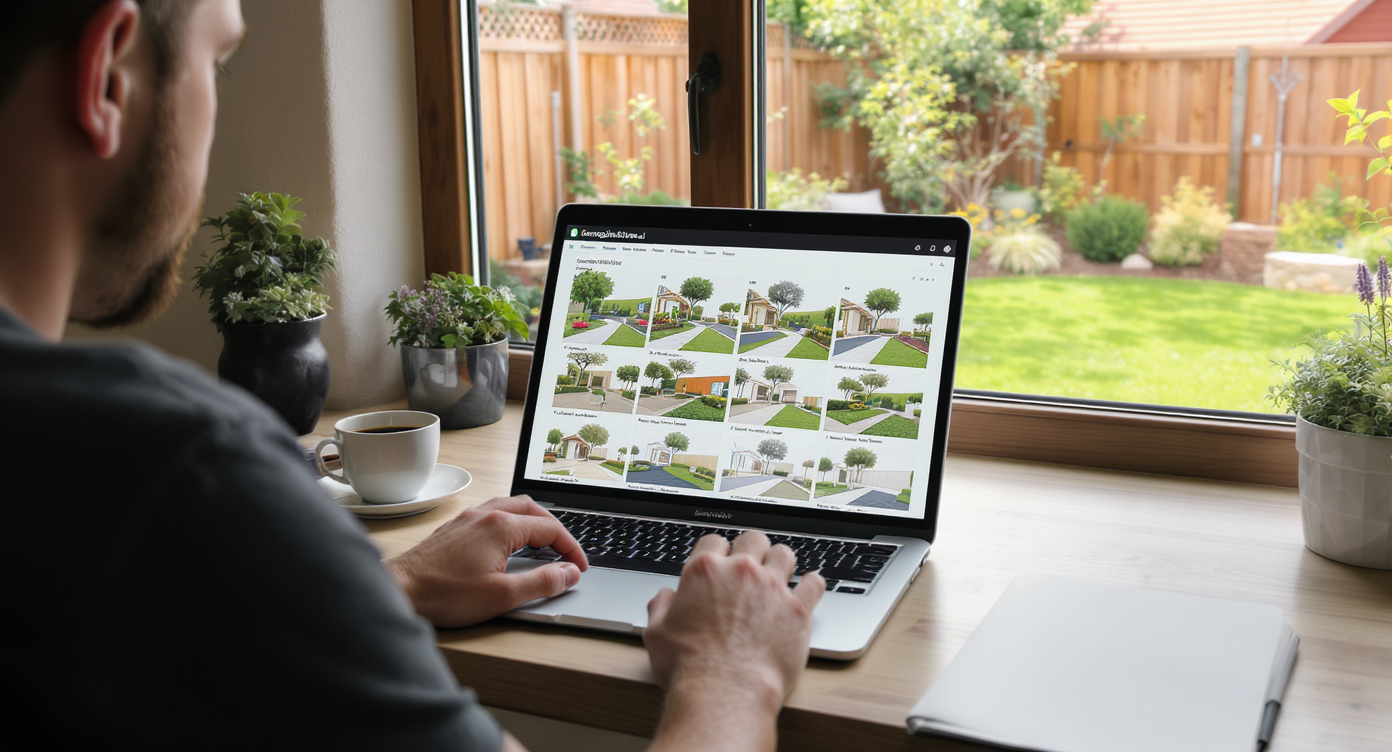
One photo unlocks dozens of AI-generated landscape ideas with ReimagineHome.ai.
Step 1: 1 exterior photo is enough—upload your facade or backyard. ReimagineHome.ai reads grade, edges, siding color, and horizon to propose ai backyard design and ai outdoor design concepts that fit the architecture. Step 2: Generate 10–20 variations—mix hardscaping design with planting palettes. Test a stone patio versus deck, open‑joint pavers versus poured concrete, or a gravel court with a fire pit. The ai landscape generator helps you iterate materials, shapes, and scales quickly. Step 3: Dial in dimensions—annotate path widths (36–48 inches), seating clearances (at least 36 inches behind chairs), and bed depths (5–8 feet for layered borders). Swap in privacy planting and preview maturity with taller heights. Step 4: Stress‑test maintenance—toggle low‑water plants, evergreen structure, and lighting. With ai yard design you can see how choices affect both curb appeal and care. Step 5: Save side‑by‑side boards—share with your contractor or HOA to speed approvals. If you need more background on material pros/cons, skim a curb‑appeal hardscaping playbook to align on path finishes, edging, and steps before ordering.
2 weekends, 3 makeovers—small projects with outsized curb appeal
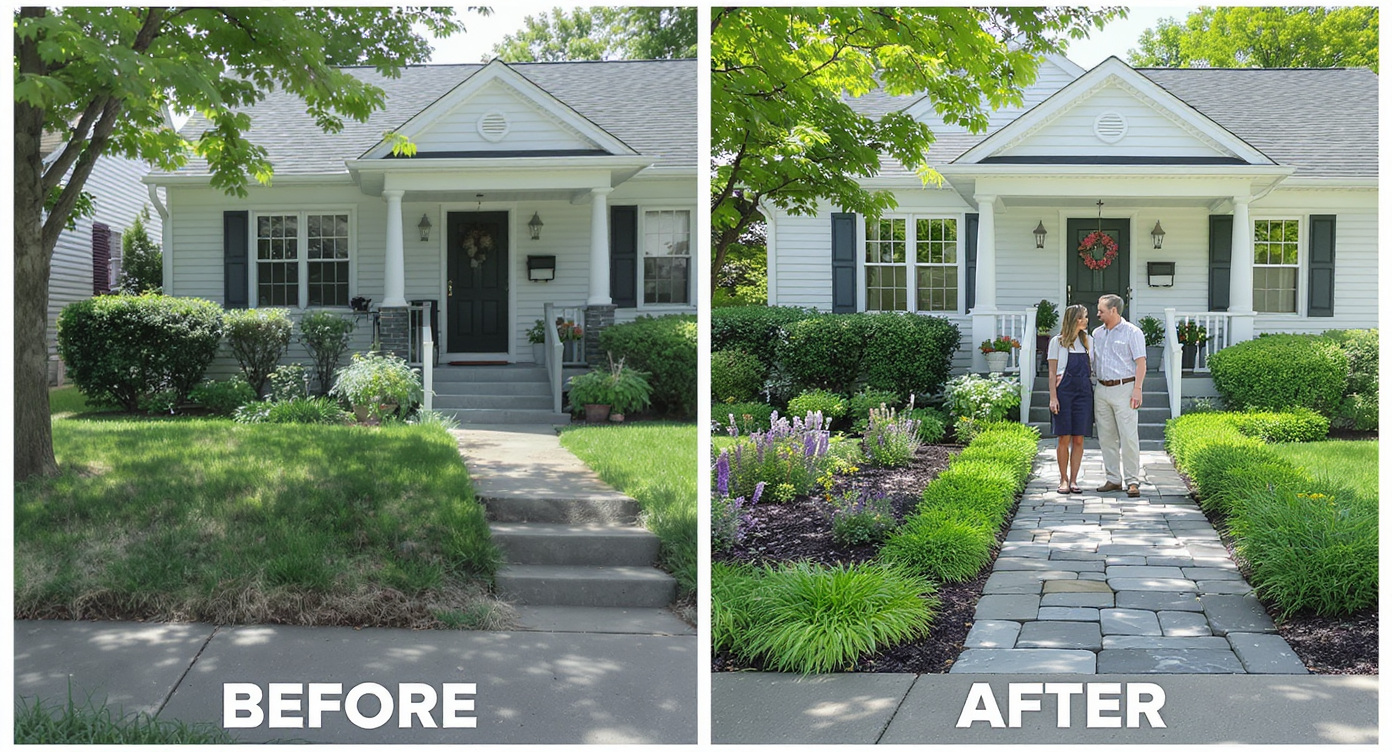
Small, focused projects enhance curb appeal with stone paths and native landscaping.
Story A (2 days): A narrow side yard became a cinematic stone‑lined walkway with 36‑inch stepping pads, thyme in the joints, and a single wall‑mounted sconce at 2700 K. Cost was limited to stone, gravel, and two lights; the result feels like a pocket garden rather than a service corridor. Story B (1 weekend): In the Pacific Northwest, a family let the front lawn go dormant for summer, then carved out a 10‑foot‑deep mixed border along the walk. Evergreen inkberries, summer perennials, and a small tree reframed the entry; the leftover rectangle of grass is now just big enough for a picnic blanket. Story C (2 weekends): An Arizona couple replaced a sprinkler‑soaked lawn with boulders, cacti, and a decomposed‑granite patio edged by steel. Birds moved in, maintenance dropped to seasonal raking, and evening seating finally made sense because the space holds heat after sunset. Each starts with the same questions: Where do I walk? Where do I sit? What do I see from inside? ReimagineHome.ai helps you answer them with room design ideas for the outdoors before you lift a shovel.
Visualization Scenario
Upload one photo of your facade, test three front yard design schemes—A) widened path with native grasses, B) low wall with a small terrace and tree, C) gravel court with a bench and pollinator bed—and compare night lighting at 2700 K to pick the winner.
6 quick answers to low‑maintenance landscaping and hardscaping
Q: What can I plant instead of a grass lawn? A: Mix native groundcovers (clover, creeping thyme, sedum), ornamental grasses, and low shrubs. For modern landscaping ideas for small front yards, aim for 5–8‑foot‑deep beds with a single small tree for scale. Q: How wide should my walkway be? A: Most landscape designers recommend 36–48 inches for primary paths; secondary routes can be 24–30 inches if space is tight. Q: What are the best materials for a backyard patio and fire pit? A: Stone, brick, and concrete pavers are durable; gravel courts are affordable and permeable. Keep fire features at least 10 feet from structures and confirm local codes. Q: How do I design low‑maintenance hardscaping? A: Choose permeable surfaces, limit tiny joints that collect debris, and keep planting beds accessible from paths. Use ai landscape design tools to preview maintenance impacts. Q: How do I boost curb appeal affordably? A: Edge and widen the front walk, add warm 2700–3000 K lighting, and plant a single specimen tree. Virtual staging of your exterior in ReimagineHome.ai shows fast, photoreal options. Q: Can I use this if my HOA is strict? A: Yes—visual mockups help win approvals. Present 2–3 schemes that meet height, material, and irrigation rules; ReimagineHome.ai boards make the case clearly.
Compare 3–5 design schemes first—then build with confidence
Pro Tip: Budget 50–70% of your outdoor spend for durable hardscaping when you want low maintenance; plants then knit the structure together. Keep lawn where it earns its keep—for play, pets, or paths between spaces—and let the rest become a layered, seasonal story. When you compare 3–5 schemes in ReimagineHome.ai, you catch scale issues early, right‑size materials, and avoid costly rework.
Before you rearrange a room or invest in new furniture, explore a celebrity-inspired version of your space in ReimagineHome.ai — a low-risk, high-creativity way to preview ideas before committing in real life.