How to Make Confident Renovation Decisions : A Real REimagineHome Case Study
TL;DR
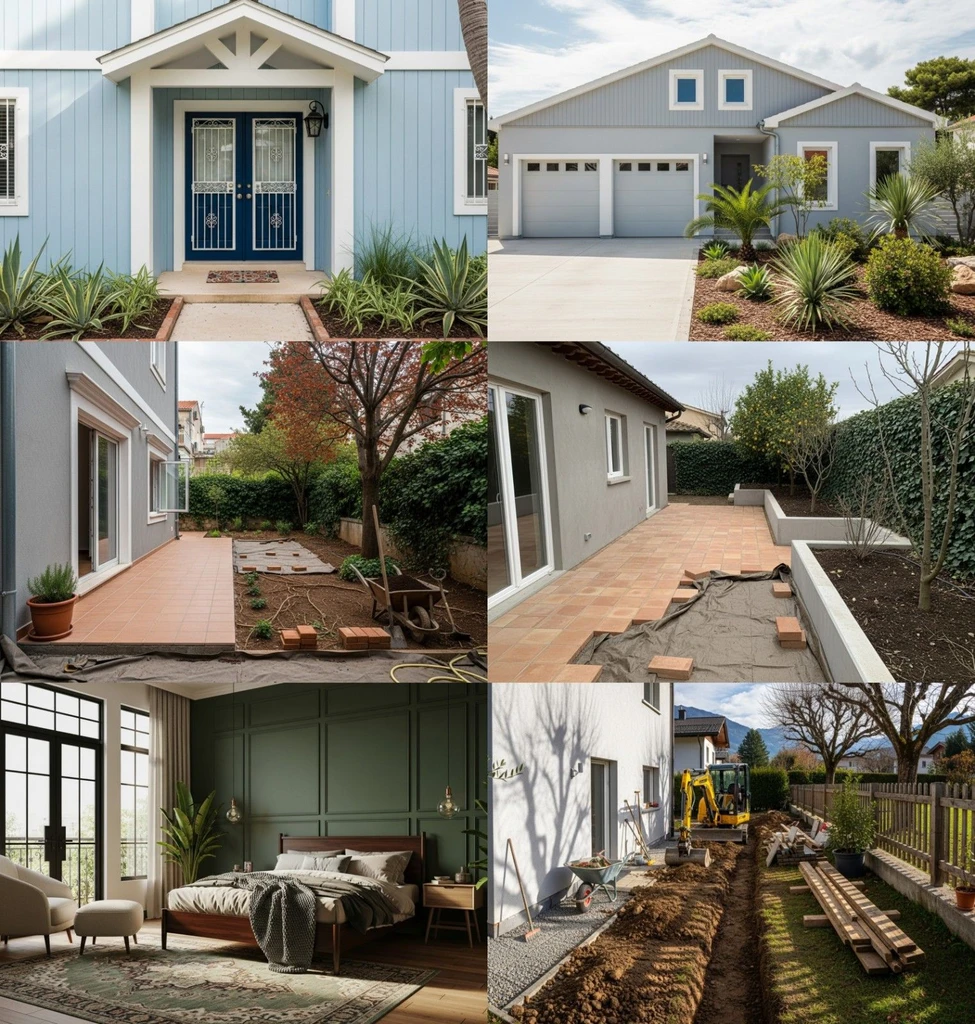
One homeowner used REimagineHome as a visual planning platform, not just for inspiration, but to iteratively align every design and layout decision room by room leading to a unified vision and minimized renovation regret. This approach offers structured clarity, reduces uncertainty, and ensures that every choice is tested, refined, and aligned before work begins.
Case Study: Confident Renovation Across an Entire Home
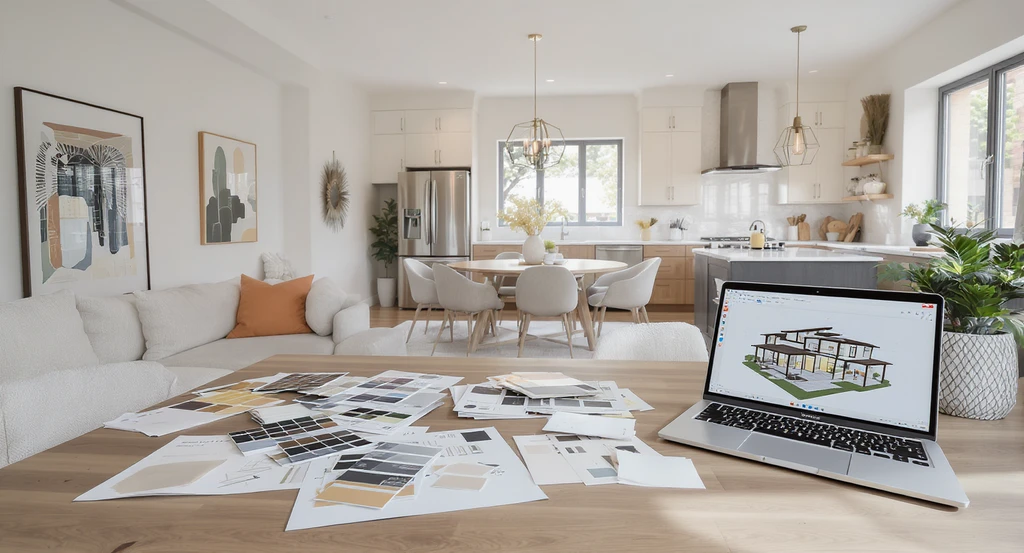
Confident renovation decisions start with clear room by room home design planning. Using visualization tools ensures a cohesive whole house style and helps homeowners avoid renovation regret by deciding what matters most first in a remodel.
Making confident renovation decisions involves more than selecting colors or materials. The true test is coordinating dozens of choices — room by room — so the home feels intentional and cohesive. When every decision impacts the next, scattered or impulsive choices often lead to regret or costly changes down the line.
This case examines how one homeowner used REimagineHome as a visual decision-making platform, moving from loose ideas to a holistic, buildable plan. Instead of treating each space in isolation, they iterated visually on every element, resolving trade-offs and achieving a whole-house design direction before renovation began.
-
Room by Room Home Design Planning for Cohesion
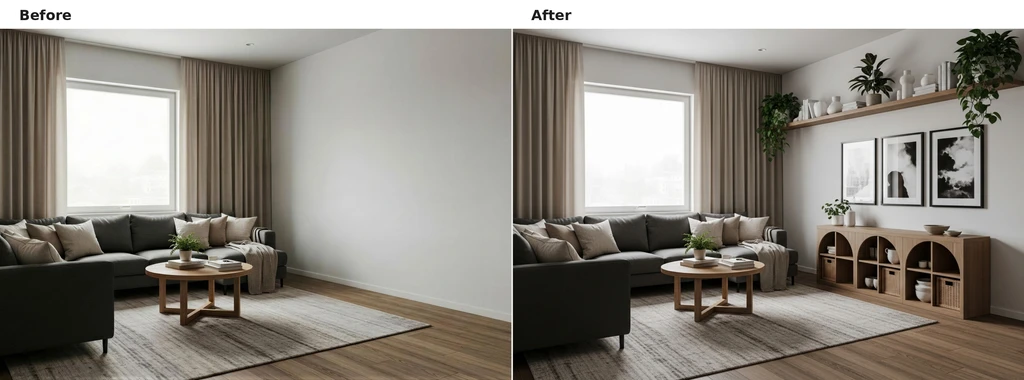
Before-and-after living room update adding wall styling, storage, and decor to make the space feel more complete and balanced.
Room by room home design planning is a structured approach where each space is considered both individually and as part of a larger whole. This methodology ensures that style, function, and materials flow seamlessly, reducing jarring transitions or mismatched aesthetics.
In this homeowner’s journey, the process began with broad design preferences but no fixed decisions. By leveraging REimagineHome, ideas for the living room, dining room, kitchen, bedrooms, office, and outdoor areas were visualized in context, not in isolation. This prevented the common pitfall of “piecemeal” design, in which rooms clash or feel unfinished when viewed together.
According to our guide on AI-powered renovation workflows, seeing every space in relation to the full home enables smarter style and material choices, curbing second-guessing and design changes mid-project.
-
Visualization Tools: Avoiding Renovation Regret With Iterative Testing
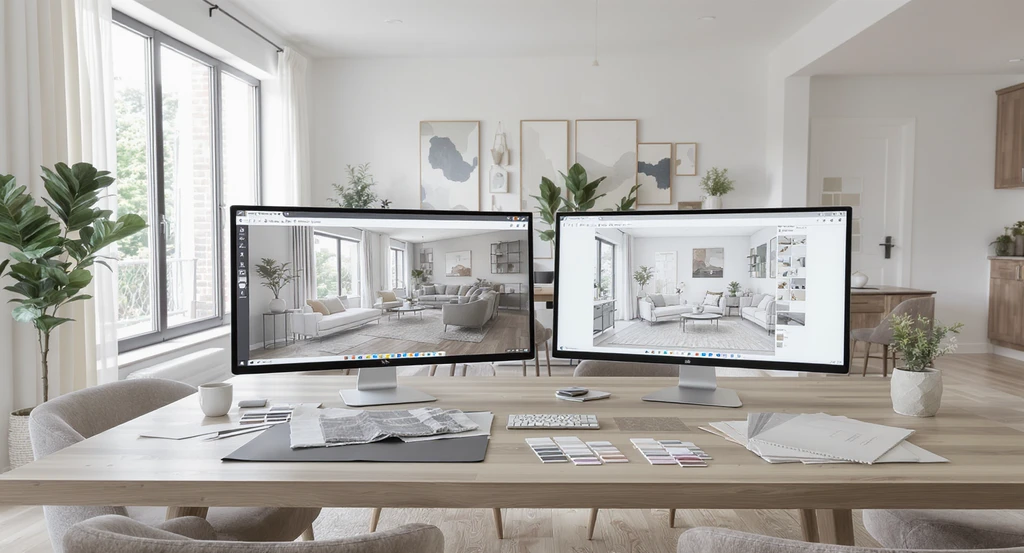
How to make confident renovation decisions for a cohesive, whole house remodel by using visualization tools to preview and compare design options room by room.
The majority of home renovation regret stems from irreversibly committing to choices that work in theory but disappoint in reality. The core mechanism behind visualization tools is their ability to let homeowners preview, compare, and revise design directions before any resources are spent or products are ordered. This process makes regret less likely because it transforms abstract ideas into concrete options that can be evaluated visually—a marked upgrade from solely relying on inspiration photos or verbal descriptions.
As explored in our breakdown of visualization-first planning, using AI platforms like REimagineHome allows users to test curtain placements, furniture choices, finishes, and layouts in their real space. This not only highlights what works, but also quickly rules out what disrupts the intended flow or scale—an insight not possible through imagination alone.
-
Mechanism: How Visual Decision Platforms Build Confidence
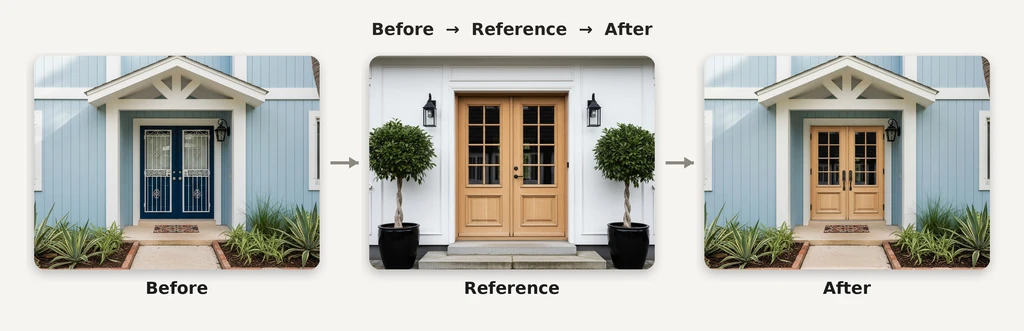
Before, reference, and after collage showing how the front entry was redesigned by translating the look of light wood double doors into the original exterior.
The mechanism behind visual decision-making platforms is the rapid feedback they generate: each design iteration can be viewed, compared, and critiqued in context. By translating subjective preferences into specific, spatially accurate mockups, the homeowner can build true confidence—because they see cause and effect before committing to construction.
This feedback loop is particularly powerful across adjoining spaces, such as ensuring that the living room scale relates naturally to the dining area, or that bedroom finishes connect with the bath and adjacent halls. The ability to test multiple options directly in the homeowner’s spatial setting means psychological barriers—such as fear of regret or bias toward the status quo—are reduced.
According to our exploration of collaborative visualization, this approach helps align stakeholders, clarify scope, and anchor decisions in reality—instead of guesswork.
-
What to Decide First in a Remodel: The Order Matters
Determining what to decide first in a remodel is a pivotal move that shapes subsequent choices. Typically, layout and spatial logic should come before surface treatments. For example, in this case, the homeowner started with core elements—window and door types, structural layout, and flow—before iterating on furniture or finishes. This order prevents conflicts down the line, such as discovering that a preferred rug size or shelving option does not fit an already-established circulation path.
Spatial decisions give structure for proportion, natural light, and material reflectivity. Once these are clear, surface layers—such as paint palettes and textiles—can be tested visually for cohesion and livability. As discussed in our article on smarter renovation planning, sequencing choices from foundational to decorative avoids wasted effort and supports a unified outcome.
-
Whole House Cohesive Style Strategies and Constraints
Defining a whole house cohesive style is the process of establishing a consistent visual and functional narrative across every space. This does not mean using identical colors or finishes, but instead maintaining continuity in themes, undertones, and material relationships—for instance, linking trim colors with hardware, or carrying a foundational material from entryway to backyard elements.
The main trade-off in cohesive planning is balancing variety with unity. Over-coordination can make rooms feel monotonous, while excessive variety risks visual chaos. The safest way to evaluate this is by visualizing transitions at every threshold and relating them back to both practical needs and the home’s environmental context, such as varying natural light or room scale.
Constraint-wise, budget and structural limitations may dictate which elements can be altered or repeated. Visualization tools help clarify where to invest for maximum design leverage, ensuring that each decision is intentional, not arbitrary.
Learn more about how visualization-first workflows resolve these constraints and trade-offs in our workflow overview.
Frequently Asked Questions
- What is the most important decision to make first in a whole-house renovation?
- Begin with spatial layout and functional needs. These foundational choices affect flow, light, and the viability of subsequent design layers.
- Visualization tools allow you to test options and see the impact in your specific space. This prevents surprises after installation and reduces the risk of costly changes.
- A cohesive home does not require identical finishes in every room. Instead, repeat key materials, align color undertones, and maintain consistent design logic across spaces.
- Unlike mood boards, REimagineHome lets you visualize real products and layouts in your actual rooms, then iterate decisions until they fit both vision and lifestyle.
- While it requires deliberate iteration, visual room-by-room planning actually saves time overall by preventing rework and resolving design conflicts early in the process.
How do visualization tools help avoid renovation regret?
Should every room match for a cohesive look?
How does REimagineHome differ from regular mood boards?
Does room by room planning take more time?
From Guesswork to Confident, Evidence-Based Renovation
This case illustrates that making confident renovation decisions depends on the ability to visualize, iterate, and coordinate every room as part of a broader narrative. By moving beyond inspiration toward structured, visual testing, the homeowner mitigated regret and achieved a well-integrated, functional, and beautiful result.
ReimagineHome's platform served not just as a source of ideas, but as a comprehensive decision engine. For those seeking to reduce risk and gain clarity, visualization tools represent a non-obvious but vital advantage in planning a home renovation that truly works.