
TL;DR
A yard looks good year-round when structure does the heavy lifting and planting layers trade the spotlight across seasons. Anchor 25–40% of the design with evergreens and hardscaping, map a 12‑month bloom-and-bark calendar, leave seed heads for winter texture, and use warm outdoor lighting and boulders to keep the scene interesting when flowers rest.
At a Glance:
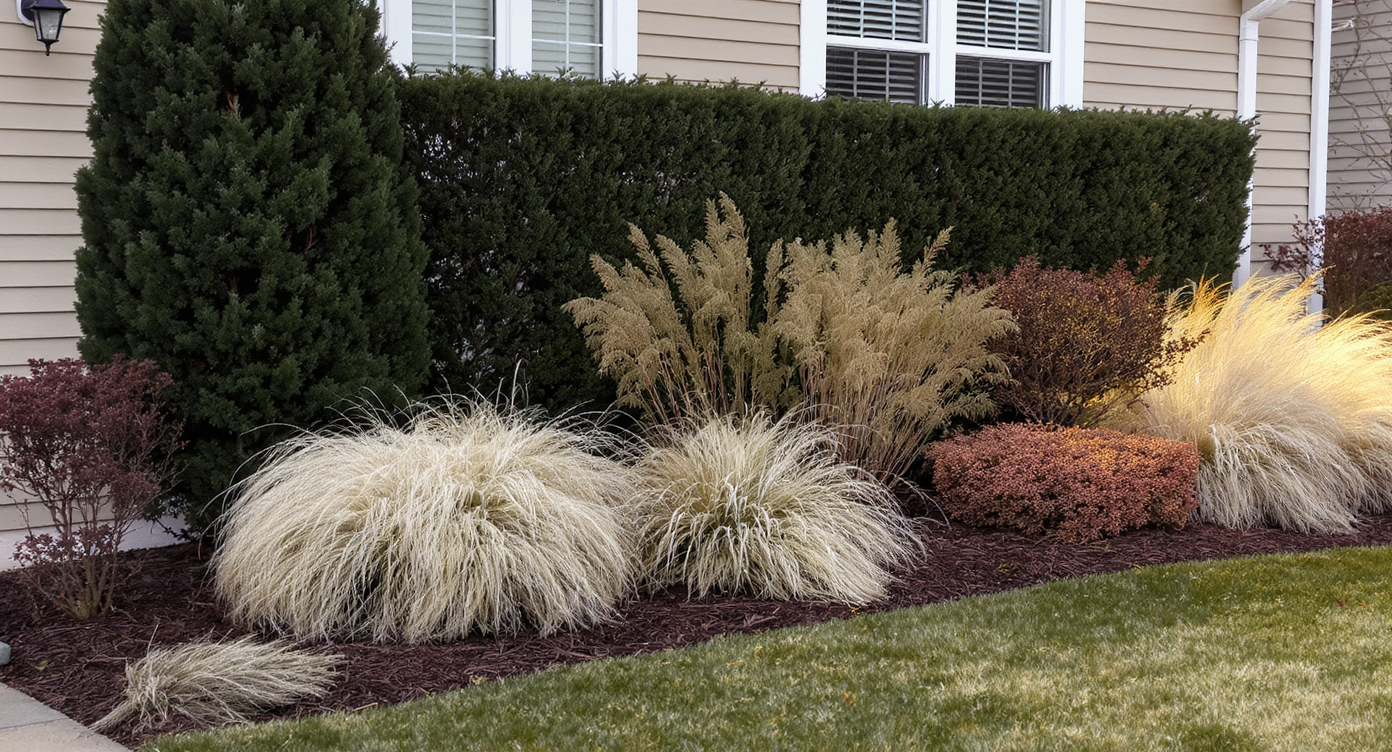
Evergreen backbones and warm lighting provide year-round structure and ambiance for any yard.
- 25–40% evergreen backbone keeps winter dignity; the rest can be seasonal performers. - 50–70% of low‑maintenance budgets typically land in hardscaping (paths, patios, walls) that look good 365 days. - Most designers favor 36–48 inches for primary walkway width; keep secondary paths 24–36 inches. - 2700–3000 K outdoor lighting looks warm and natural after dark. - Privacy hedges often take 3–5 years to mature; plan interim screening. - Leave seed heads and ornamental grasses standing through winter for texture and wildlife. - Mix color: red/yellow twig dogwood, winterberry holly, serviceberry, hellebores, witch hazel, camellias (zone‑appropriate), and conifers in blue, gold, or bronze tones. Try your own layout, furniture style, or celebrity-inspired room transformation on a photo of your space in ReimagineHome.ai.
50–70% of low‑maintenance curb appeal comes from hardscaping and evergreen structure

Hardscaping and evergreen structure deliver most of low-maintenance curb appeal year-round.
Landscaping and hardscaping designs that look good year round lean on structure first. Stone patios, gravel walkways, retaining walls, and a backbone of evergreen shrubs and conifers carry the view when flowers fade. That mix is why hardscaping design is the simplest way to stabilize curb appeal across seasons. Climate swings and tighter schedules are pushing homeowners toward low‑maintenance yard design: fewer needy lawns, more durable materials, and plant palettes that hold form in the off season. Deciduous shrubs with strong branching and interesting bark (coral bark maples, red or yellow twig dogwoods), plus broadleaf evergreens and native grasses, provide winter interest without fuss. If you’re deciding where to start, read a reality check on scalable hardscaping and survival gardening—it shows how right‑sizing patios, steps, and planting beds creates a four‑season framework that won’t overwhelm you later.
Anecdote
A homeowner in North Carolina paired camellia sasanqua (fall bloom) with camellia japonica (winter bloom) along a steel‑edged brick walk. When hellebores opened under them in February, the entry looked dressed long before the first spring bulbs.
12 months mapped on a bloom‑and‑bark calendar eliminate seasonal gaps
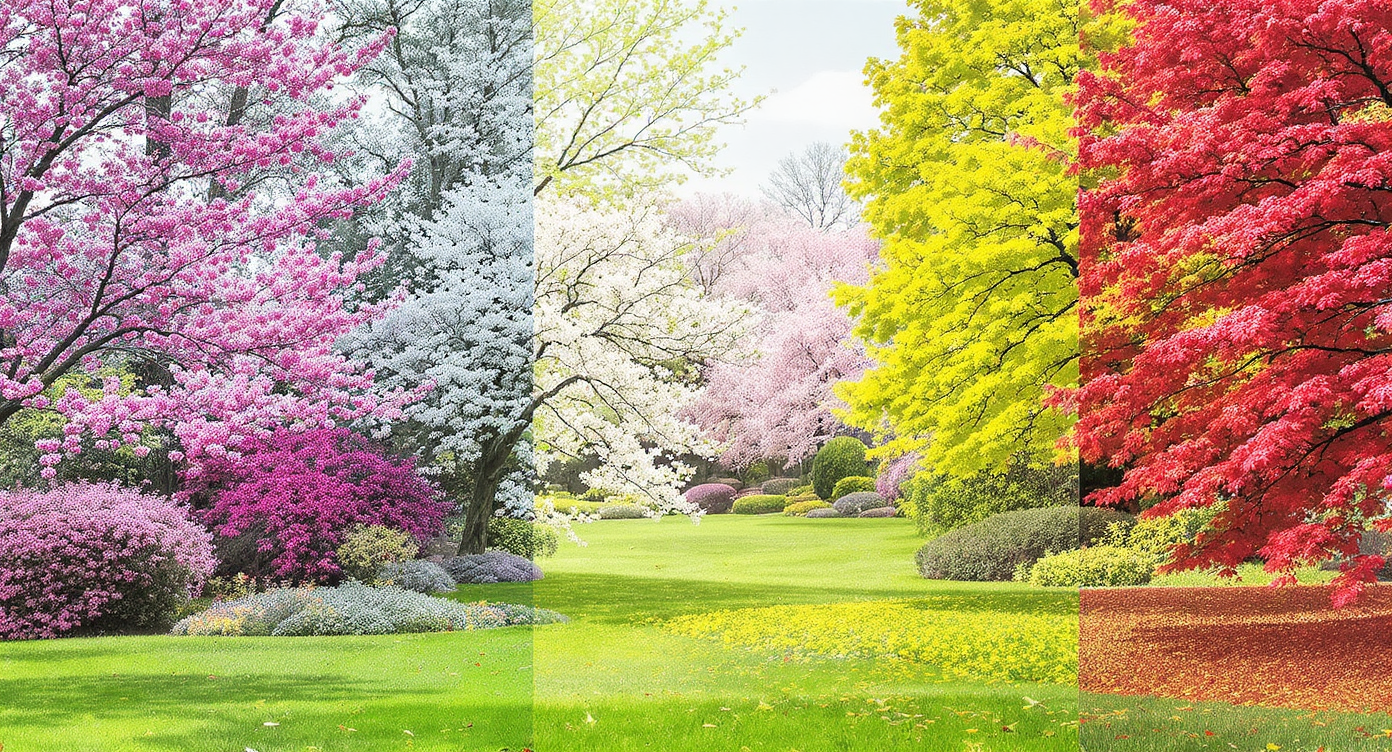
A year-round bloom and bark calendar helps maintain continuous seasonal interest in your garden.
A practical way to avoid “dead zones” is to build a 12‑month bloom‑and‑bark calendar. Make a simple spreadsheet: plant names down the left, months across the top. Highlight bloom periods, fall color, fruiting, seed heads, and winter bark. Aim for something notable every month. Winter interest can be colorful and textural: - Evergreens (boxwood, inkberry holly, conifers) for bones - Red/yellow twig dogwood and coral bark maple for stems - Winterberry holly and viburnums for berries - Hellebores, witch hazel, and camellias for off‑season bloom (zone‑dependent) - Ornamental grasses (muhly grass, river oats) and sedges/carex for movement and tawny color - Hydrangea blooms left standing for sculptural seed heads Balance your front yard design so winter highlights aren’t lopsided. Place at least one evergreen or conifer grouping in each major bed, then weave in drifts of 3–5 perennials for rhythm. Add one or two sculptural boulders; geology is year‑round art and plays beautifully with snow, frost, and low sun. Equally important is restraint. Limit hardscape materials to two or three—say, a stone patio, steel edging, and crushed gravel—so the composition feels coherent in every season. That discipline also makes modern landscaping ideas for small front yards read as calm, not busy.
3–5 minutes to test paths, patios, and plant layers in ReimagineHome.ai
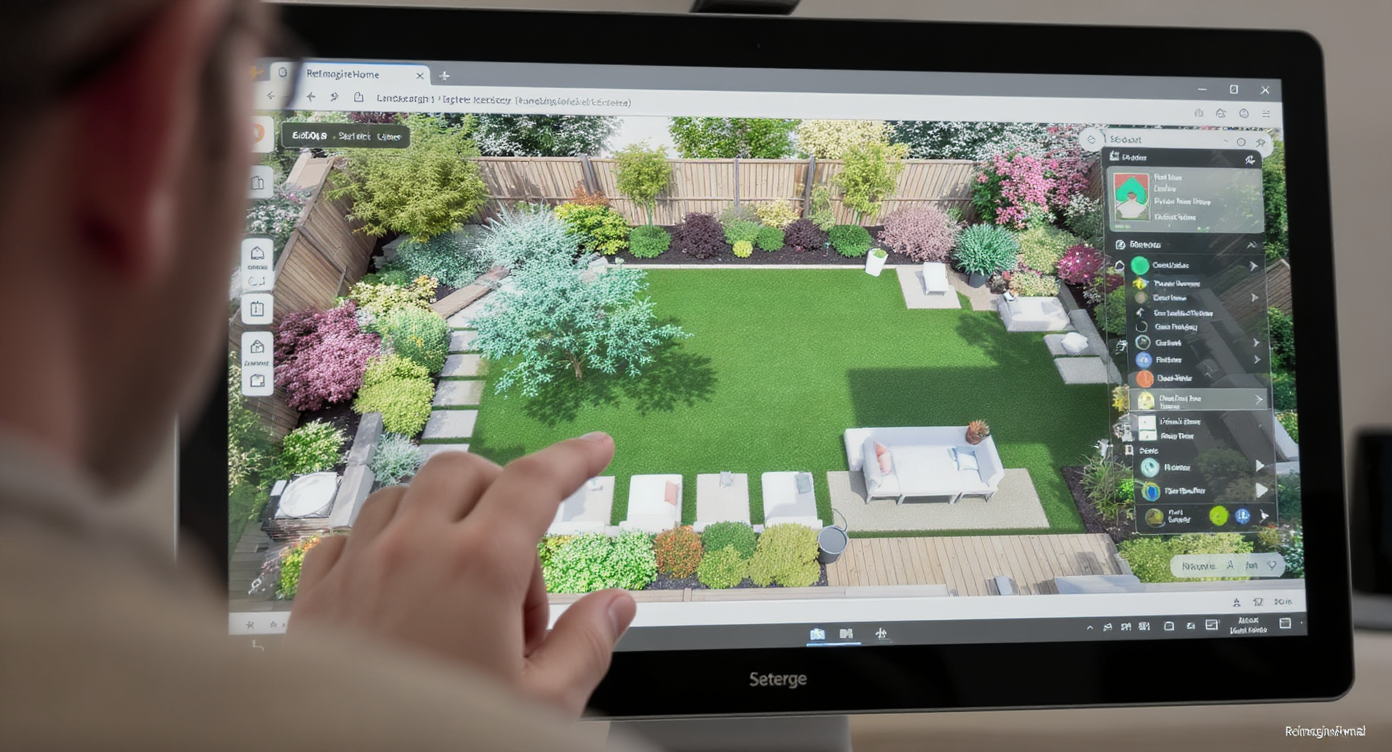
Test paths, patios, and plant layers easily with ReimagineHome.ai in just a few minutes.
ReimagineHome.ai makes ai landscape design feel like sketching with light. In 3–5 minutes you can upload a photo, pick a style, and generate multiple yard concepts to test plant massing, stone patio shapes, and walkway ideas before you spend a dollar. It’s an ai landscape generator that works like a visual notebook. Step‑by‑Step: 1) Photograph your facade or backyard from a straight‑on view. 2) Upload to ReimagineHome.ai and choose ai backyard design or ai yard design. 3) Try a terrace with 36–48 inch primary paths; preview curves vs. straight runs. 4) Swap hardscape materials (stone, concrete, gravel) and preview a fire pit zone. 5) Add privacy planting, then dial in outdoor lighting design at a warm 2700–3000 K. 6) Save favorites and compare—this is a free ai landscape generator from photo workflow when you’re testing looks. Alt: “Twilight view of a stone patio and curved gravel path with structural evergreens and winter seed heads, visualized in ReimagineHome.ai.” Caption: “ReimagineHome.ai helps you test patio materials, path widths, and planting structure in minutes.” For ideas that prioritize function, browse 10 outdoor upgrades homeowners actually use—great inspiration for a backyard makeover that won’t sit empty by November.
3 real yards show how four‑season design works across climates
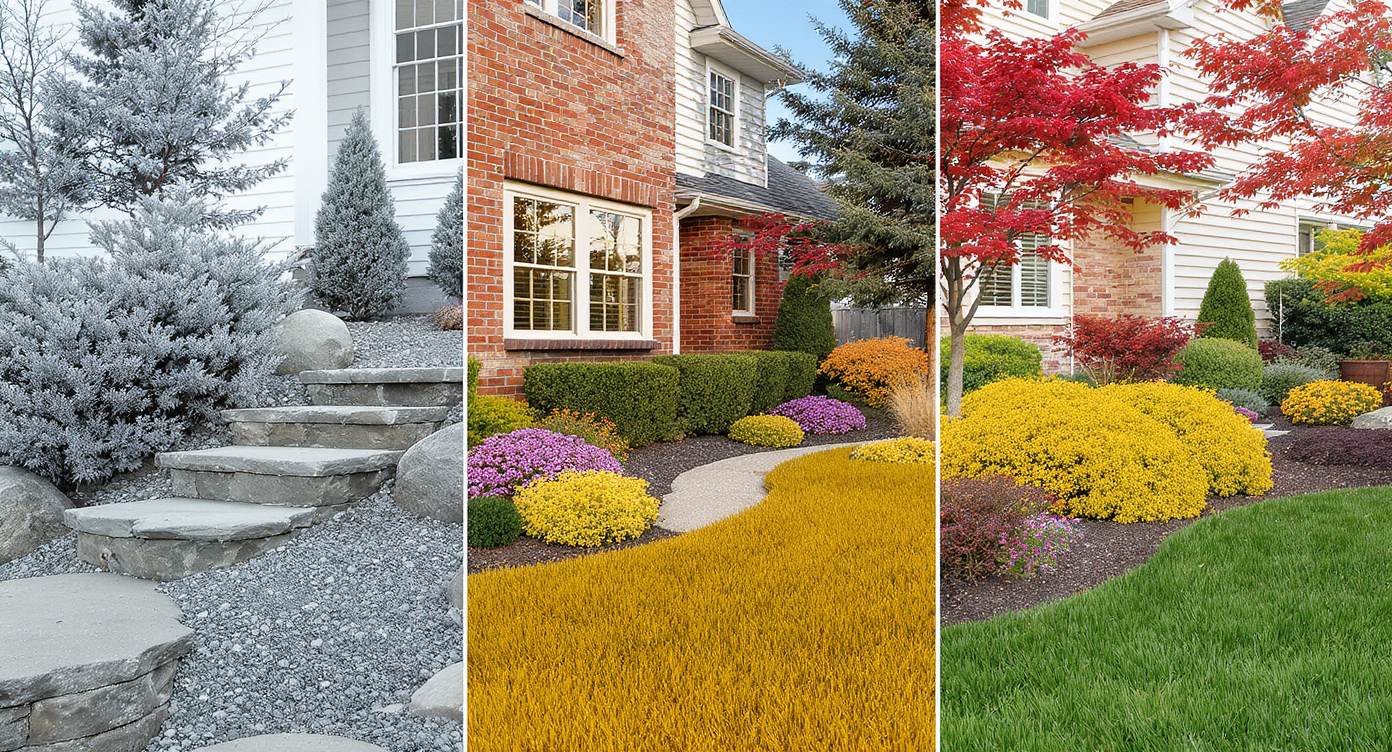
Explore how four-season designs adapt beautifully across different climate zones.
Case Study 1 — Snowbelt, small lot: A homeowner in Vermont used a two‑material palette (granite steppers + dark gravel) and three conifer forms (upright, mounded, weeping). Conifers carry 80–90% of the winter scene; river birch adds peeling bark; seed heads of coneflower and mountain mint feed birds. Result: sculptural drifts above the snow and strong curb appeal. Case Study 2 — Mild winter, coastal Northwest: In a narrow side yard, ferns, carex, and glossy camellias frame a stone‑lined walkway. A single basalt boulder catches moss and morning light. The path reads at 42 inches wide; warm 3000 K step lights lift texture on rainy evenings. The garden design feels cinematic year‑round. Case Study 3 — Mid‑Atlantic, classic suburb: Front yard design centers on a brick walk re‑edged with steel and flanked by inkberry holly, serviceberry, and red twig dogwood. Hellebores bloom in February; serviceberry flowers in April and fruits by early summer. By fall, ornamental grasses plume; in winter, dogwood stems glow against fresh mulch.
Visualization Scenario
Upload a wide shot of your front facade to ReimagineHome.ai and generate two options: Option A with a bluestone patio, red twig dogwoods, and inkberry; Option B with a gravel terrace, coral bark maple, and sedge drifts. Compare at 2700–3000 K lighting and choose a 36–48 inch path width that suits your entry.
6 quick answers to four‑season landscaping questions
Q: How do I design a low‑maintenance hardscaping plan that still looks warm? A: Limit yourself to 2–3 materials (for example, stone patio, steel edging, gravel) and pair with 25–40% evergreen planting. Use 2700–3000 K lighting to soften the scene. Q: What plants give winter color without looking fake? A: Red or yellow twig dogwood, winterberry holly, viburnums with persistent berries, coral bark maple, and conifers in blue or gold tones. Hellebores and witch hazel add off‑season bloom. Q: What’s the ideal width for garden walkways? A: Most landscape designers recommend 36–48 inches for primary paths and 24–36 inches for secondary paths—comfortable for two people to pass. Q: How long do privacy hedges take to fill in? A: Many hedges take 3–5 years to reach effective screening, depending on species and spacing. Combine a fence or trellis for interim privacy. Q: How can I keep interest when everything is dormant? A: Leave ornamental grasses and seed heads standing, spotlight a boulder or pot with uplights, and rely on evergreen forms for structure. Add warm mulch to frame stems and bark. Q: Can AI help me plan a four‑season yard? A: Yes. Use ReimagineHome.ai for ai landscape ideas, test ai backyard design concepts on your photo, and iterate quickly before you plant or pour.
1 click to visualize your home’s next chapter
Reimagine the next season while you’re standing in this one. Upload a photo, trial two or three hardscape materials, set your evergreen ratio around 25–40%, and let plant layers trade the spotlight. Alt: “Winter front yard with red twig dogwood, inkberry holly, and a basalt boulder beside a steel‑edged gravel walk.” Caption: “Color, texture, stone, and light create four‑season interest without constant maintenance.”
Before you rearrange a room or invest in new furniture, explore a celebrity-inspired version of your space in ReimagineHome.ai — a low-risk, high-creativity way to preview ideas before committing in real life.