
TL;DR
If a room looks clean, uncluttered, and intentional, it reads as minimalist; to avoid the sterile, staged look, add warmth with texture, layered lighting, and one focused accent color. Use a room design AI to preview options from a photo before you buy—try it in ReimagineHome.ai. This approach solves the common dilemma of “Is my apartment minimalist or just bare?” and lets you test rental-friendly ideas and small swaps with a long-tail goal: a cozy minimalist apartment without clutter.
Why This Room Feels “Off” (and Why You’re Not Imagining It)

Minimalism vs. warm minimalism: adding texture and color without clutter.
A minimalist apartment is simply a space with clear surfaces, few but purposeful pieces, and calm visual lines; if it feels a bit like a hotel lobby, keep the minimalism but add warmth through texture, lighting, and a single accent color. The fastest way to get it right is to preview changes on a photo of your room so you can edit without buying or moving everything.
- Define minimalist vs. just “tidy,” and what adds warmth without clutter.
- Quick furniture and layout rules that fix most small living room layout issues.
- Rental-friendly decor ideas (lighting, textiles, art, peel-and-stick finishes).
- How AI interior design from photo works—using ReimagineHome.ai to test color, furniture scale, and style mixes.
- Step-by-step edits and real mini makeovers that moved spaces from “staged” to lived-in.
Before you move a single sofa or pick up a paint roller, upload a photo to ReimagineHome.ai and test a few ideas safely.
If your living room is small or long-and-narrow, this overview pairs well with a detailed guide to small living room layouts for scale checks and traffic flow tips.
Why Interior Design Dilemmas Are Usually About Layout, Scale, and One Wrong Piece
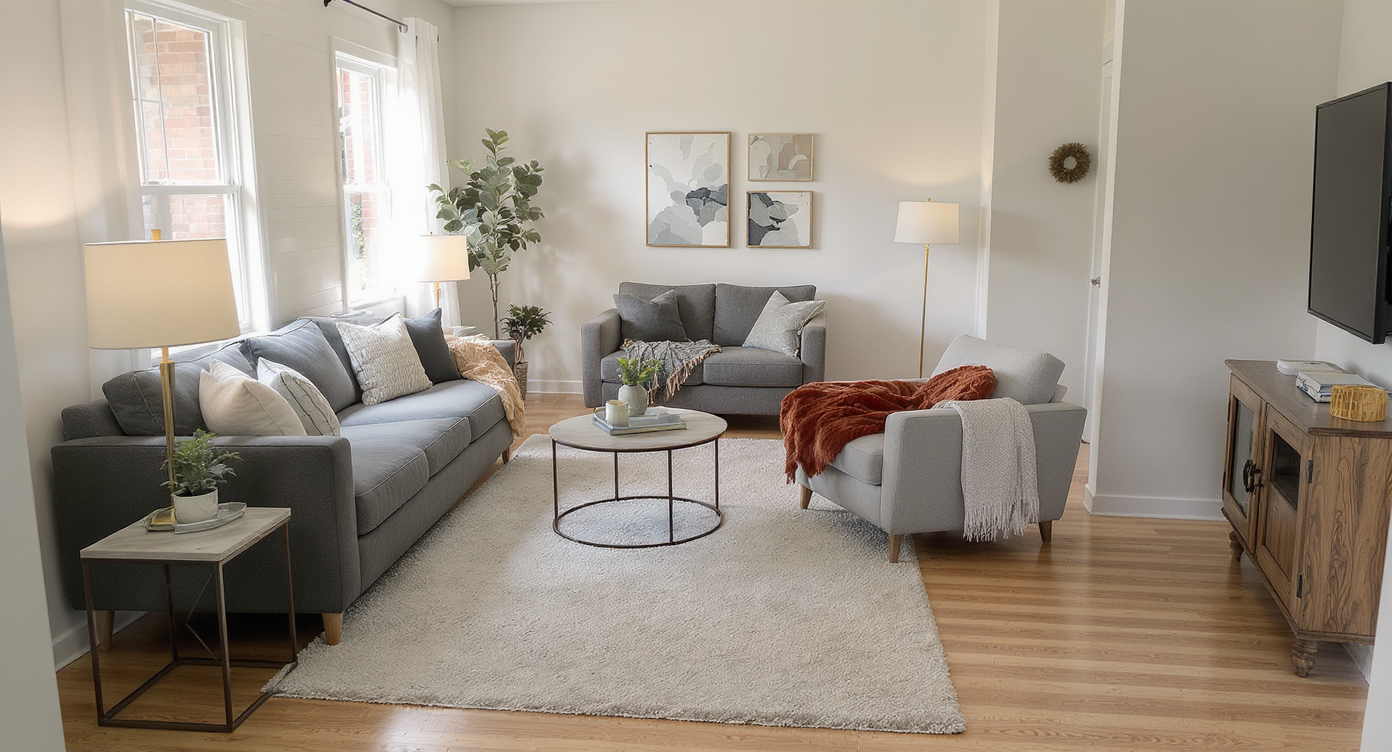
Balanced furniture scale and clear pathways prevent layout dilemmas in small rooms.
Most designers recommend keeping 30–36 inches of clear walking space through main paths—when flow is tight, the entire room reads “off,” even if it’s spotless. Minimalist spaces can feel sterile when one element is mis-scaled: a bulky sectional in a modest room, a too-small rug that floats the furniture, or art hung too high.
Minimalism isn’t “nothingness.” It’s restraint plus intention. In real apartments, the top culprits behind a space that feels staged rather than lived-in are scale, lighting, and texture. A generous greige palette looks calm, but if everything is the same tone and sheen, it goes flat on camera and in person. And that one misfit piece—say, an oversize C-shaped sofa—can dictate every other decision and make the room feel like a showroom.
Start with a fast audit: Do you have at least one soft texture (throw, boucle, wool, linen), one natural element (wood, stone, branch), and one focal point (art, sculptural lamp)? If not, the cure isn’t “more stuff,” it’s choosing one or two purposeful layers in the right scale. If your room is compact, borrow layout ideas from a detailed guide to small living room layouts and apply them to your minimalist plan.
Anecdote
That corner where the armchair never quite fits? In one apartment, the chair became wall art—replaced by a floor lamp and a larger rug. The room finally breathed.
Furniture Rules That Quietly Solve Most Room Problems
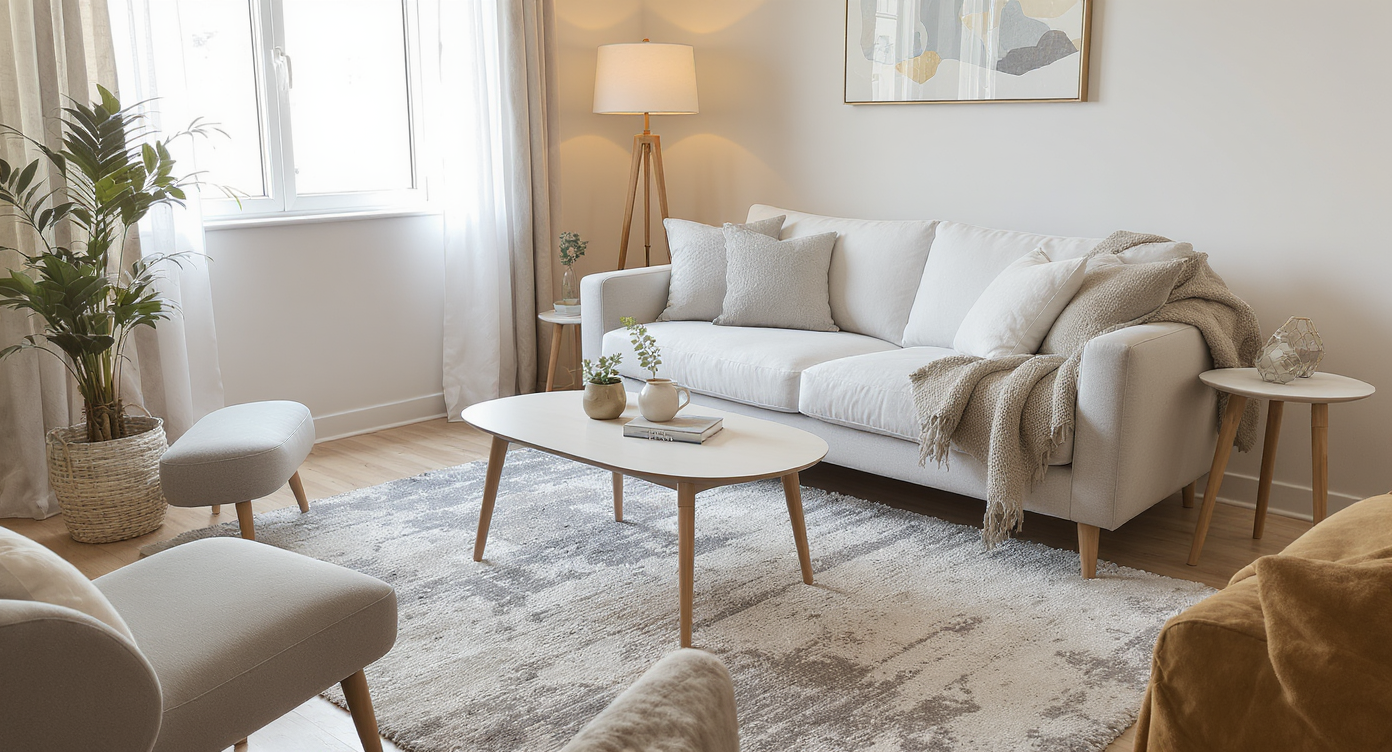
Simple furniture spacing rules create functional, inviting living areas without crowding.
Coffee tables usually work best when they’re 14–18 inches from the sofa edge; closer looks cramped, farther feels awkward. A few more rules that quietly fix minimalist rooms without adding clutter:
- Walkways: 30–36 inches on main paths; 24 inches minimum around the bed’s accessible sides.
- Seating depth: 34–38 inch sofa depth suits most small living rooms; go slimmer if the room is tight.
- Rug size: Front legs of all seating on the rug; in small rooms, target at least 5×8 under a loveseat or 8×10 for a sofa plus chairs.
- Art height: Center line around 57–60 inches from the floor, or align with the top third of the wall behind a sofa.
- Side and coffee table height: Within 2 inches of seat height (typically 16–20 inches) to keep lines quiet and functional.
These are minimalist superpowers because they reduce visual noise by aligning edges and gaps. If your sofa overwhelms circulation, try a straight sofa with slimmer arms, or swap a blocky coffee table for a round or oval one to soften the “hotel” vibe. Use ReimagineHome.ai to drop your actual room photo into a room layout AI and check scale before you commit; it’s far easier than wrangling returns. For tool comparisons and budgets, see this breakdown of AI interior design tools.
How ReimagineHome.ai Helps You Test Layouts, Styles, and DIY Ideas
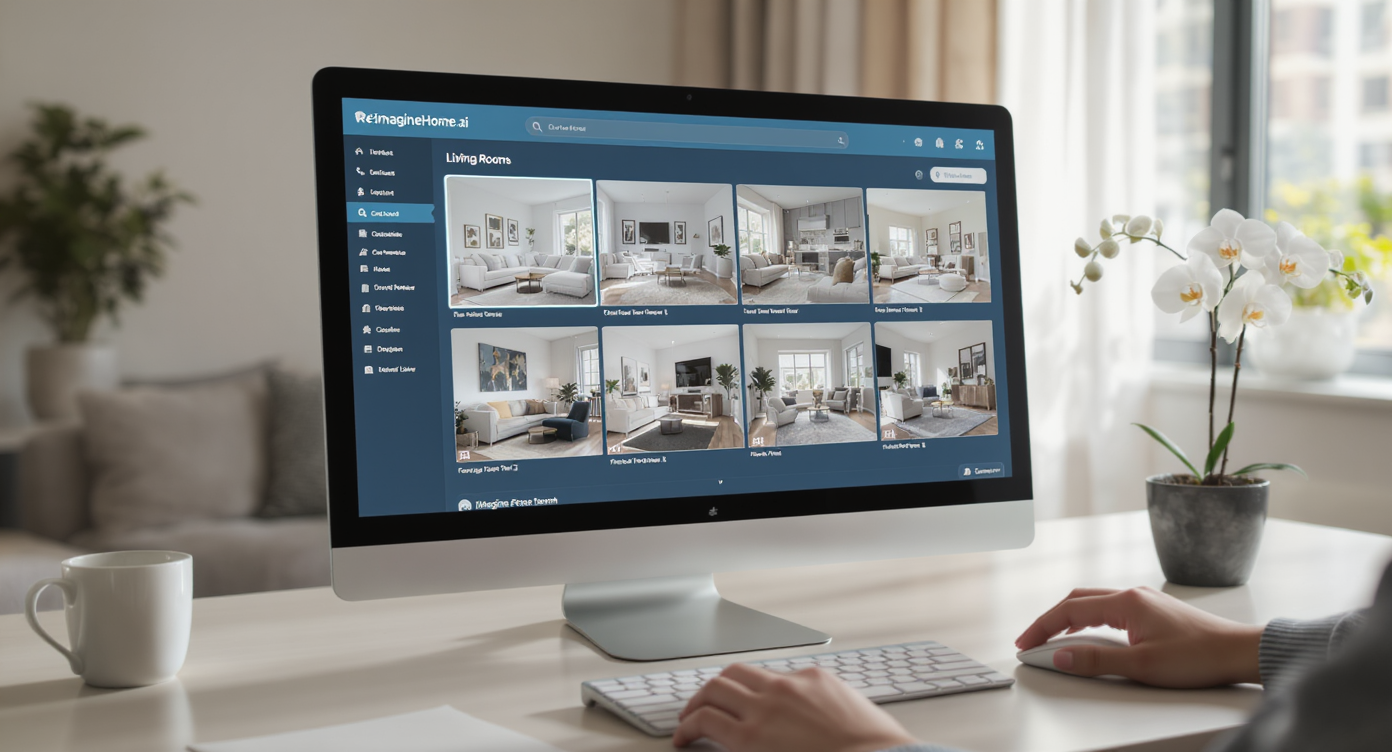
ReimagineHome.ai enables quick testing of layout and style ideas before moving furniture.
AI tools can show multiple layout and style options in minutes—before you lift a sofa or make a single purchase. With ReimagineHome.ai, you can:
- Do an AI interior design from photo: upload one picture and restyle it minimalist, Scandi, Japandi, or Boho to compare warmth levels without clutter.
- Use an AI room designer to right-size furniture: test narrower sofas, different coffee table shapes, or a larger rug that anchors seating.
- Preview accent colors and finishes: try a calm oat or greige base with one accent (ink blue, olive, or camel) in throws, pillows, or a single chair.
- Experiment with lighting: visualize a floor lamp with a warm shade, dimmable bulbs, or a statement bedside lamp (yes, the skull lamp can stay) to replace overhead glare.
- Virtually stage low-maintenance greenery: test sculptural branches in a vase, preserved moss, or a single tall snake-plant look if you travel often.
The advantage of a room makeover AI is pure risk reduction—you can audition two or three minimalist variations quickly and choose the one that looks calm yet personal. For a broader look at virtual room design tools and when to use them, skim this breakdown of AI interior design tools before you dive in.
Step-by-Step: Fixing This Room Using AI and Simple DIY Changes
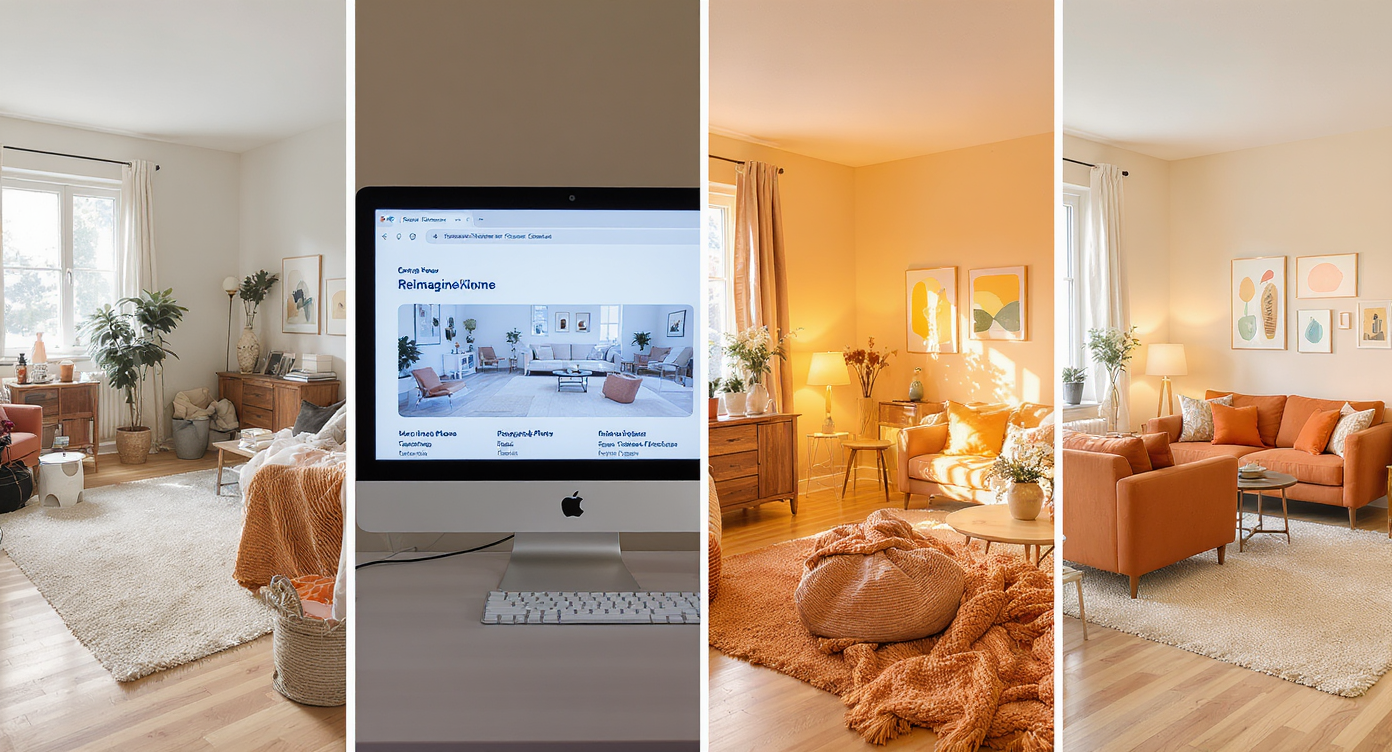
Transform rooms step-by-step using AI and simple DIY changes for function and warmth.
Most living rooms feel better when you can maintain 30–36 inches of clearance in the main path; if you’re under that, prioritize slimmer pieces or a different arrangement.
- Photograph your room as-is. Upload it to ReimagineHome.ai and generate 3–5 minimalist variations (Scandi minimal, Japandi warm minimal, or modern minimal).
- Check scale first. If the sofa crowds the walkway, try a narrower model or swap the coffee table for a round one in the AI preview. Adjust rug size so front legs sit on it.
- Choose one accent color. Keep the palette to 3 tones max (e.g., warm greige + charcoal + olive). Apply color in 2–3 places: a throw, one pillow, and art.
- Add texture, not trinkets. Layer one tactile throw, one wood or stone accent, and a nubby rug. In the AI room editor, toggle textures to see the impact.
- Light in layers. Add a floor lamp at sofa height, a table lamp near reading zones, and warm bulbs (2700–3000K). Preview lamp shapes and shades virtually.
- Greens for travelers. If you’re away for weeks, test a single tall floor vase with branches or a preserved arrangement in the AI mockup—zero maintenance, maximum life.
- Rental-friendly tweaks. Consider peel-and-stick backsplash, a framed print rail instead of drilling, and bathroom textile color coordination. Keep towels in sets of two for balance.
- Commit in phases. Order the rug first (it sets scale), then lighting, then one accent chair or side table. Re-generate in AI after each step to stay on track.
If you’re juggling a petite living room and sofa placement, pair these steps with a detailed guide to small living room layouts for more diagrams and spacing tips.
Visualization Scenario
Upload a photo of your living room with the current greige palette. Generate a Japandi warm-minimal version with a slimmer sofa, 8×10 rug, one oak side table, and an olive throw—then compare it to a cooler Scandi option with a round coffee table and two linen lampshades.
FAQ
How do I make a minimalist apartment feel cozy without adding clutter?
Keep the palette tight (3 colors max), add a tactile rug and one throw, and layer two lamps with warm bulbs. Use a room design AI to preview combinations on your photo before you buy.
Which AI interior design tool is best for small apartments?
ReimagineHome.ai excels at AI interior design from a single photo—ideal for small living room layout tests, rug sizing, and style previews in tight spaces. For context on features and pricing, see this breakdown of AI interior design tools.
How can I see if a new sofa or rug will fit before I buy?
Check clearances (30–36 inches for main paths) and front-legs-on-rug as a rule, then upload your room to an AI room planner to visualize scale with your actual proportions.
Can I use AI tools to plan DIY paint or textile projects?
Yes. Try accent paint, peel-and-stick, and textile swaps in an AI home decorator first to confirm color and value contrast, then buy with confidence.
What’s the easiest way to mix minimalist style with personal quirks (like bold art)?
Use a 70/30 rule: 70% calm base (walls, big furniture), 30% character (art, one sculptural lamp). Repeat a material or accent color twice so it feels intentional.
Visualize Your Room’s Next Chapter
Previewing 3–5 options before buying lowers the chance of returns and helps you commit with confidence. Minimalism isn’t a personality test—it’s a framework. When you add texture, considered lighting, and one accent color, the calm stays while the room begins to feel like you. Think of it as editing a great sentence: remove the extra words, then choose the perfect adjective.
When you can see the possibilities, it’s easier to move with confidence. Start by uploading one honest photo to ReimagineHome.ai and let your next version of the room come into focus.