7 Editor-Approved Ideas for Styling a Small Foyer Without Sacrificing Function
TL;DR
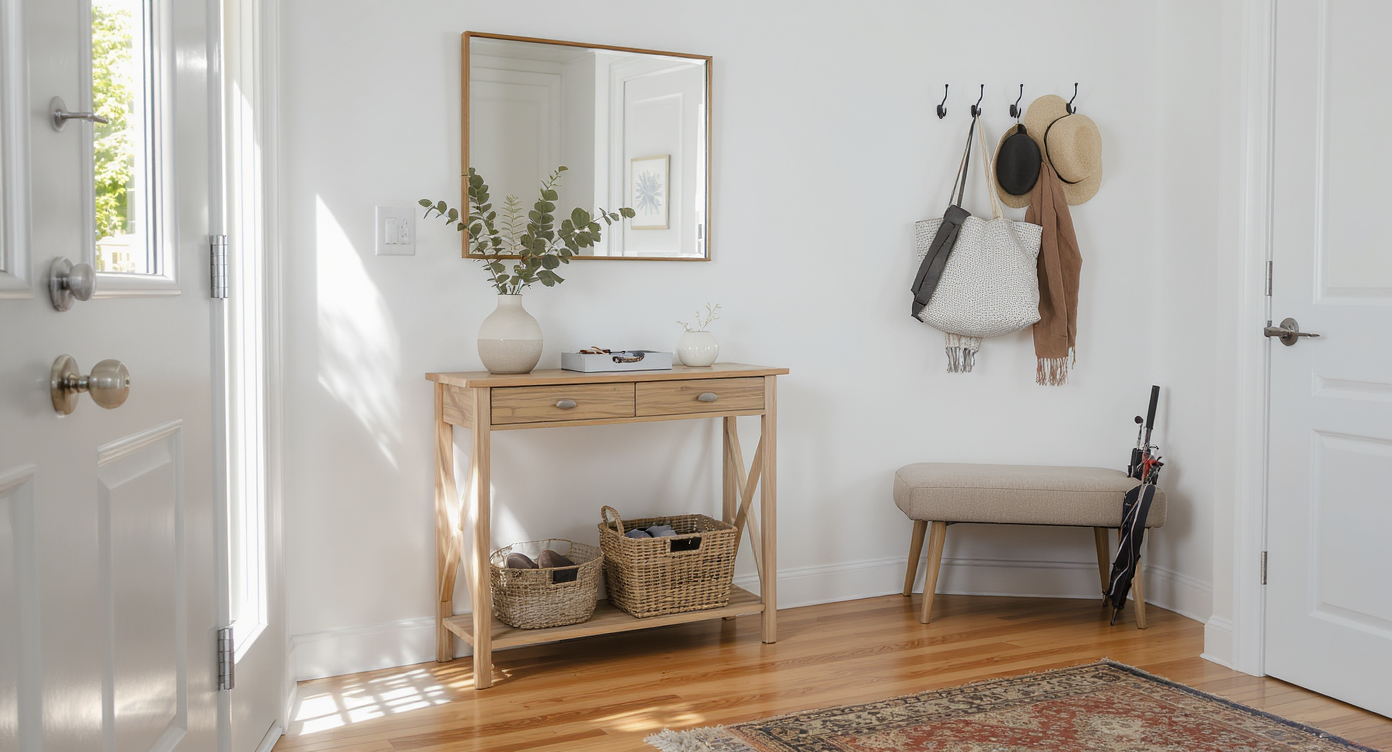
Designing a welcoming foyer in a compact space is possible by using vertical storage, slender furniture, reflective surfaces, and clever lighting. With the right styling and layout strategy, you can achieve both beauty and functionality, even when limited by tight footprints or tricky corners.
Why Styling a Small Foyer Matters
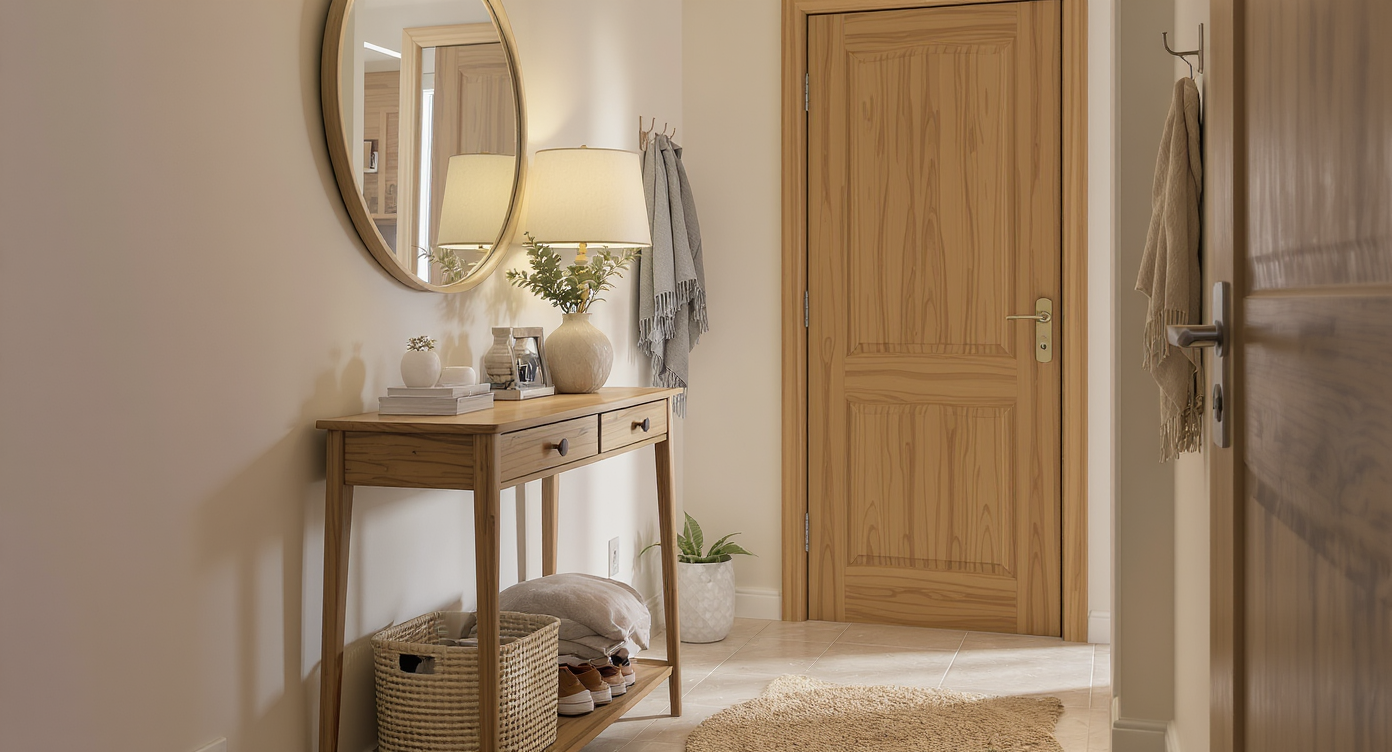
A compact, stylish apartment foyer shows smart use of space: a wood console, mirror, lamp, hooks, and shoe storage all arranged for function and welcome.
The entryway does more than greet guests—it sets the first impression for your entire home. In compact spaces, every decision from the placement of a mirror to the choice of a lamp can shift a foyer from cramped to inviting. This list explores options for maximizing style and practicality in a small foyer, balancing aesthetics with the realities of limited square footage. For anyone navigating narrow apartments, older homes with modest entries, or simply craving a prettier front door experience, these ideas provide concrete strategies. Instead of defaulting to clutter or awkward furniture, discover professional approaches for layout styling, visual layering, and adaptable multifunctional pieces that fit even the slimmest zones.
-
1. Choose Furniture Sized for Circulation
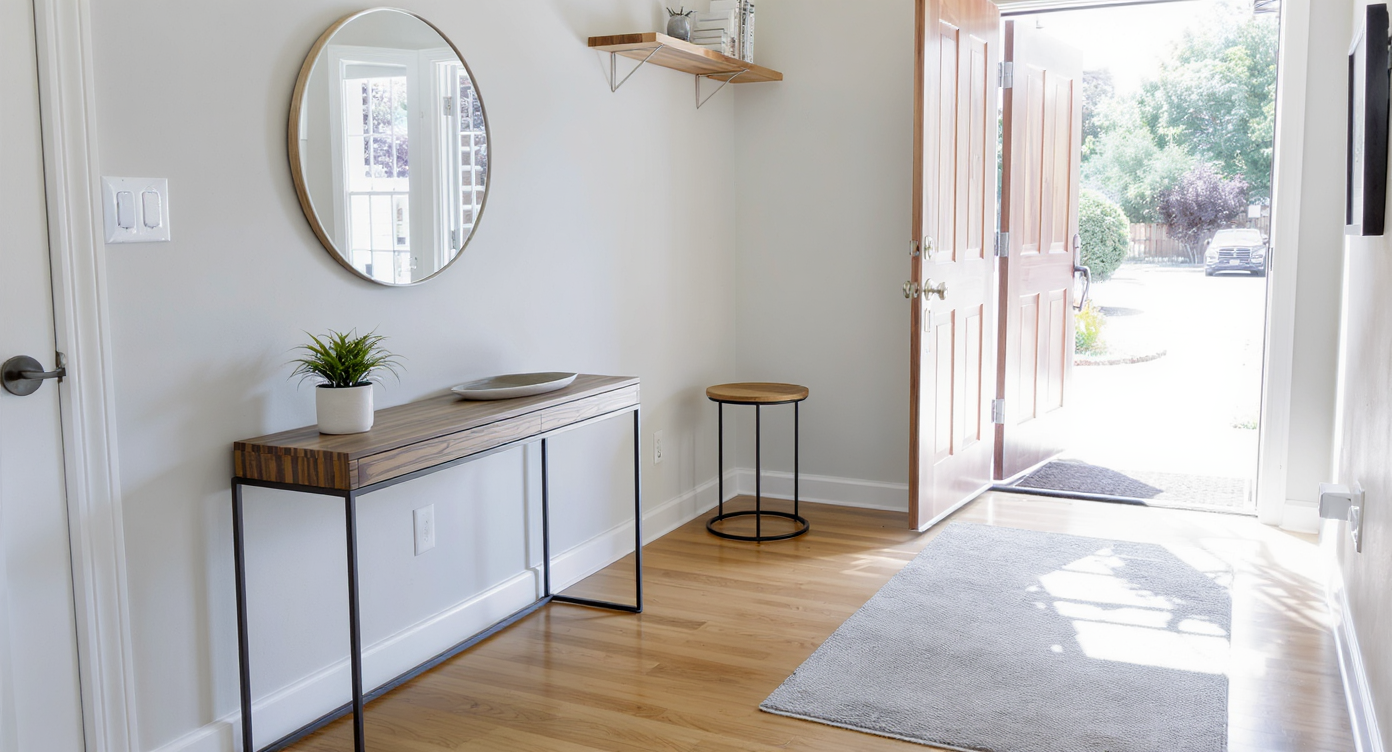
A narrow foyer demonstrates ideal circulation with slim furniture, a round corner table, and a clear 36-inch wide pathway to the hallway.
Oversized tables have no place in a tight foyer. Opting for slim consoles, petite round tables, or wall-mounted shelves allows for storage and surface area without crowding your entry. Furniture under 12 inches deep is typically ideal for compact spaces. A corner-friendly model or a table with a rounded edge further reduces the bump factor, especially along key walking paths. Designers often see that when a table is too large, door swings and natural traffic patterns are disrupted, instantly making the area feel smaller. If your foyer leads directly into a hallway, be sure to maintain 36 inches of clear passage, as seen in strategies for protecting walking space in holiday decorating.
-
2. Use Vertical Surfaces for Style and Storage
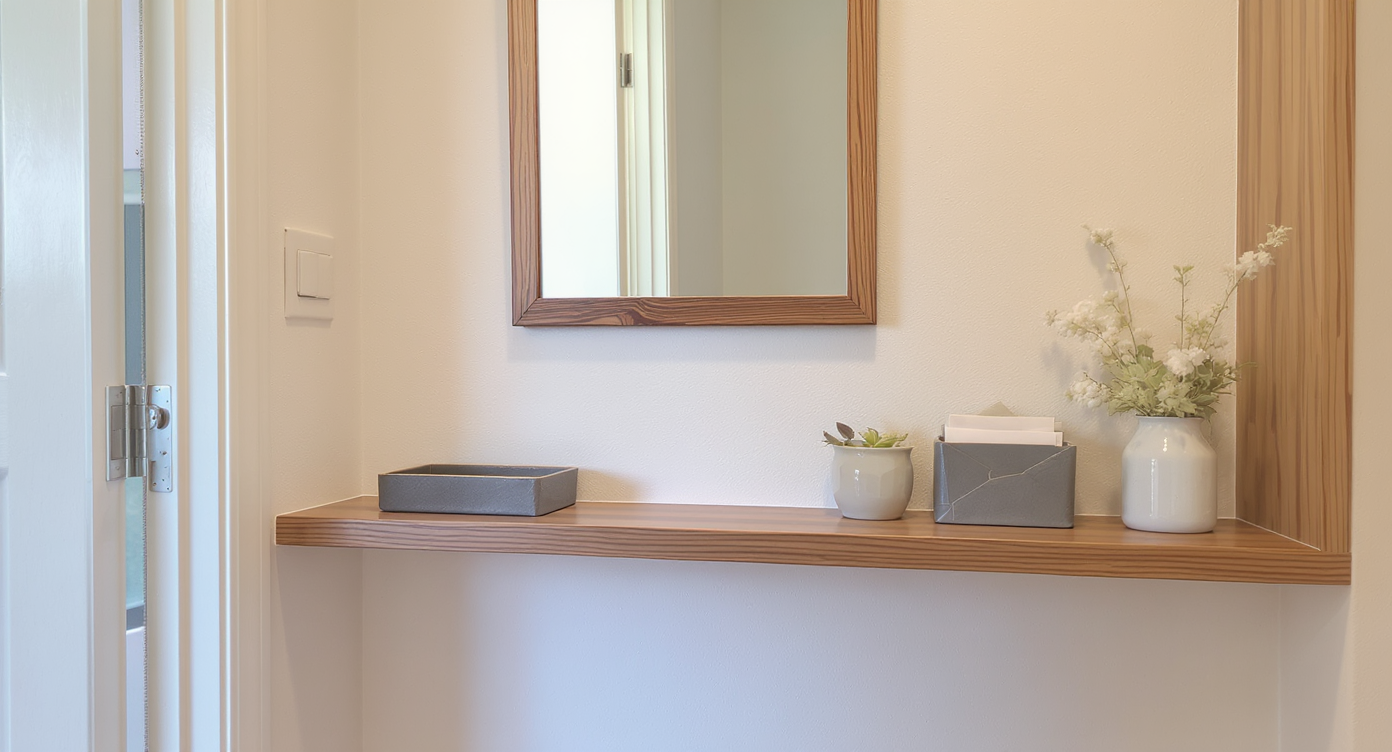
Vertical wall-mounted shelves, a mail rack, and a mirror above a floating ledge maximize foyer storage without using floor space.
When floor space is scarce, walls become your best asset. Consider photo ledges, floating shelves, or a wall-mounted mail rack to corral everyday essentials. This approach frees up valuable floor area while providing display opportunities. Anchoring a mirror above a ledge instantly expands visual depth and creates a landing zone for keys or mail. Photo ledges, in particular, allow you to lean art or small vases without worrying about accidental bumps—a common concern in busy entryways. In practice, designers find vertical installations not only maximize square footage but also prevent clutter creep, keeping drop zones organized and attractive.
-
3. Opt for Reflective and Light-Boosting Elements
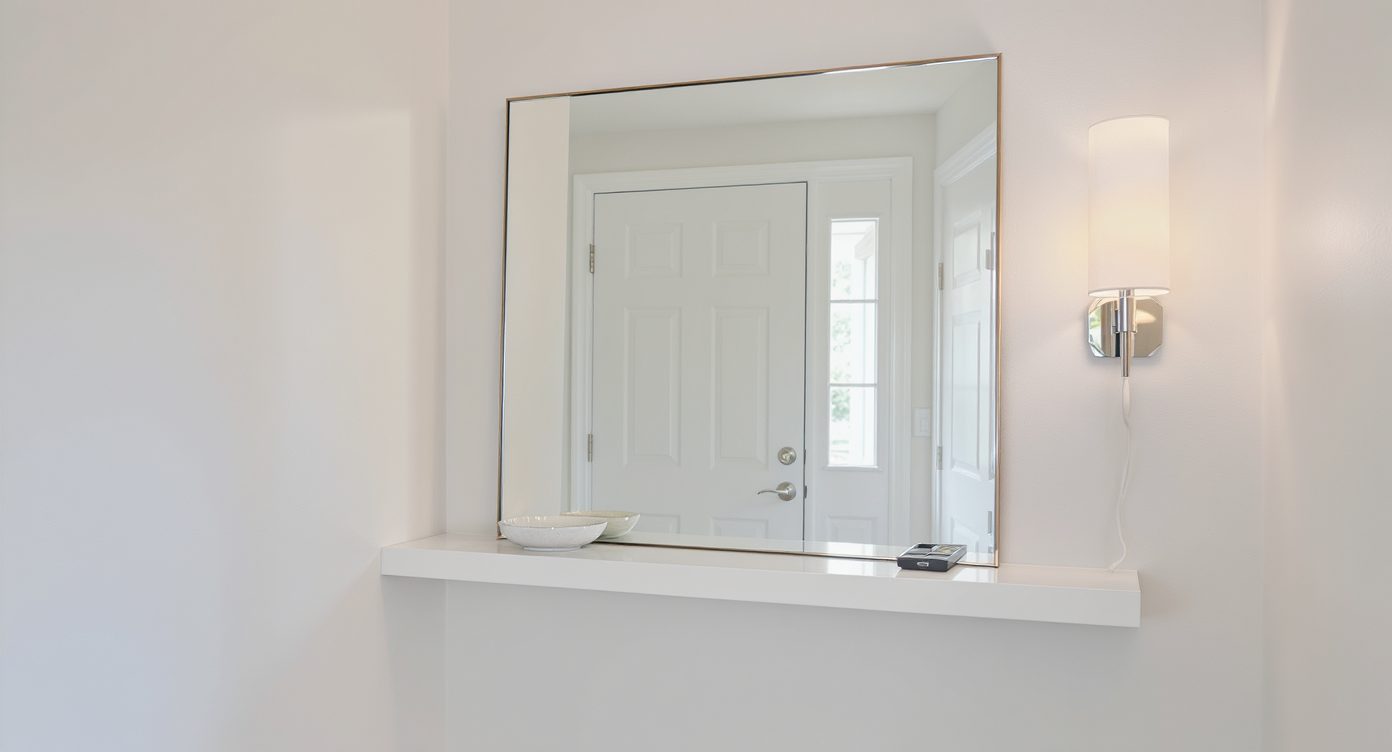
A foyer uses a large mirror with a shelf and a mirrored sconce to amplify light and create an airy, welcoming entryway atmosphere.
Strategically placed mirrors can double natural or artificial light, helping even the narrowest foyer appear larger and more welcoming. Consider a mirror with an integrated shelf or decorative frame offering subtle storage or style. In settings where electrical outlets are limited, mirrors will boost ambient light and enhance the impact of battery-operated or rechargeable lamps. A well-chosen mirror opposite your door creates an instant sense of openness, while a mirrored sconce or light fixture reinforces airiness day or night.
-
4. Layer Lighting for Ambience and Utility
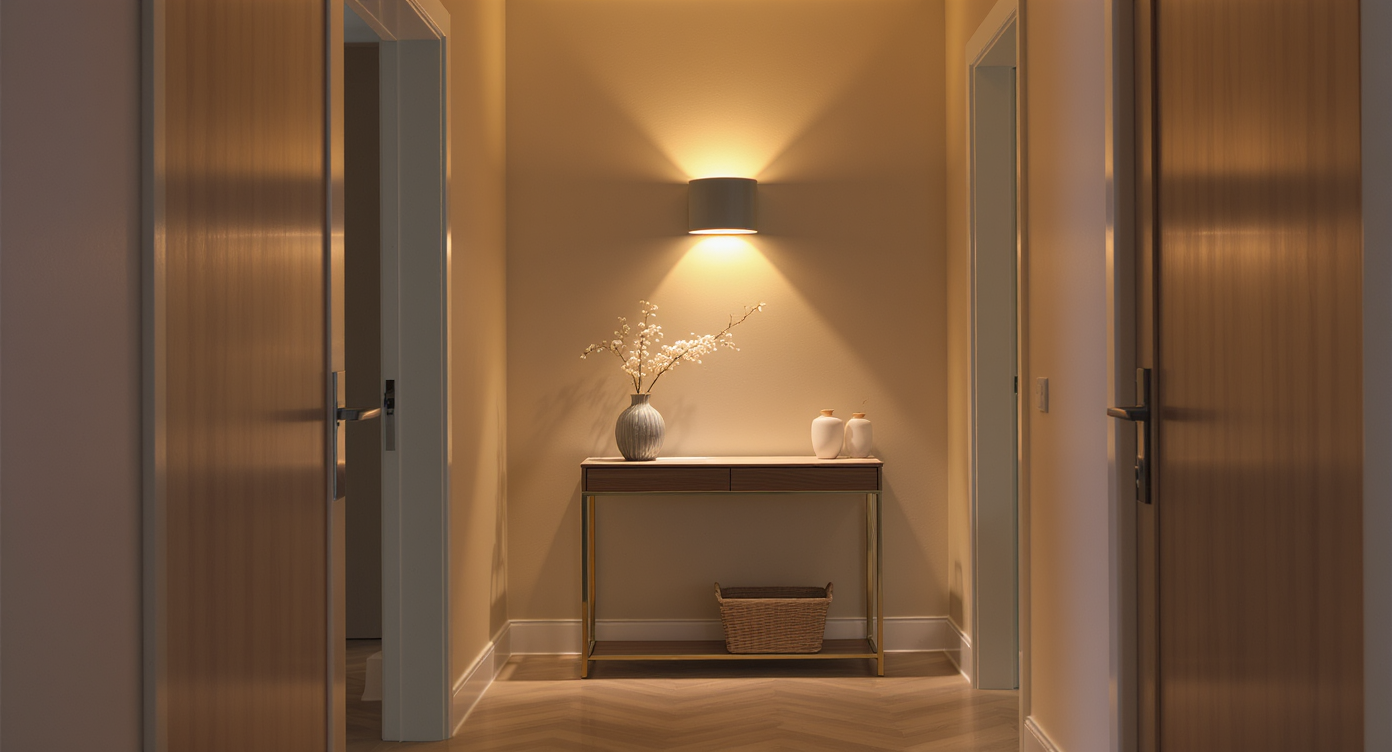
A small foyer features layered lighting: a wall-mounted sconce, battery-operated lamp, and concealed LED accents create a cozy, functional entryway.
Traditional table lamps may not always be possible in compact foyers, especially where outlets are absent. Battery-operated lamps, rechargeable sconces, or wall-mounted fixtures provide flexible solutions without requiring rewiring. If you are able to add a plug-in lamp, select low-wattage bulbs and avoid intense directional lighting to reduce glare and shadows. For inspiration, review expert guidance on using layered LED accent lighting in living areas. Aim for warm hues and layered sources to create a soft, flattering entrance.
-
5. Multi-Task with Your Decor Pieces
Every object in a modest entry needs to earn its place. Prioritize items with more than one use—such as a stylish umbrella stand that doubles as a statement piece, or a bench with hidden shoe storage. Consider a bowl that collects keys and mail, or ottomans that store hats and gloves beneath a mirror. Integrating floral motifs via printed textiles, artwork, or tray inlays can introduce color and character even if a surface for actual arrangements is lacking. Multifunctional decor ensures your foyer remains tidy and expressive, not overcrowded.
-
6. Style Corners With Intent and Balance
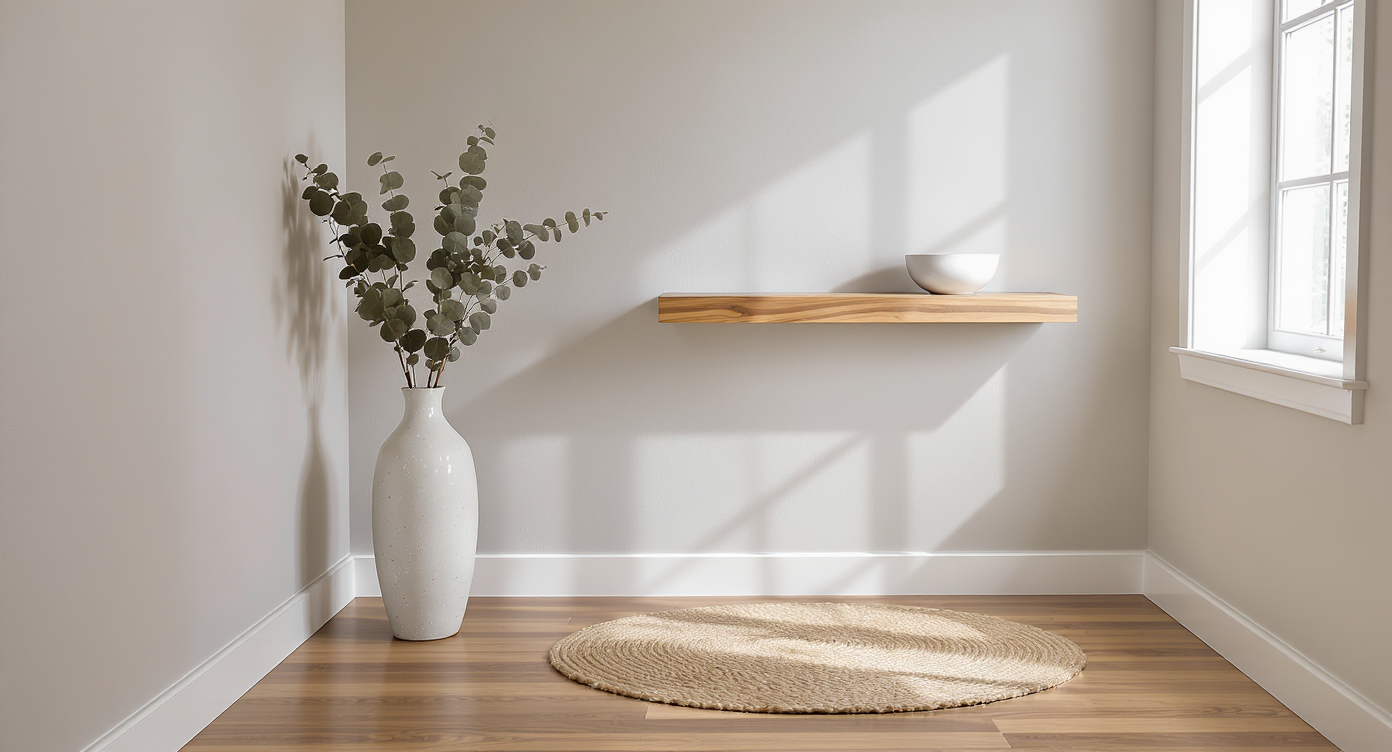
A corner of a small foyer is anchored by a tall sculptural vase and a slim shelf, with a centered rug visually balancing the entry space.
Neglected corners can throw off the overall symmetry of your foyer. Rather than fill these areas with multiple small objects, select one substantial piece—such as a tall vase or sculptural lamp—to anchor the space. Re-centering a rug or placing a slim shelf can visually balance the entry and direct movement. A professional solution for decorating awkward corners often involves editing down to fewer, larger elements that reinforce a sense of purpose and calm. This rule applies to compact foyers just as much as living rooms.
-
7. Test Your Layout Before You Commit
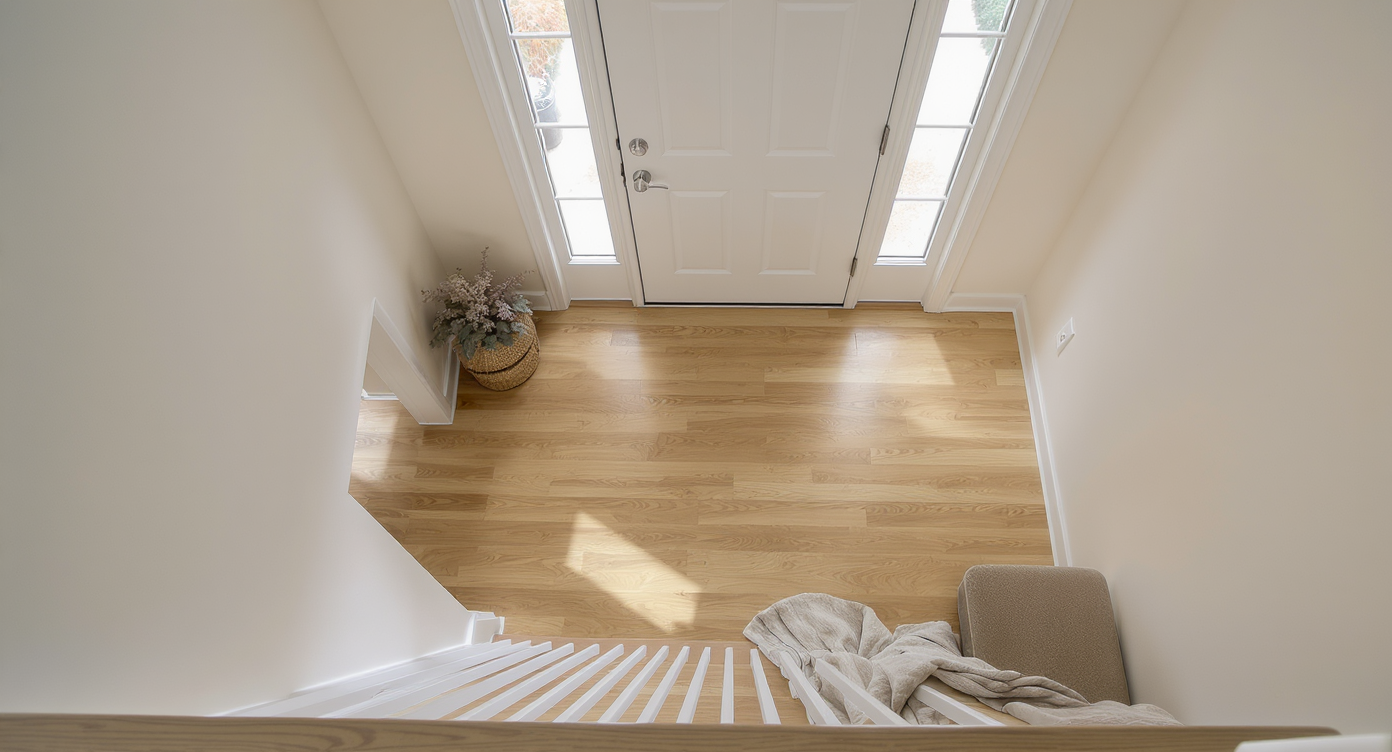
Modern small foyer with painter’s tape guides and a tablet showing a digital layout preview, illustrating layout planning before purchase.
Planning is the often-missed step that prevents expensive mistakes and regrets, particularly in small foyers. Before investing in furniture or decor, visualize the layout using an AI design preview or a rough room sketch. This helps identify pinch points, confirm sight lines, and ensure balance between utility and style. Platforms like REimagineHome.ai let you preview arrangements and finishes before moving anything, which is invaluable when inches matter. A little foresight goes far in avoiding crowding or compromising your first impression.
Frequently Asked Questions
Use mirrors, vertical storage, and a carefully selected color palette to reflect light and create the perception of spaciousness. Visualize changes before committing by using a preview tool like REimagineHome.ai.
What lighting works best in a foyer without outlets?
Battery-powered lamps, rechargeable LED sconces, or candlestick-style wall fixtures offer ambient light without electrical installation hassles.
How do I organize a narrow entry without clutter?
Utilize wall hooks, slim shelves, or a single small table to collect essentials. Limit surfaces to one or two objects to avoid overcrowding.
Can I put a mirror directly opposite the front door?
Designers often place mirrors opposite doors to amplify natural light and create depth, provided it is in keeping with the home's style and does not interfere with door swing.
Which materials add warmth in a small foyer?
Natural woods, soft textiles, and warm metal finishes add texture and coziness while maintaining an uncluttered look.
Smart Planning Elevates Compact Foyers
A small foyer is an opportunity to refine your sense of what matters most—clarity of purpose, streamlined storage, and beautiful yet functional design choices. By employing vertical solutions, right-sized furniture, layered lighting, and planning tools like REimagineHome.ai, you can transform your entryway into a welcoming showcase for your personal style.