
TL;DR
Want zero-waste Thanksgiving decoration ideas that still feel festive? Let the food be the decor, layer reusable linens, and add foraged finds like leaves, pine cones, and branches. Choose beeswax candles, dried orange garlands, and edible centerpieces so nearly everything is eaten, composted, or saved. This is how to decorate for Thanksgiving without waste while keeping it beautiful.
Low-Waste Thanksgiving Decor Ideas for a Cozy, Reusable Setup
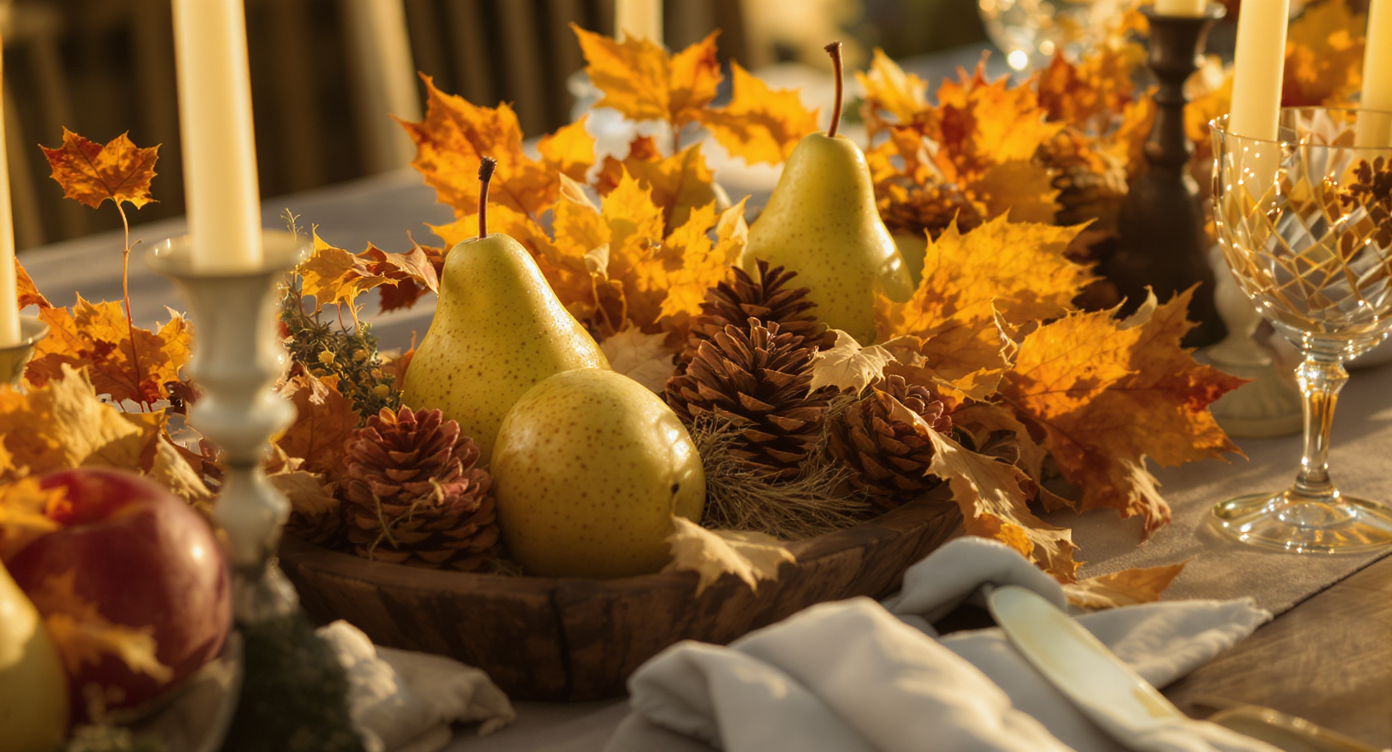
Edible and natural elements like fruit, pine cones, and candles create a warm, zero-waste Thanksgiving table setting.
Make your Thanksgiving look as good as it tastes without sending anything to the landfill. Zero-waste Thanksgiving decorations aren’t about austerity. They’re about choosing materials that get used up, composted, or reused — and still create that warm, harvest-season glow.
Designers often note that the most sustainable centerpiece is edible. Think heirloom squash, pears, apples, and bread loaves nestled on a board; beeswax tapers flickering; a linen runner grounding it all. Foraged leaves and pine cones add texture, and dried orange garland brings scent and color. The result? Thanksgiving decorations that are versatile, biodegradable, and undeniably festive.
Here’s the thing: the best zero-waste decor plan is simple to execute under holiday time pressure. Below is a room-by-room, table-first strategy that relies on what you already have, what nature provides, and what can be eaten or composted later.
Core Strategy: A Beautiful, Zero-Waste Thanksgiving Decor Plan
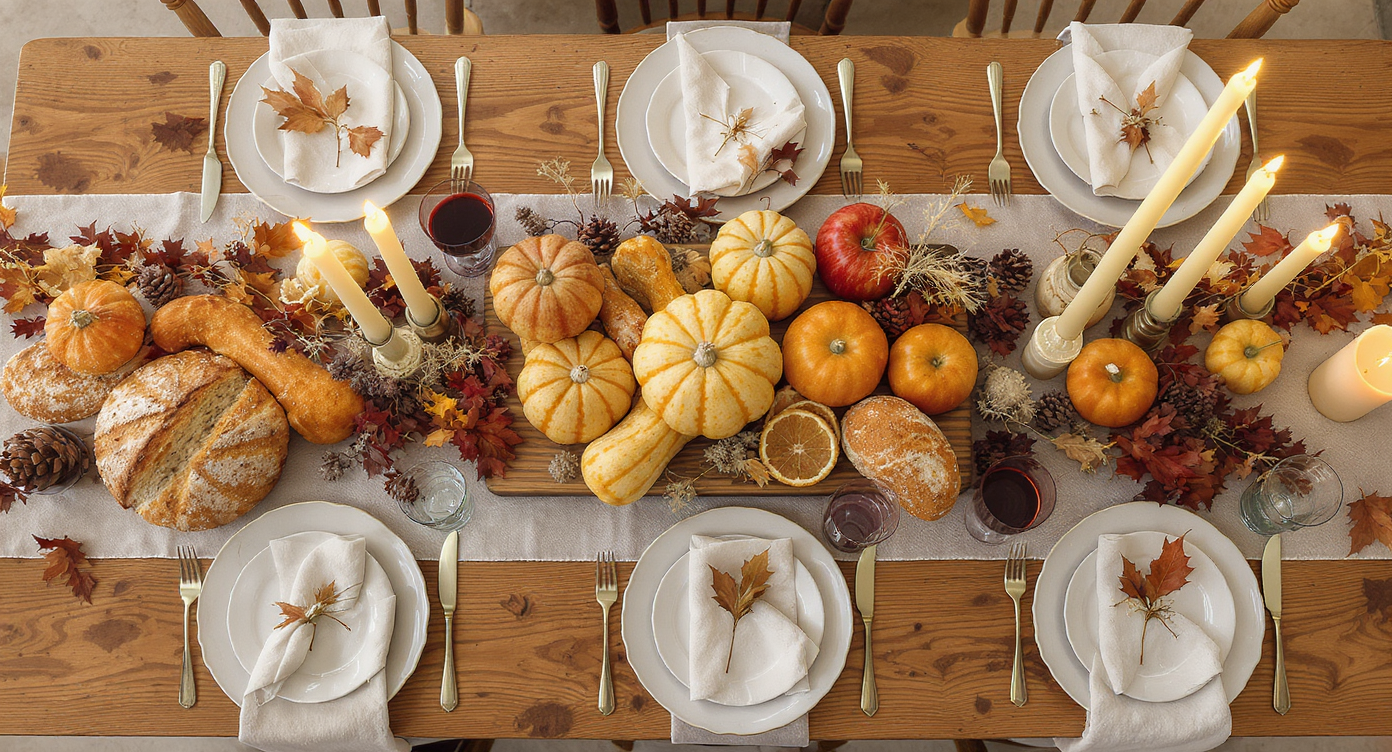
The core zero-waste decor strategy blends edible, reusable, and foraged materials for a festive look.
The fastest path to zero-waste Thanksgiving decorations is to let food, textiles, and foraged pieces do the heavy lifting; aim for centerpieces under 12 inches tall so guests can talk across the table.
1) Start with reusable textiles. A linen or cotton tablecloth and cloth napkins set the tone. Experts recommend a runner that’s one-third the table width with a 6–12 inch drop; cloth napkins in the 18–20 inch range feel generous and last years. Choose solids or simple plaids in warm neutrals to reuse all winter.
2) Build an edible centerpiece. Use a low tray or cutting board and layer small pumpkins, gourds, pears, and apples. Add bread, nuts-in-shell, and sprigs of rosemary or thyme. A good rule of thumb is one focal squash per two feet of table length, then fill with fruit. Everything gets eaten, baked, or composted.
3) Add beeswax candles. Beeswax candles are biodegradable and burn clean with a subtle honey scent. Designers often advise spacing tapers 8–12 inches apart for even light and safety; a classic 10-inch taper burns about 8–10 hours, or roughly one hour per inch.
4) Forage the finishing touches. Gather dry leaves, acorns, and pine cones. Scatter 12–20 leaves across a 6-foot table. If bringing pine cones indoors, bake them at 250°F for 1–2 hours to ensure any pests are gone, then cool before styling. After the holiday, compost or store them in a paper bag for next year.
5) Create a dried orange garland. Slice oranges 1/4-inch thick, pat dry, and bake at 200°F for 2–3 hours, flipping halfway, until translucent. Thread with cotton string or jute twine. For mantels, aim for a garland 1.5–2 times the length of the surface for a soft swag. It’s compostable when you’re done.
6) Let the food do the decorating. Put pies on pedestals, set cider in a clear pitcher, and pre-plate a produce-forward cheeseboard. A gorgeous cake dusted with powdered sugar becomes sculpture. One platter with vibrant sides can anchor a buffet better than store-bought decor.
7) Kid-friendly, edible crafts. Encourage little hands to make apple “turkeys” with toothpick fruit feathers. They double as snack-and-decor and disappear by dessert. Butter pats pressed in leaf or turkey molds are another crowd-pleaser; figure about 1 tablespoon per pat.
8) Borrow or buy secondhand. Baskets, platters, and vintage candlesticks from a thrift shop or neighbors keep materials in use. Choose timeless shapes so you’ll reach for them every season.
9) Plan the end-of-night exit. Compost leaves, orange slices, floral stems, and spent gourds. Store linens and candlesticks. Eat or roast the fruit and squash within the week. When every element has a clear “afterlife,” waste disappears.
User insight: Many hosts find that a linen runner, a trio of beeswax tapers, and a board piled with small squash and apples are enough. Simple. Abundant. Memorable.
Anecdote
A host once swapped store-bought decor for a farmer’s market haul — tiny pumpkins, pears, crusty bread — plus beeswax candles. Cleanup took minutes and the leftovers became soup and pie. It felt like the holiday finally matched their values.
Common Mistakes & Misconceptions
Zero-waste Thanksgiving decorations succeed when every element is edible, compostable, or reusable — audit each item before it lands on the table.
- Buying single-use themed decor. It feels festive in the store, but it clutters storage and ends up trashed. Choose solids, naturals, and produce you’ll actually eat.
- Over-tall centerpieces. Anything over 12 inches blocks conversation. Keep center height low and spread decor in a line down the runner.
- Skipping pest-proofing for foraged pieces. Bring nature in, but bake pine cones at 250°F for 1–2 hours and brush off leaves so your table stays clean.
- Too many scents. Scented candles plus spiced potpourri can compete with the meal. Use unscented or light-honey beeswax and let the food’s aroma lead.
- Forgetting the after-plan. If it can’t be eaten, composted, or reused, it’s not zero-waste. Decide the item’s “next life” before you buy or gather it.
Pro Tips & Expert Insights
Designers often advise working in odd numbers and repeating textures; three tapers, five fruit clusters, and repeating citrus create cohesion without clutter.
- Style in modules. Build small clusters (candle + citrus + herb) and repeat every 18–24 inches down the table for an effortless, layered look.
- Mix matte and shine. Pair rough pine cones and linen with a polished brass candlestick for contrast using pieces you’ll keep year-round.
- Color story, not theme. Choose a palette — warm neutrals, olive, rust — and skip overt motifs. It’s more elegant and outlasts one holiday.
- Use placemat alternatives. Cut kraft paper to size for kids’ spots and compost after. Or layer thrifted chargers you’ll reuse.
- Light the perimeter. A couple of beeswax votives on the buffet and one by the entry instantly says “welcome” without extra decor.
Reflection: Every time I let the menu and harvest produce lead the styling, guests comment on the atmosphere. It’s the easiest way to look generous without generating waste.
Anecdotes & Real Stories
Real hosts report the biggest impact from edible centerpieces, dried citrus, and candlelight — inexpensive, sustainable, and undeniably cozy.
The squash centerpiece that hosted the party. One family floated their sectional centerpiece idea by stacking pretty squash and apples on a breadboard with three tapers. The room felt twice as warm, and they turned the squash into soup that weekend.
Leaves as confetti, happiness as the theme. A host gathered colorful maple leaves the morning of, scattered them like confetti down a linen runner, and composted them that night. Zero cleanup, maximum autumn vibes.
Orange garlands, golden glow. A couple baked 1/4-inch orange slices at 200°F until they glowed, strung them with twine, and swagged the mantel at 1.5× length. Guests asked for the “recipe” for the decor.
Kid-made apple turkeys. With cousins in tow, the kids built apple turkeys with toothpick fruit “feathers.” The platter looked whimsical, and by the end of the evening, it was empty — decor, snacks, and activity in one.
Granny’s favorite butter. A grandson pressed softened butter into a leaf mold and chilled it. The shaped pats delighted the table and eliminated the plastic tub.
Visualization Scenario
Visualize a linen runner with three golden tapers, a breadboard piled with squash and pears, and a citrus garland glowing at dusk — everything either eaten, composted, or stored for next year.
FAQ
Fast, clear answers to the most-searched questions about zero-waste Thanksgiving decorations.
What are easy zero-waste Thanksgiving decoration ideas?
Use an edible centerpiece of pumpkins, squash, and fruit, add beeswax candles, and finish with foraged leaves and pine cones you can compost. This low-waste Thanksgiving decor looks abundant and leaves almost nothing to throw away.
How do I make a dried orange garland for Thanksgiving?
Slice oranges 1/4 inch thick, bake at 200°F for 2–3 hours until dry, then thread onto cotton string or jute. This long-tail favorite — a dried orange garland for Thanksgiving — is fully compostable afterward.
Are beeswax candles better for eco-friendly Thanksgiving decor?
Beeswax candles are biodegradable, burn longer, and produce less soot than paraffin. For sustainable Thanksgiving decorations, experts recommend beeswax tapers spaced 8–12 inches apart.
How can I decorate a Thanksgiving table on a budget without waste?
Thrift a linen tablecloth, forage leaves and pine cones, and let seasonal produce be the centerpiece. This budget zero-waste Thanksgiving decor plan uses what you can eat, compost, or reuse.
Can I compost Thanksgiving decorations like leaves, pine cones, and orange slices?
Yes — leaves, pine cones, dried citrus, and herb sprigs are home-compostable. Zero-waste Thanksgiving table decor works best when every item has a compost or reuse plan.
What’s a rule of thumb for centerpiece height and layout?
Keep centerpieces under 12 inches tall and repeat small clusters every 18–24 inches down the runner. This living room–friendly layout ensures conversation and a cohesive look.
Tools & Inspiration
Simple tools can supercharge a zero-waste plan; prioritize items you’ll use beyond the holiday.
- Farmer’s market haul list: small pumpkins, gourds, pears, apples, herbs, crusty bread.
- Reusable kit: linen runner, cloth napkins, brass or wood candlesticks, jute twine, cotton string.
- Design visualizer: Try ReimagineHome to test table layouts and lighting mood before you style.
- Secondhand sources: thrift stores, buy-nothing groups, neighbor lending threads for extra plates or platters.
Picture It
A long table dressed in a flax linen runner. Three beeswax tapers, spaced a foot apart, throw a soft glow. Down the center, a line of sugar pumpkins, Bosc pears, and rosemary sprigs gathers around a wooden board stacked with bread. Dried orange garland loops the mantel at a gentle 2× swag. By night’s end, the fruit goes into a pie, the herbs into leftover stuffing, and the leaves into the compost. Nothing wasted. Everything warm.
That’s the quiet magic of zero-waste Thanksgiving decorations: beauty that feeds the eye, the meal, and the planet.