.svg)

.svg)
.svg)

7 Designer Strategies for a Modern Moody Kitchen With Seamless Open Living
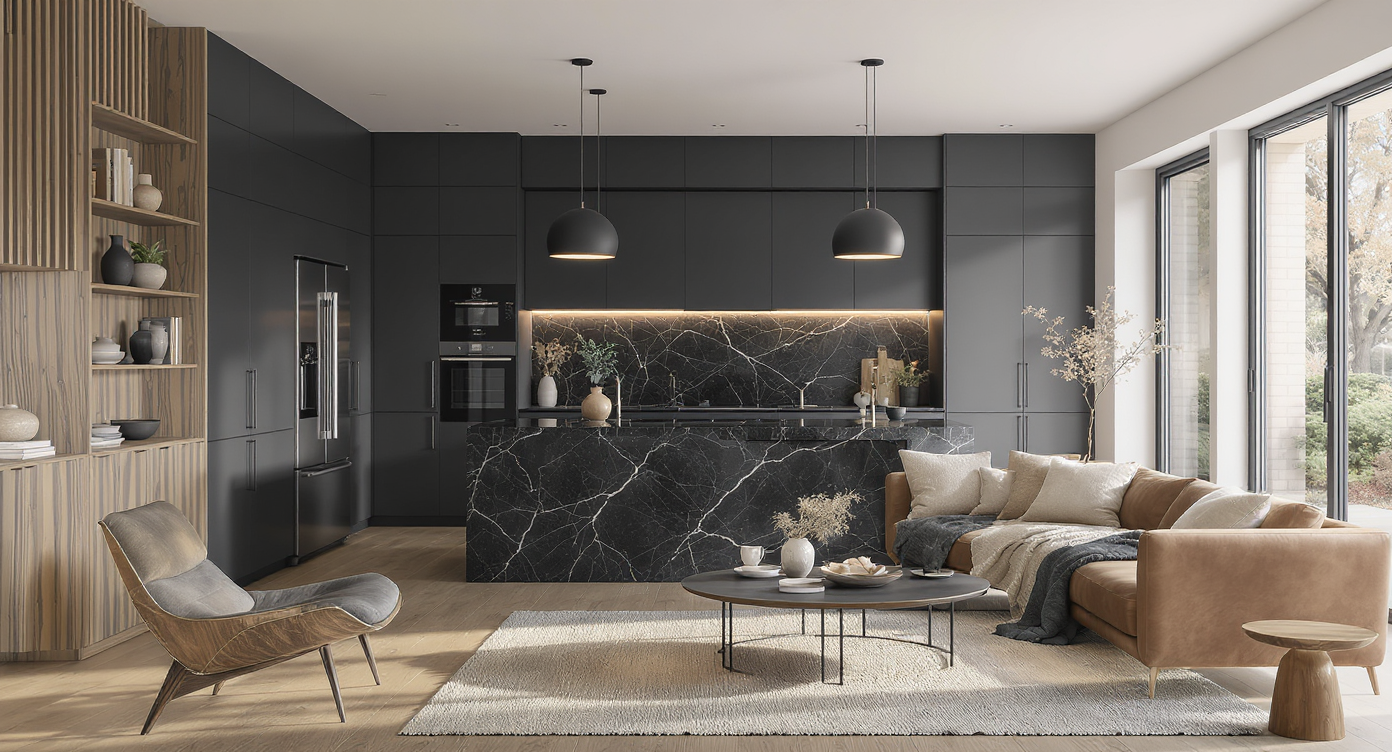
TL;DR
An open kitchen remodel is a complex challenge blending aesthetics, functionality, and flow with adjacent spaces. These seven expert-approved strategies address palette choices, transitional design, kitchen layout options, and AI-powered mood-based design tools to help homeowners create a cohesive, modern, and inviting space, even when the rest of the home is already finished.
Why Open Kitchen Remodeling Feels So Daunting—and So Worth It
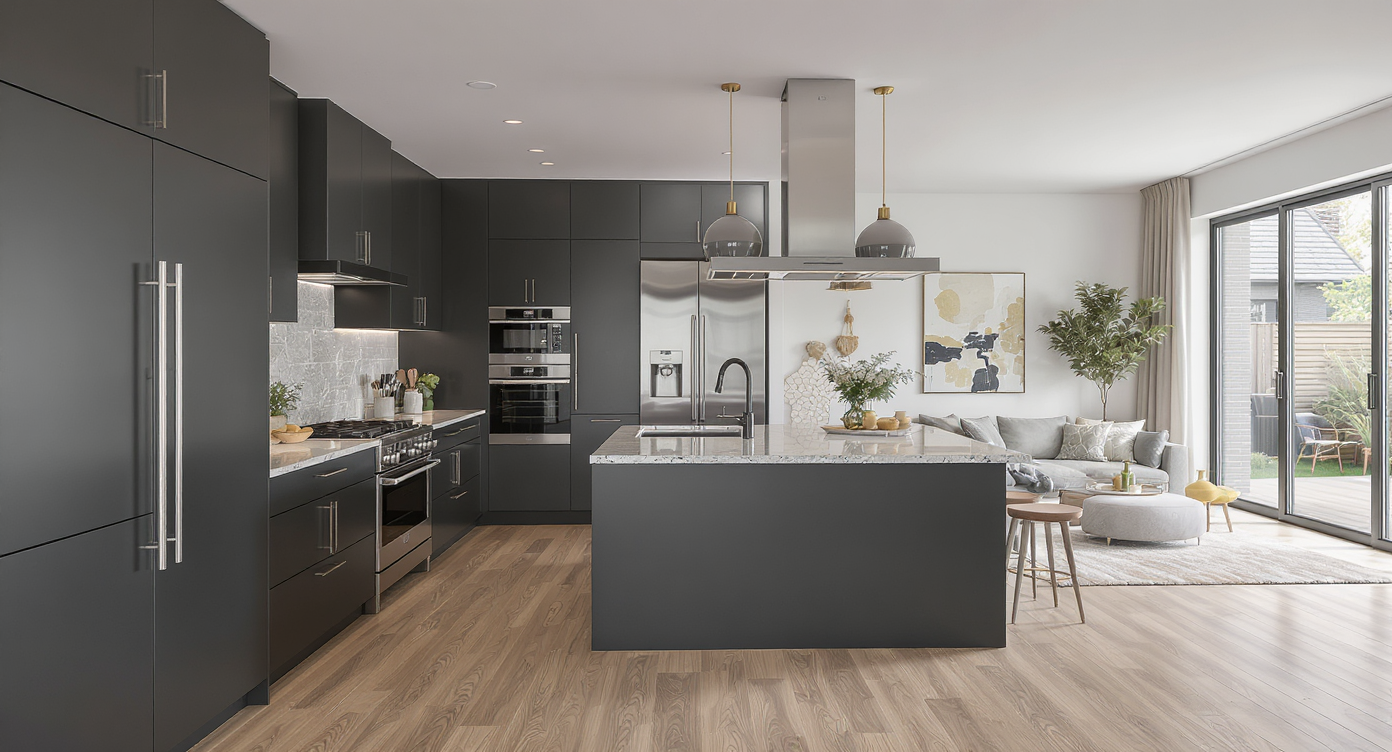
A modern moody kitchen seamlessly connects to a styled living area, reflecting the real-world challenges of open-plan remodels.
Completing a kitchen remodel after the rest of your home has already been refreshed often feels like tackling the final, most demanding puzzle piece. The need to connect a functional kitchen to your living and dining areas, especially in open-plan layouts, raises questions beyond cabinetry and finishes. You must balance modernity and warmth, function and style, and ensure new elements integrate with your pre-existing décor. Today’s kitchen is rarely just a workspace. It serves as a social hub, a visual link to adjacent rooms, and increasingly expresses the mood and character of the entire home. The following seven strategies—rooted in current design thinking and practical experience—offer guidance for mastering this balancing act, providing concrete approaches for remodeling & upgrades with long-term satisfaction in mind.
-
1. Master the Open Living Concept With Transition Zones
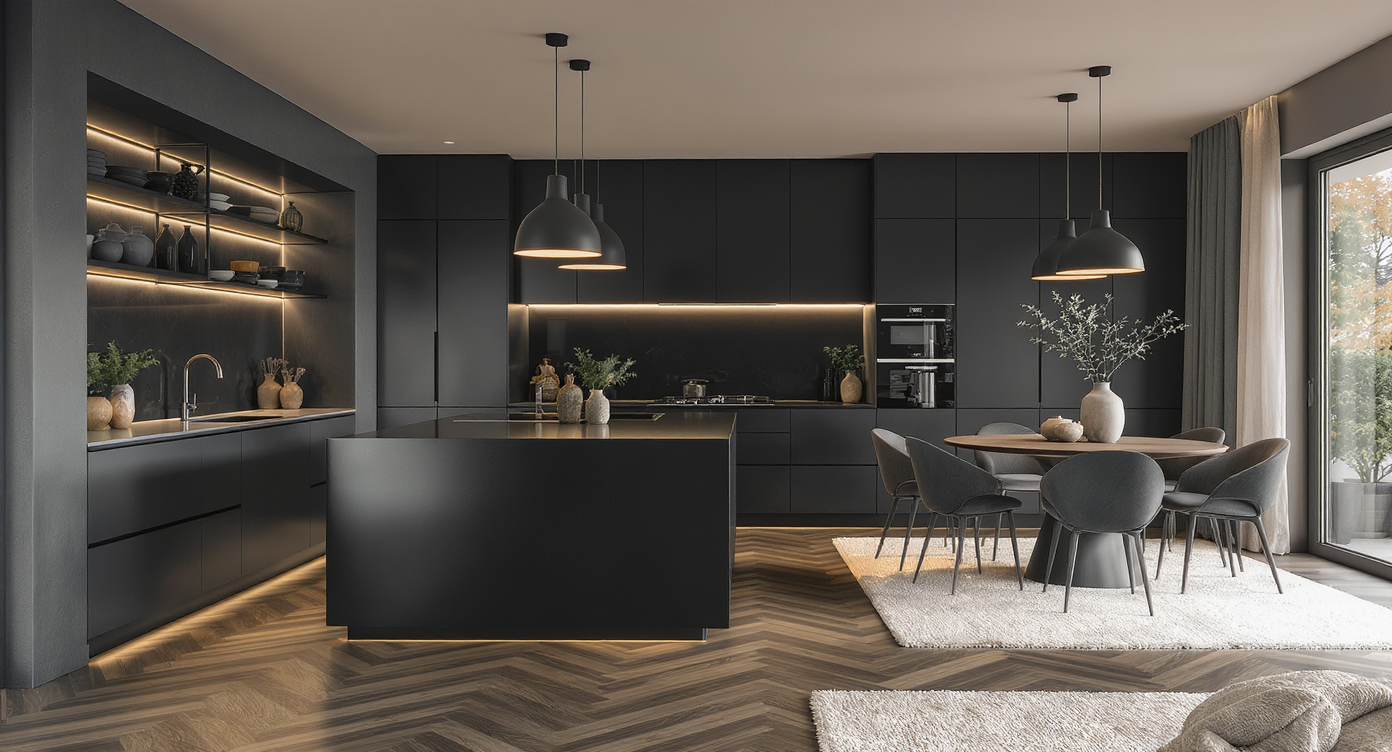
A moody open kitchen uses a peninsula, open shelving, a flooring transition, and layered lighting to subtly define connected living zones.
When a wall falls and the kitchen merges with dining or living spaces, the lines between rooms blur. This can be liberating—unless transitions are overlooked. Designers frequently recommend creating subtle transition zones that signal a shift in activity without breaking visual flow. A peninsula, low open shelving, or changes in flooring texture are classic solutions. Instead of abrupt boundaries, soft transitions like a change in lighting or a rug under the dining table help define zones while maintaining cohesion. This approach helps open living concepts feel intentional, not intrusive.
-
2. Integrate a Unified Yet Varied Color Story
Carrying color from your living and dining spaces into the kitchen is crucial for open plans. However, designers advise that a single uniform palette can look flat. Instead, introduce one or two secondary hues—a moody green on cabinetry, for example, as explored in our coverage of recent kitchen paint colors—and add richer accents like deep reds, warm golds, or metallics for depth. Introducing another shade through tile can bring energy if it harmonizes with your existing color story, but restraint is key to prevent visual overload. As discussed in our guide on rebalancing strong kitchen colors, testing these ideas digitally helps avoid regret later.
-
3. Embrace Statement Elements—but In Moderation
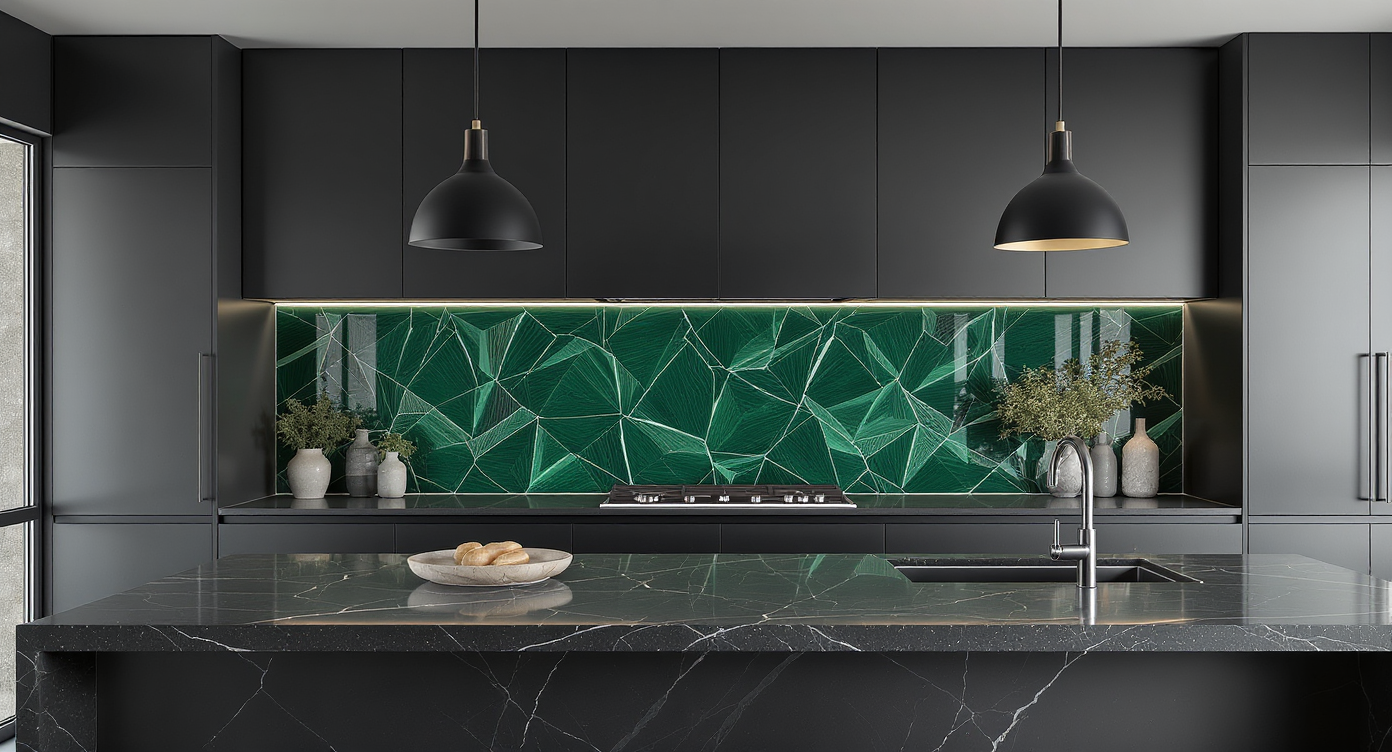
A moody kitchen uses a bold emerald tile backsplash as a single standout feature, with the rest of the space kept understated and refined.
A bold backsplash or an eye-catching tile is on-trend, yet designers often caution about competing focal points when introducing new patterns or colors in an already-styled home. If you love a moody bar vibe, consider letting one signature element—like a tile peninsula or dramatic lighting—shine, while keeping surrounding surfaces more subdued. This prevents the kitchen from feeling crowded. As highlighted in analysis of current kitchen trends, tactile and confident materials add punch when handled with intention, while too many features can muddle the effect.
-
4. Leverage Kitchen Layout Design AI for Confident Choices
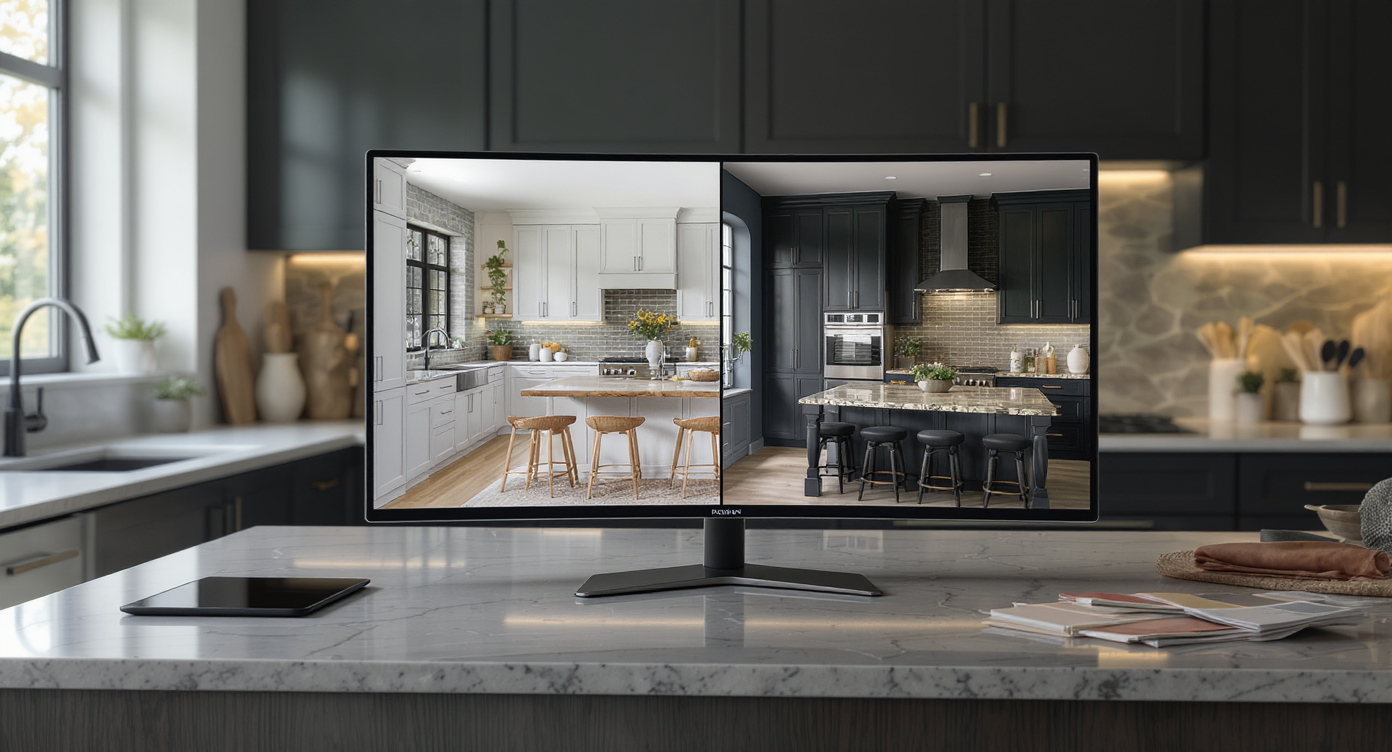
A kitchen island with a monitor displays AI-generated layout previews, helping visualize changes in finishes, color, and peninsula placement.
Many homeowners struggle to visualize how their layout decisions will affect walkways, sightlines, and openness. Here, AI-powered kitchen layout design tools have proved transformative. Uploading photos to services like REimagineHome.ai allows you to preview layouts, finishes, and color schemes in your own space before committing. This approach minimizes guesswork and helps test moody versus bright designs or different peninsula placements—reducing the stress of late-stage remodeling & upgrades. As detailed in our feature on AI-powered kitchen previews, the ability to digitally experiment can clarify difficult choices and expedite project timelines.
-
5. Calibrate Mood-Based Design With Lighting and Texture
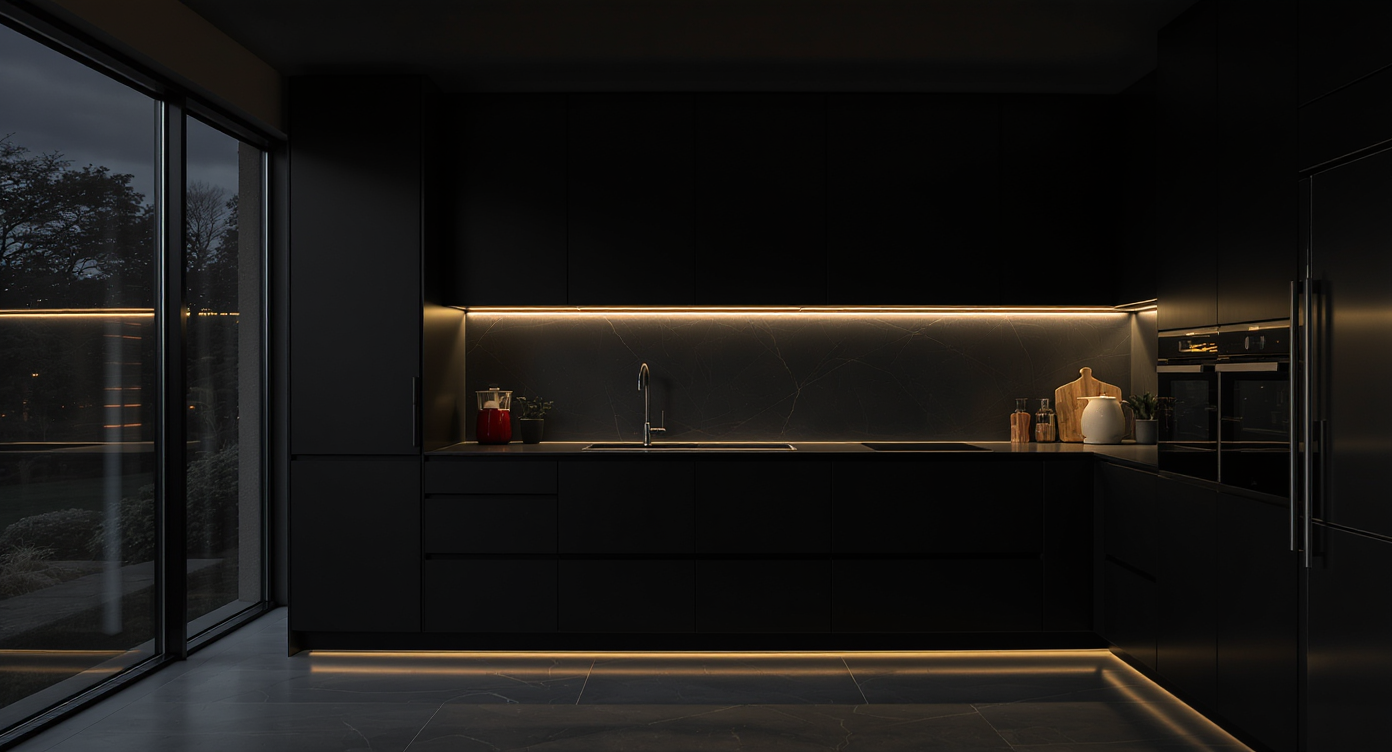
Seamlessly layered lighting and tactile finishes create a moody, bar-inspired ambiance in this modern open-plan kitchen at dusk.
Open kitchens often risk feeling sterile unless grounded by layered textures and thoughtful lighting. If you crave a moody, bar-inspired vibe, incorporate matte or metallic finishes and use dimmable lighting to shift the atmosphere between day and night. Warm gold hardware, tactility in countertops, and textured tile or glass amplify ambiance. Mood-based design thrives on sensory contrast—balancing reflective and soft surfaces organically connects the kitchen with both lively dinner parties and quiet mornings at home.
-
6. Harmonize Storage and Display for Balanced Functionality
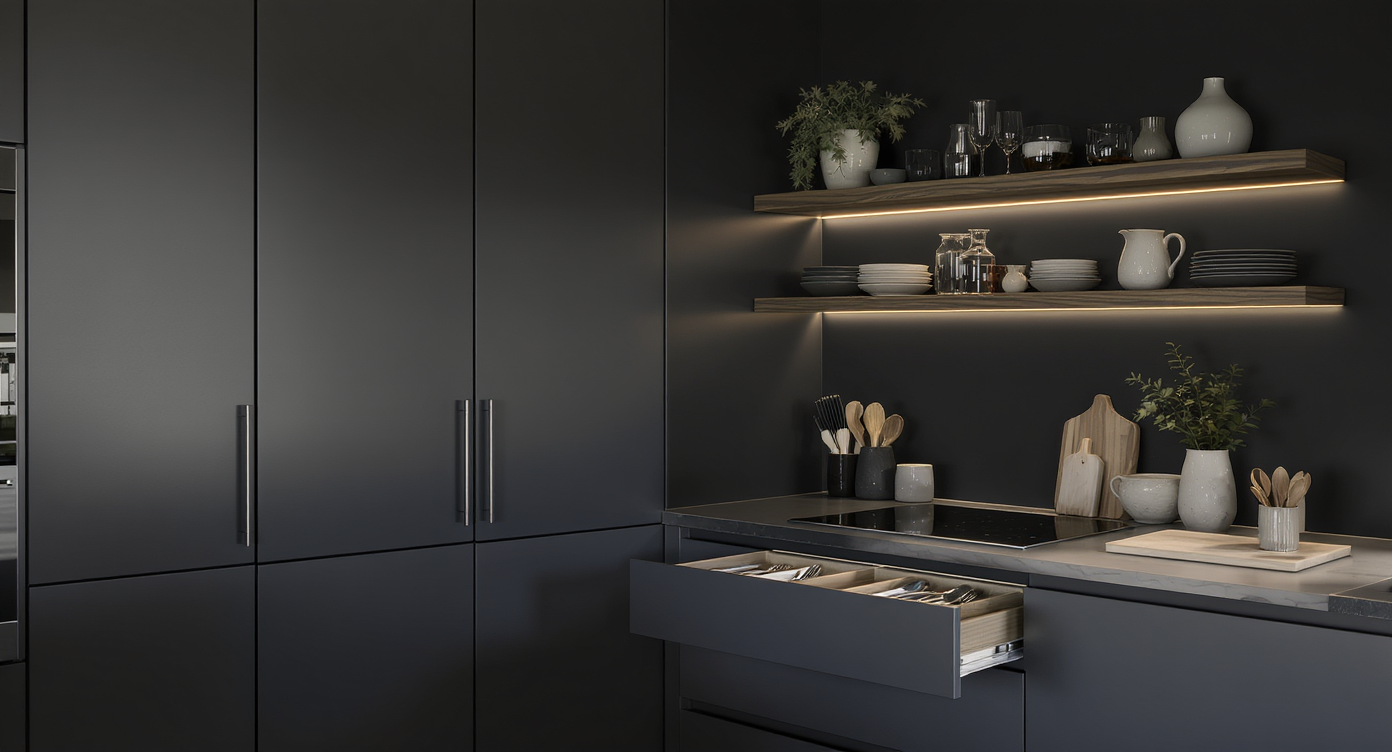
Seamless cabinetry conceals storage while floating open shelves and custom interiors balance display and daily kitchen functionality.
Integrated storage solutions can preserve the open, uncluttered feel of a kitchen while showcasing your personal style. Use tall cabinetry to conceal bulkier items and float open shelves for display-worthy pieces that echo living or dining room décor. Customizing cabinet interiors supports everyday ease without sacrificing aesthetics. Many designers are now recommending hybrid approaches: some closed storage, some opportunity for display. As we covered in our discussion of surface restyling techniques, visual previews of finish options ensure that even these functional details contribute to your overall design story.
-
7. Think Long-Term: Flexibility for Future Upgrades
Spaces and tastes inevitably evolve. Opting for materials or finishes that can be swapped easily—such as peel-and-stick backsplashes or clip-on cabinet fronts—gives you the freedom to reimagine the kitchen without a full overhaul. This is especially valuable as trends shift and your living spaces mature. Designers frequently recommend updates like replacing hardware, repainting, or restyling surfaces to refresh a kitchen rather than embarking on another renovation. Being intentional about flexibility now pays dividends later.
Open Kitchen Remodel FAQ
Reinforce links through color, finishes, lighting, or furniture style without insisting every element match. Use subtle transition zones, as recommended by experienced designers.
Should I use bold tile if I already have patterned elements in my home?
Limit bold statements to one or two features and seek samples or digital previews. Refer to our insights on current design trends for guidance.
What is the best way to preview a kitchen remodel in my own space?
Upload a photo to tools like REimagineHome.ai and explore different layouts, colors, and finishes virtually, reducing risk before construction.
Can lighting really influence a kitchen’s mood?
Yes. Lighting design is crucial for mood-based design, especially in open concepts. Dimmable or layered lighting creates adjustable ambiance for various functions.
How do I future-proof my kitchen design?
Choose modular storage, easily updated hardware or finishes, and materials that support simple refreshes rather than full-scale renovations.
Essentials for a Thoughtful Kitchen Remodel That Lasts
A modern moody kitchen that flows with the rest of your home requires more than matching colors or finishes. Thoughtful transitions, balanced statement features, AI-powered previews, and future-ready surfaces make open living concepts feel purposeful and enduring. Incorporate both proven design techniques and digital tools like REimagineHome.ai for a remodel that feels as natural as it is current.





.svg)


.png)